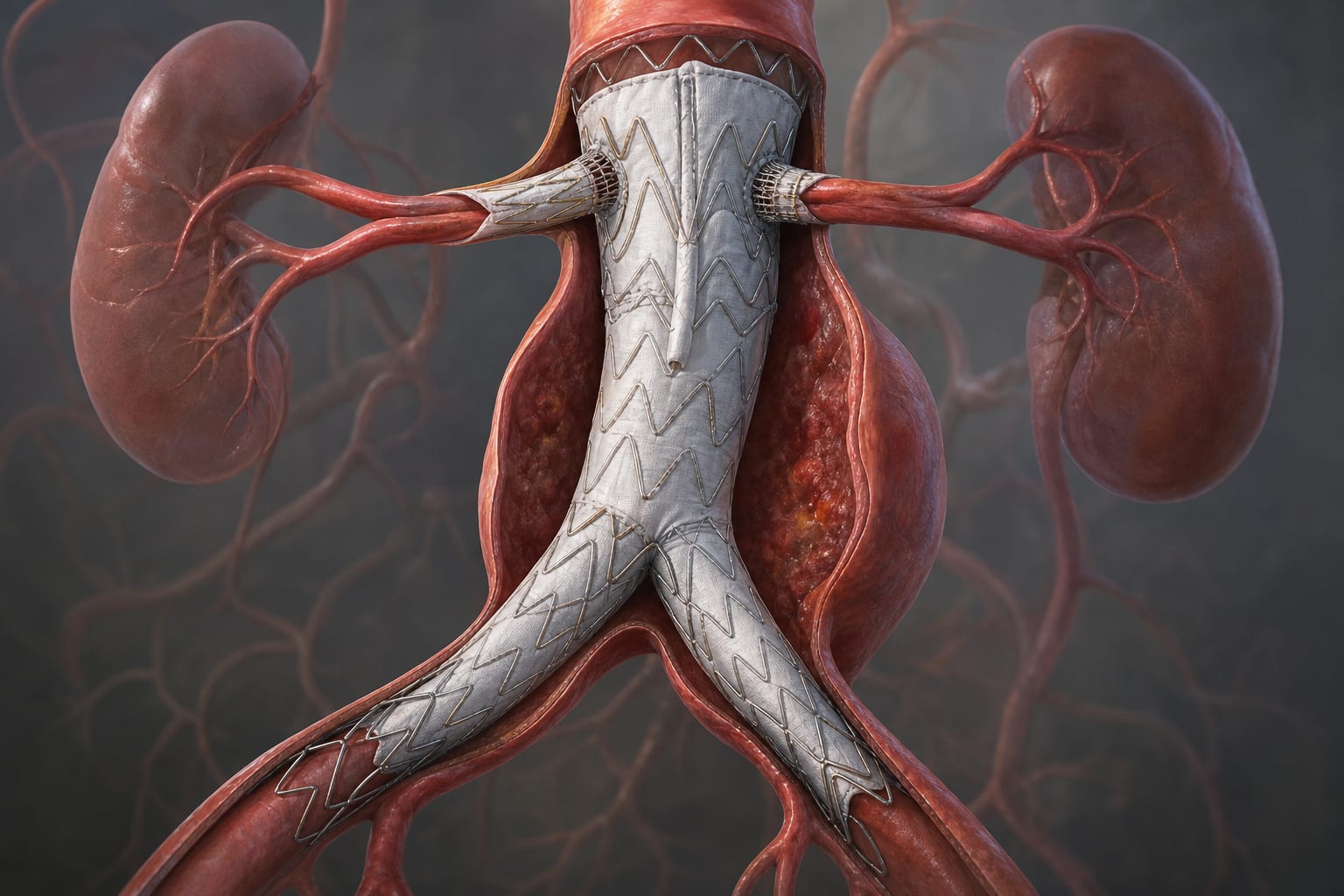
To report a case of a late presenting type Ia endoleak after fenestrated endovascular aneurysm repair (fEVAR) treated with a custom branched device, highlighting its significance in high-risk patients.
Key Findings:
The patient had a late type Ia endoleak after previous fEVAR, necessitating innovative intervention.
A custom branched device was successfully utilized to address the anatomical challenges presented by the failed graft, demonstrating its potential in similar cases.
Interpretation:
The case demonstrates the feasibility of using a custom branched device for conversion in cases of failed fEVAR, particularly in high-risk patients, and suggests avenues for future applications.
Limitations:
The report is based on a single case and may not be generalizable; further studies are needed to validate these findings.
Long-term outcomes and effectiveness of the custom device in this context are not provided.
Conclusion:
The use of a custom branched device offers a viable endovascular solution for managing complications arising from failed fenestrated endografts, underscoring the importance of tailored approaches in complex cases.