The relationship between secondhand smoke exposure in Chinese children and adolescents and renal function and hyperuricemia: a cross-sectional study - Summary - MDSpire
Advertisement
The relationship between secondhand smoke exposure in Chinese children and adolescents and renal function and hyperuricemia: a cross-sectional study
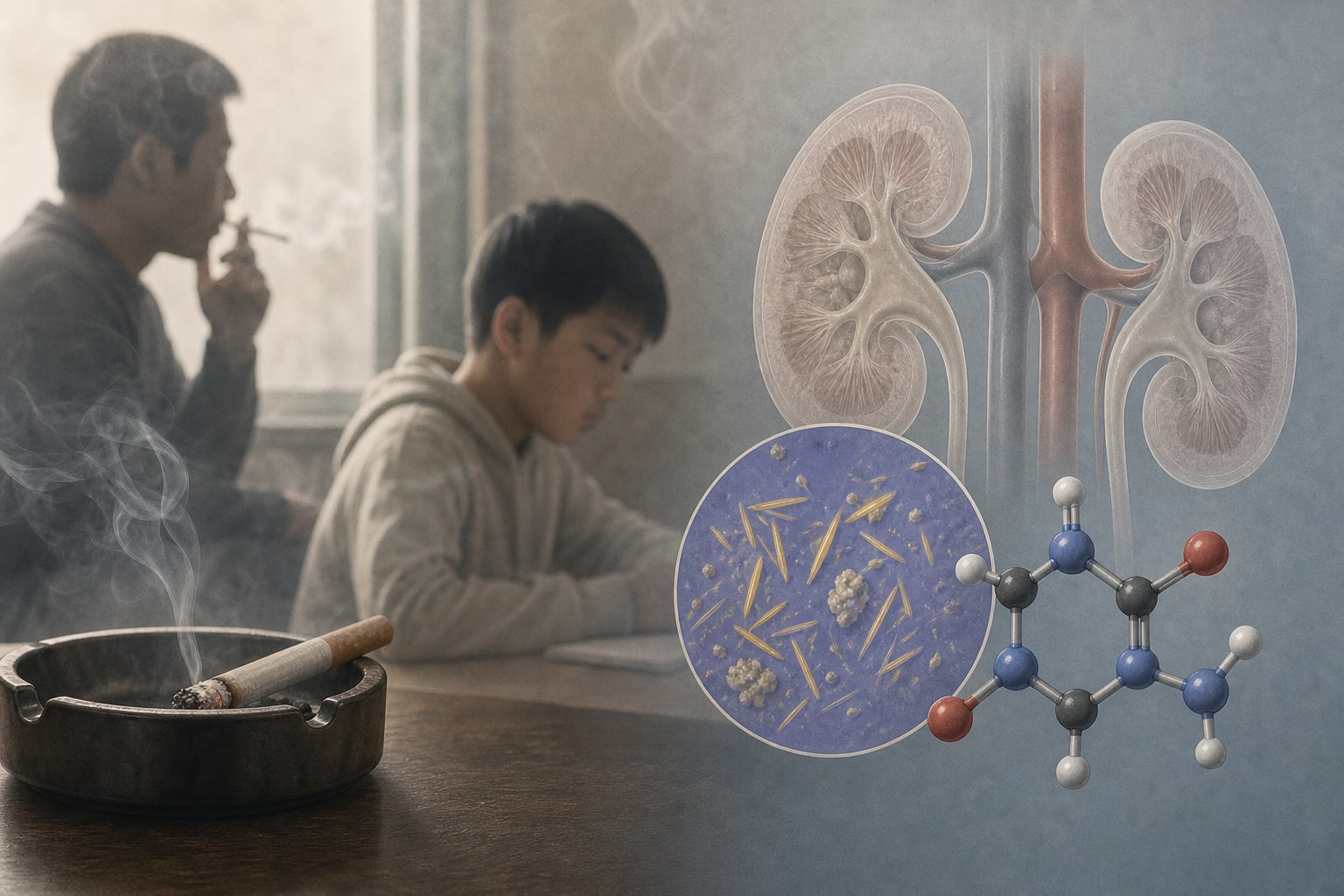
To examine the association between secondhand smoke (SHS) exposure and hyperuricemia (HUA) among Chinese children and adolescents, highlighting the significance of understanding this relationship and exploring the potential mediating role of renal function.
Key Findings:
Prevalence of HUA among children and adolescents aged 6–17 is 20.5%.
41% of the study population was exposed to SHS.
No exposure to SHS is a protective factor for HUA (OR = 0.811, 95% CI: 0.698, 0.943).
In boys, no exposure to SHS is also a protective factor for HUA (OR = 0.747, 95% CI: 0.613, 0.911).
eGFR mediates 10.42% of the association between SHS and HUA in boys.
Interpretation:
Exposure to SHS in children and adolescents, particularly boys, may increase the incidence of HUA by impairing renal function, which has significant public health implications.
Limitations:
Cross-sectional design limits causal inference.
Reliance on self-reported data for SHS exposure may introduce bias, potentially affecting the accuracy of the findings.
Conclusion:
It is imperative to enforce smoking bans in public places more stringently to protect children and adolescents from SHS exposure, and to consider specific policies that address this issue.