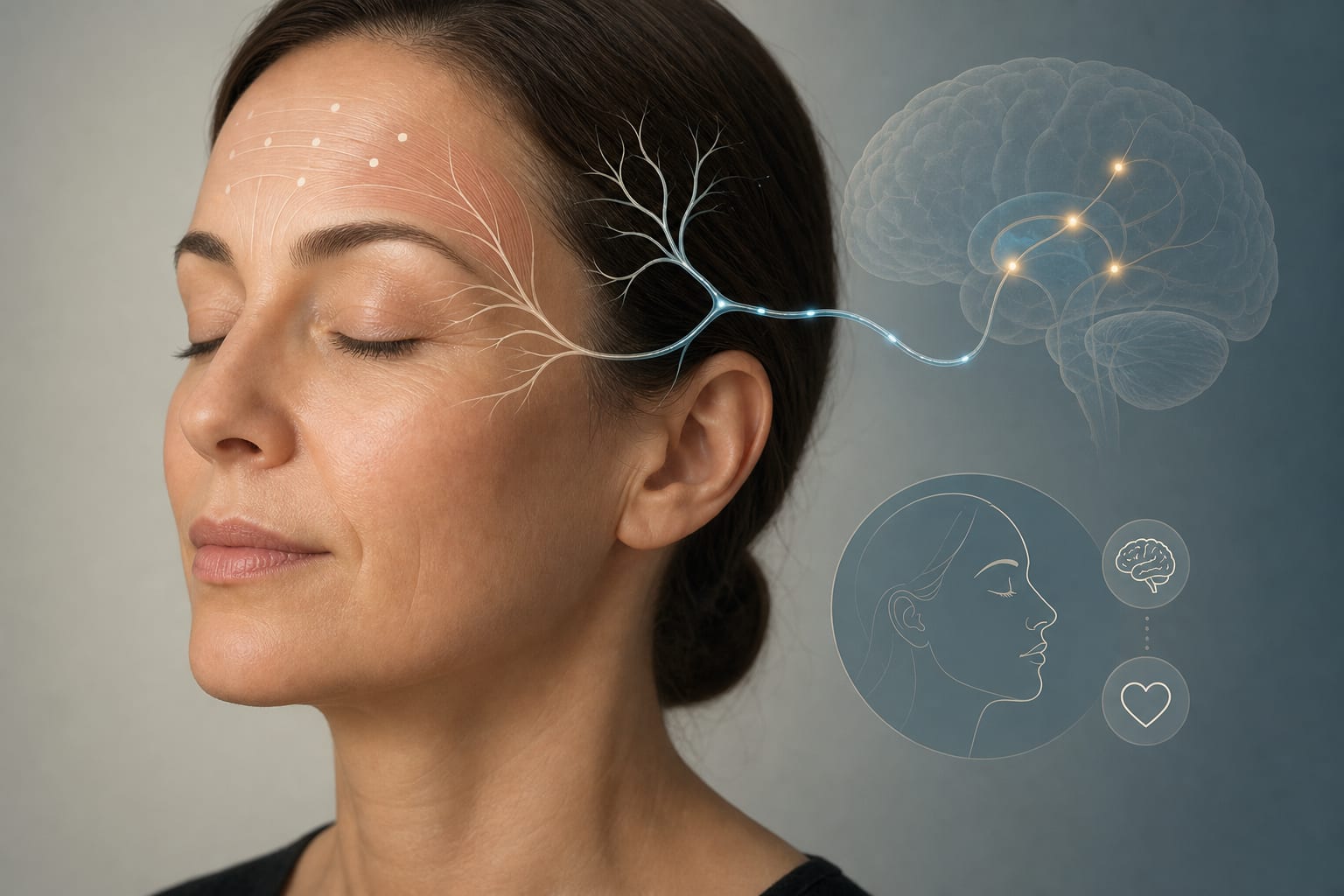
To analyze the psychodermatological benefits of BoNT-A treatment in the upper facial third, focusing on mechanisms of skin-brain interaction and clinical outcomes across psychiatric domains.
Key Findings:
Upper facial BoNT-A is associated with reductions in depressive and anxiety symptoms.
Improvements in self-perception and social functioning were noted.
Inhibition of facial muscles modulates signaling to limbic structures, supporting the facial feedback hypothesis.
Evidence in bipolar disorder and personality disorders is limited and heterogeneous.
Caution is advised in patients with body dysmorphic disorder.
Interpretation:
BoNT-A treatment in the upper facial third offers psychodermatological benefits that extend beyond aesthetics, enhancing emotional regulation and affective symptoms.
Limitations:
Available findings are dispersed and often focus on specific populations or psychiatric disorders.
Many studies prioritize aesthetic outcomes over psychodermatological benefits.
Conclusion:
BoNT-A should be considered a complementary intervention within a biopsychosocial framework, with a need for future large-scale RCTs with standardized endpoints.