Temporal transcriptomic analysis of scale drop disease virus in Asian seabass kidney cells reveals host immune and signaling changes - Summary - MDSpire
Advertisement
Temporal transcriptomic analysis of scale drop disease virus in Asian seabass kidney cells reveals host immune and signaling changes
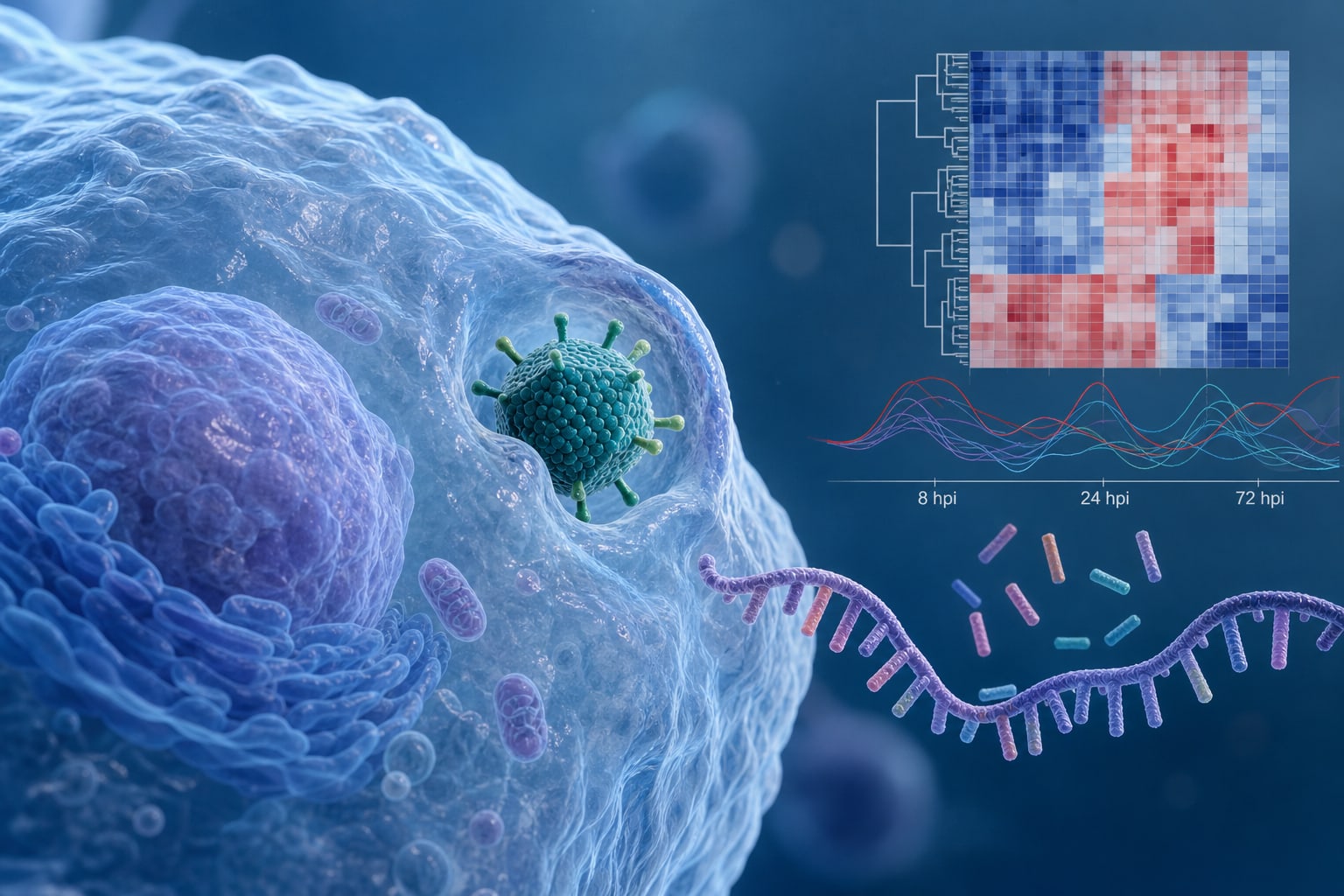
To characterize host transcriptional responses to Scale Drop Disease Virus (SDDV) infection using a permissive Asian seabass kidney (ASBK) cell system, highlighting the significance of these responses in understanding viral pathogenesis.
Key Findings:
SDDV infection induced dynamic remodeling of immune signaling pathways and cellular processes, including specific pathways such as NF-kB and JAK-STAT.
Early infection stages showed rapid activation of innate immune sensing and signaling, indicating a robust initial host response.
Later stages were characterized by immune modulation and cellular reprogramming, suggesting a shift in host strategy to cope with viral infection.
Interpretation:
The study establishes ASBK-1 cells as a robust platform for mechanistic studies of SDDV and elucidates time-dependent host molecular networks during infection, with implications for developing targeted therapies.
Limitations:
Limited understanding of SDDV pathogenesis due to lack of comprehensive molecular investigations, which may affect the interpretation of host responses.
Previous studies primarily focused on epidemiology and diagnostics rather than host-virus interactions, highlighting a gap in knowledge.
Conclusion:
The findings advance the understanding of host-virus interactions in Asian seabass and highlight the need for further research on SDDV pathogenesis, particularly in the context of aquaculture sustainability.