Baseline vs. on-treatment heart failure with preserved ejection fraction (HFpEF) in a real world cardio-oncology clinic: observational analysis of cancer therapy-related cardiovascular toxicity incidence and cancer treatment implications - Summary - MDSpire
Advertisement
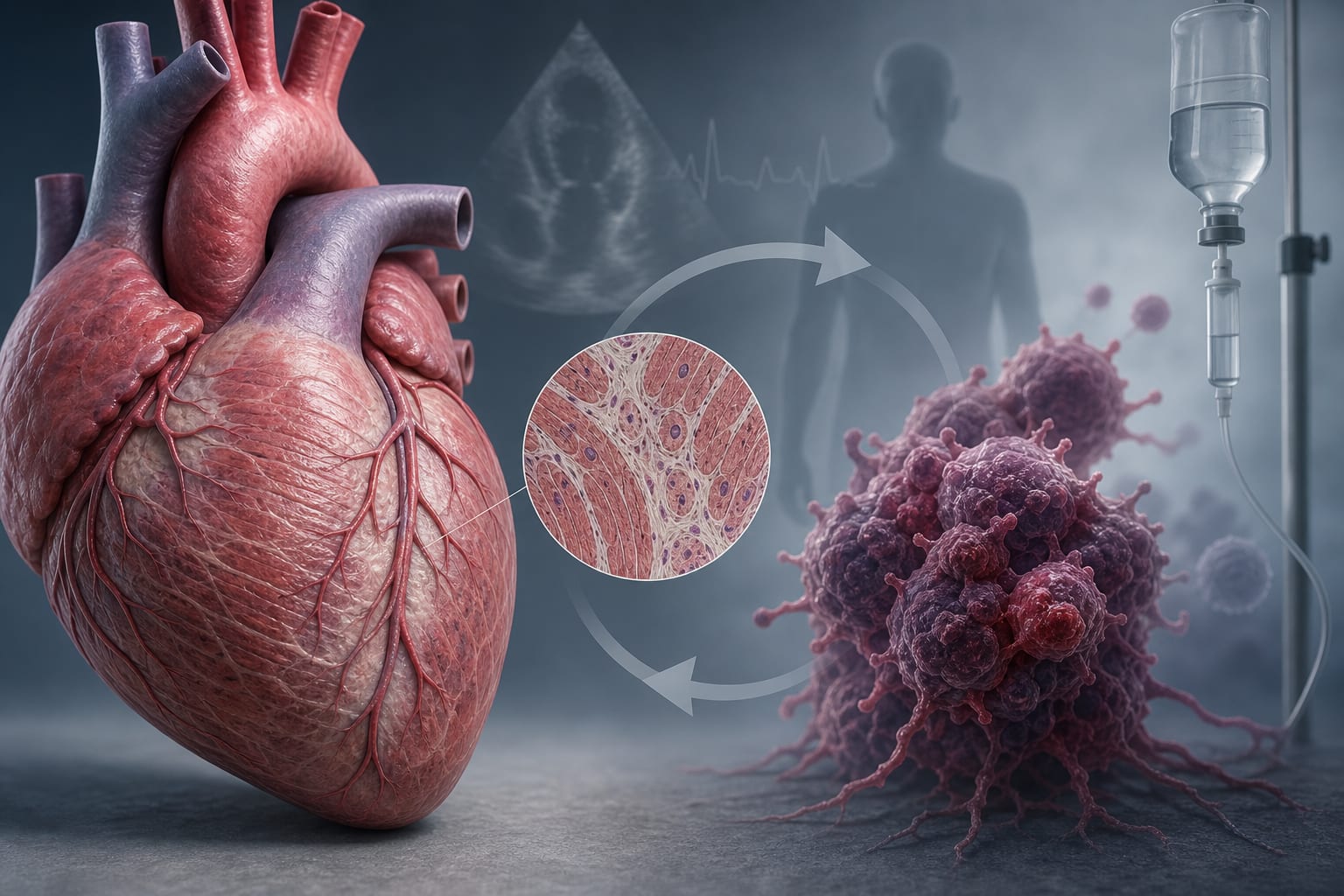
Baseline vs. on-treatment heart failure with preserved ejection fraction (HFpEF) in a real world cardio-oncology clinic: observational analysis of cancer therapy-related cardiovascular toxicity incidence and cancer treatment implications
To evaluate the prevalence of HFpEF at baseline and the incidence of HFpEF events throughout treatment in cancer patients, comparing these outcomes with patients without pre-existing heart failure and those with pre-existing heart failure with reduced ejection fraction (HFrEF).
Key Findings:
Pre-existing HFpEF was associated with higher mortality (27.8% vs. 12.8%, p = 0.011) compared to patients without HF, indicating a significant risk factor.
HFpEF events occurred in 14.4% of patients, with older age, female sex, arterial hypertension, and previous arrhythmias identified as significant predictors.
No difference in CTR-CVT incidence was observed between groups, but pre-existing HFpEF led to more HFpEF events (41.6%, p < 0.001), highlighting the need for careful monitoring.
Interpretation:
Pre-existing HFpEF indicates a high-risk phenotype with significant morbidity and mortality implications for cancer treatment, although the independent mortality signal is primarily driven by HFrEF.
Limitations:
The study is retrospective and may be subject to selection bias.
Data on HFpEF in cancer patients is limited and often not evaluated as an individual outcome.
Potential impact of missing data on the outcomes measured.
Conclusion:
HFpEF events are common in cancer patients and may have important implications for cancer treatment, highlighting the need for improved risk stratification tools.