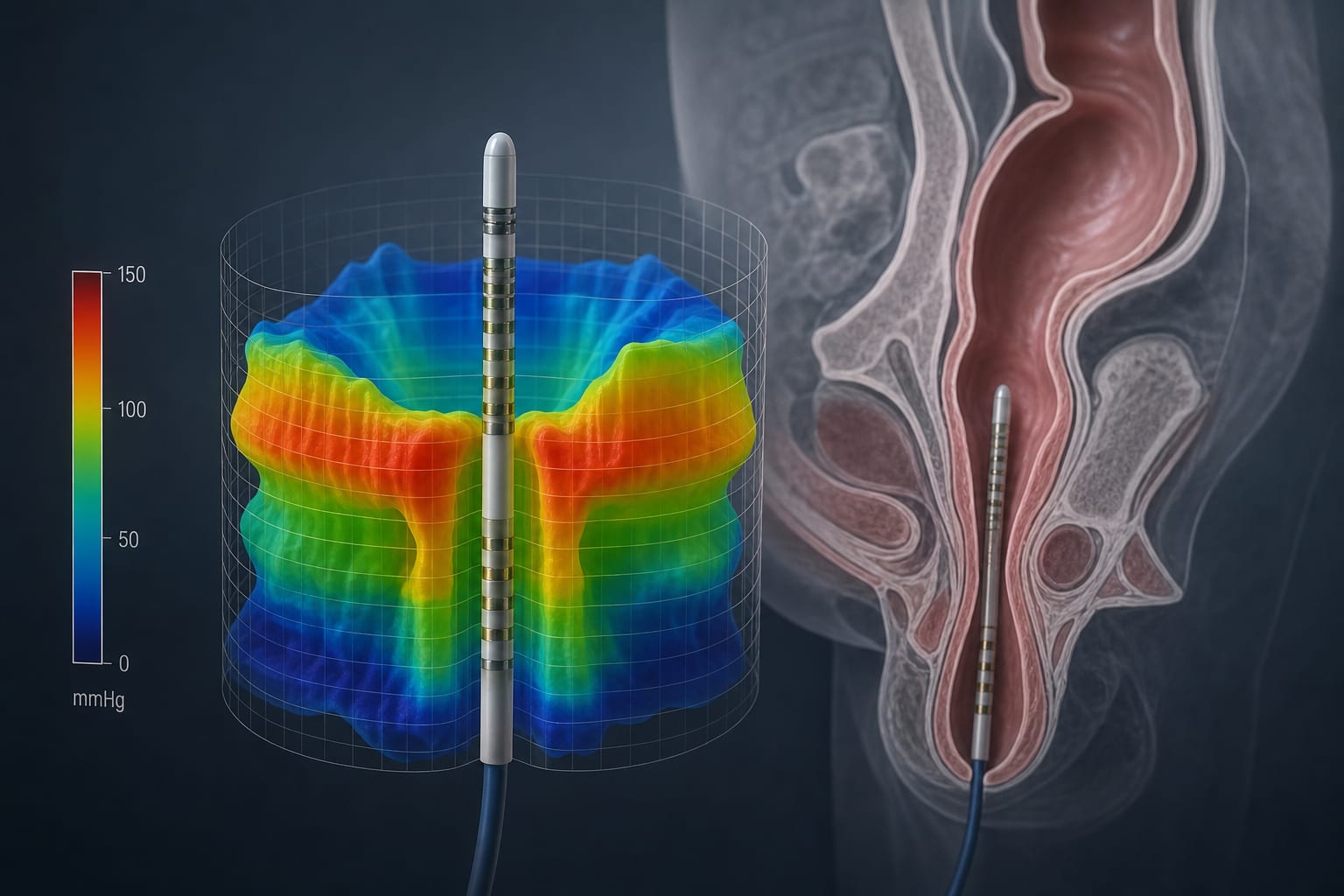
To evaluate the diagnostic performance of 3DHRAM in identifying descending perineal syndrome (DPS) specifically in patients with obstructed defecation.
Key Findings:
41.3% of patients presented with DPS on CD.
Perineal descent was independently associated with DPS (odds ratio = 1.13, 95% CI 1.03–1.23, P = 0.009).
3DHRAM showed sensitivity of 0.61 and specificity of 0.76 for excessive perineal descent with a cut-off value of 10.5 mm.
The best diagnostic performance was achieved when combining perineal descent with rectocele, rectal mucosal prolapse, and dyssynergic pattern, yielding a Youden Index of 0.44.
Interpretation:
3DHRAM has potential as a complementary tool for diagnosing DPS, but further validation is needed.
Limitations:
Single-center study may limit generalizability.
Retrospective design may introduce selection bias.
Small sample size may affect the robustness of findings.
Conclusion:
Future multi-center, prospective studies with larger cohorts are needed to validate findings and define the role of 3DHRAM in diagnosing DPS, emphasizing the importance of generalizability.