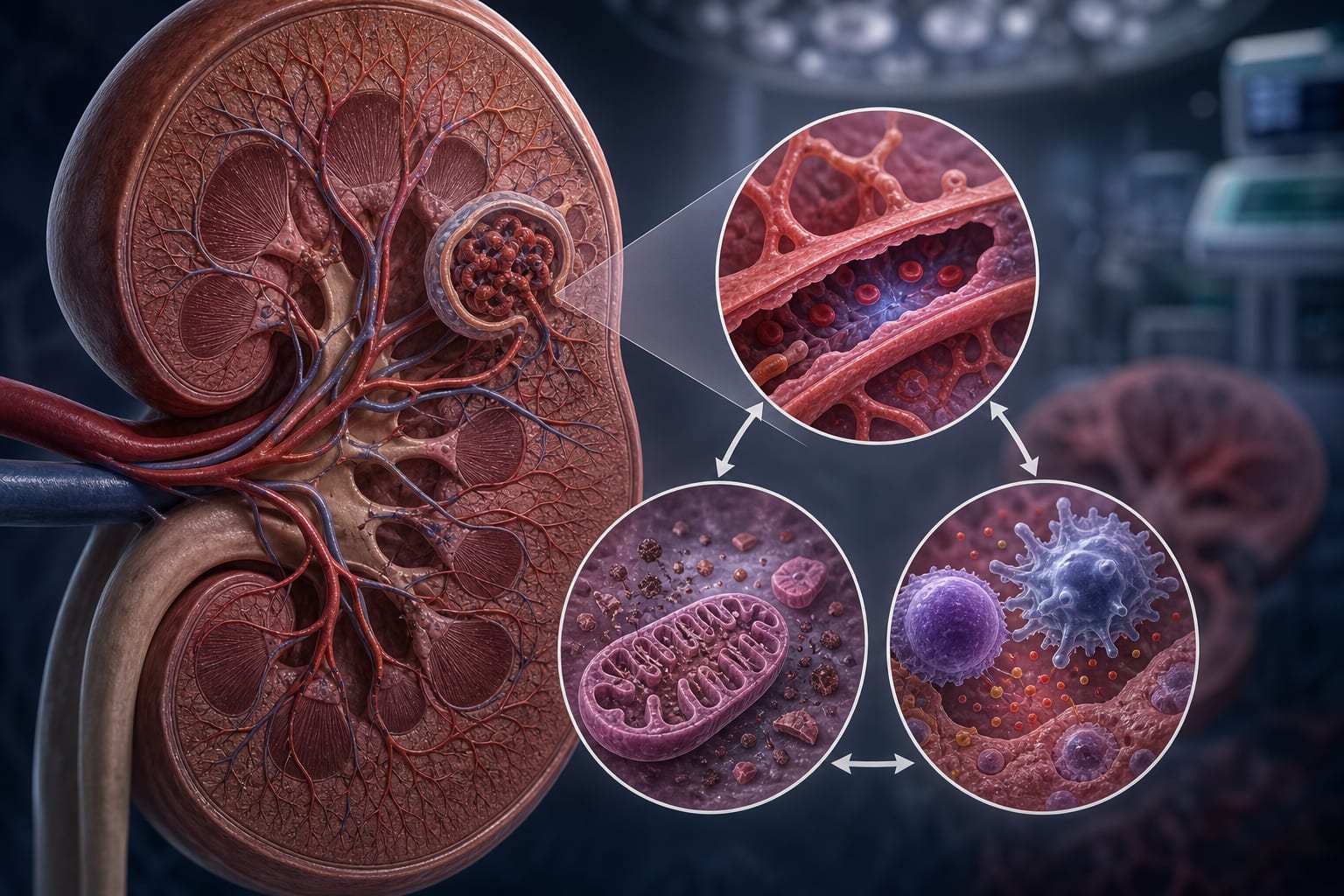
To provide an integrated pathophysiological framework for understanding perioperative acute kidney injury (AKI), emphasizing the significance of renal microcirculatory hypoxia, mitochondrial dysfunction, and immuno-metabolic alterations in clinical practice.
Key Findings:
Perioperative AKI is characterized by local microcirculation, cellular energy metabolism, and immune-inflammatory responses, with implications for targeted interventions.
Renal microcirculatory hypoxia is a significant upstream trigger for AKI, necessitating monitoring strategies.
Mitochondrial damage and innate immune activation contribute to the occurrence and amplification of AKI, highlighting areas for therapeutic focus.
The pathological triangle model integrates existing frameworks and emphasizes the interdependence of the three components, offering a novel perspective for clinicians.
Interpretation:
The proposed model offers a time-resolved and stratification-oriented approach to understanding the clinical heterogeneity of perioperative AKI, suggesting tailored interventions based on individual patient profiles.
Limitations:
The direct link between renal microcirculatory oxygenation and postoperative organ injury requires further elucidation, which may hinder immediate application.
The model does not aim to replace existing frameworks but to integrate them, which may limit its applicability in isolation and necessitate further validation.
Conclusion:
The article presents a comprehensive framework for mechanistic classification, risk stratification, and multi-target interventions for perioperative AKI, underscoring its potential impact on improving patient outcomes.