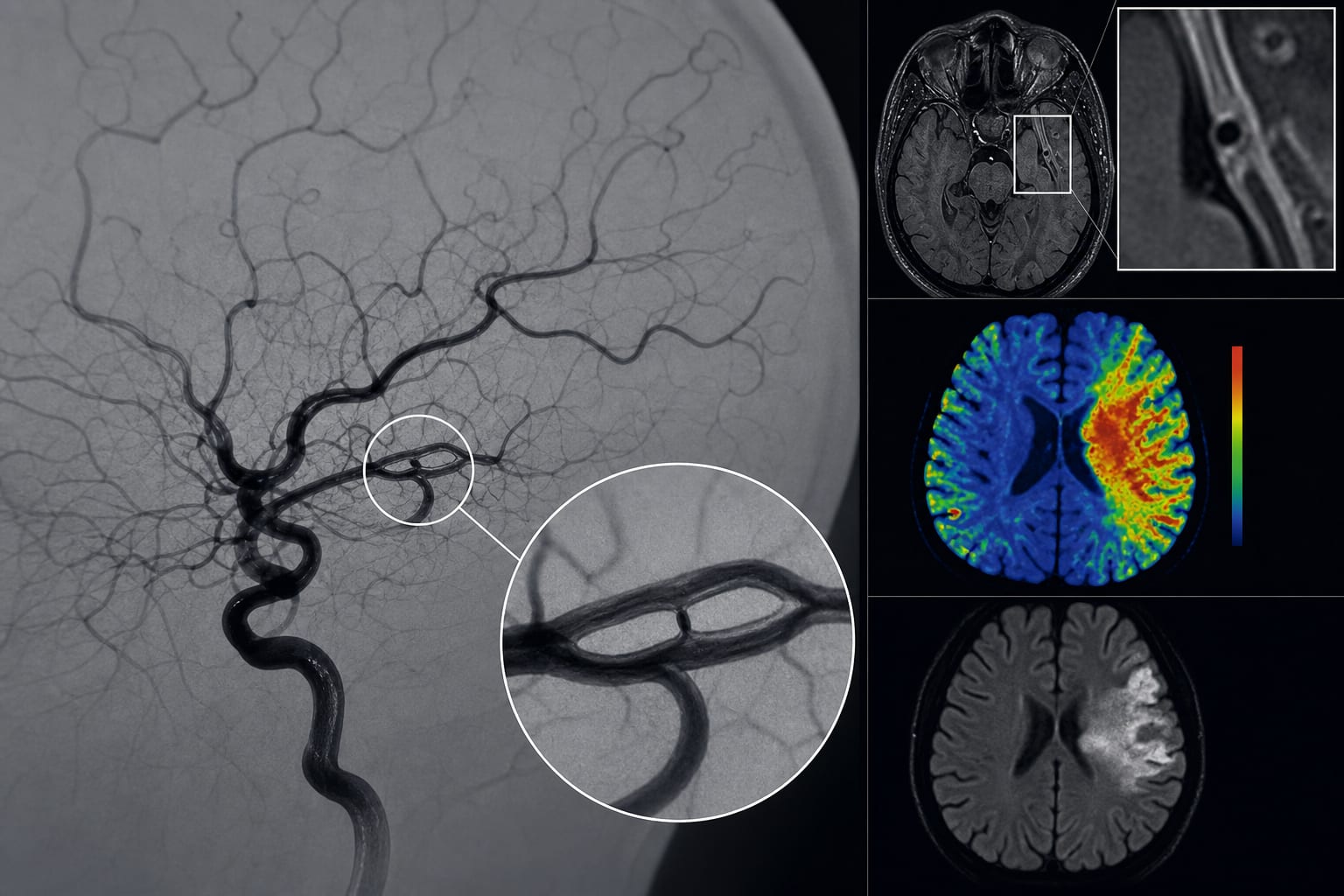
To report a case of MCA fenestration and conduct a literature review on its association with cerebral ischemia, highlighting its clinical significance.
Key Findings:
MCA fenestration is a rare variant that can mimic stenosis.
73.7% of patients had slit-like morphology, more common in AIS than TIA.
57.9% of diagnoses were made via DSA.
Mechanical thrombectomy had favorable outcomes in 83.3% of cases with concurrent MCA occlusion.
73.7% of patients achieved favorable outcomes at follow-up.
Patient ages ranged from 4 to 85 years.
Interpretation:
MCA fenestration should be considered in differential diagnoses for cerebral ischemia, especially in patients without conventional vascular risk factors, as it may influence management strategies.
Limitations:
The study is based on a limited number of cases, which may not represent the broader population.
The relationship between MCA fenestration and cerebral ischemia is not fully understood, necessitating further research.
Conclusion:
Multimodal imaging is essential for accurate diagnosis and management of MCA fenestration, emphasizing its role in preventing misdiagnosis.