Efficacy and safety of Oliceridine versus Sufentanil in postoperative analgesia for burn skin grafting: a machine learning and SHAP-based cohort study - Summary - MDSpire
Advertisement
Efficacy and safety of Oliceridine versus Sufentanil in postoperative analgesia for burn skin grafting: a machine learning and SHAP-based cohort study
To evaluate the comparative efficacy and safety of Oliceridine versus Sufentanil specifically in postoperative pain management for burn skin grafting using machine learning.
Key Findings:
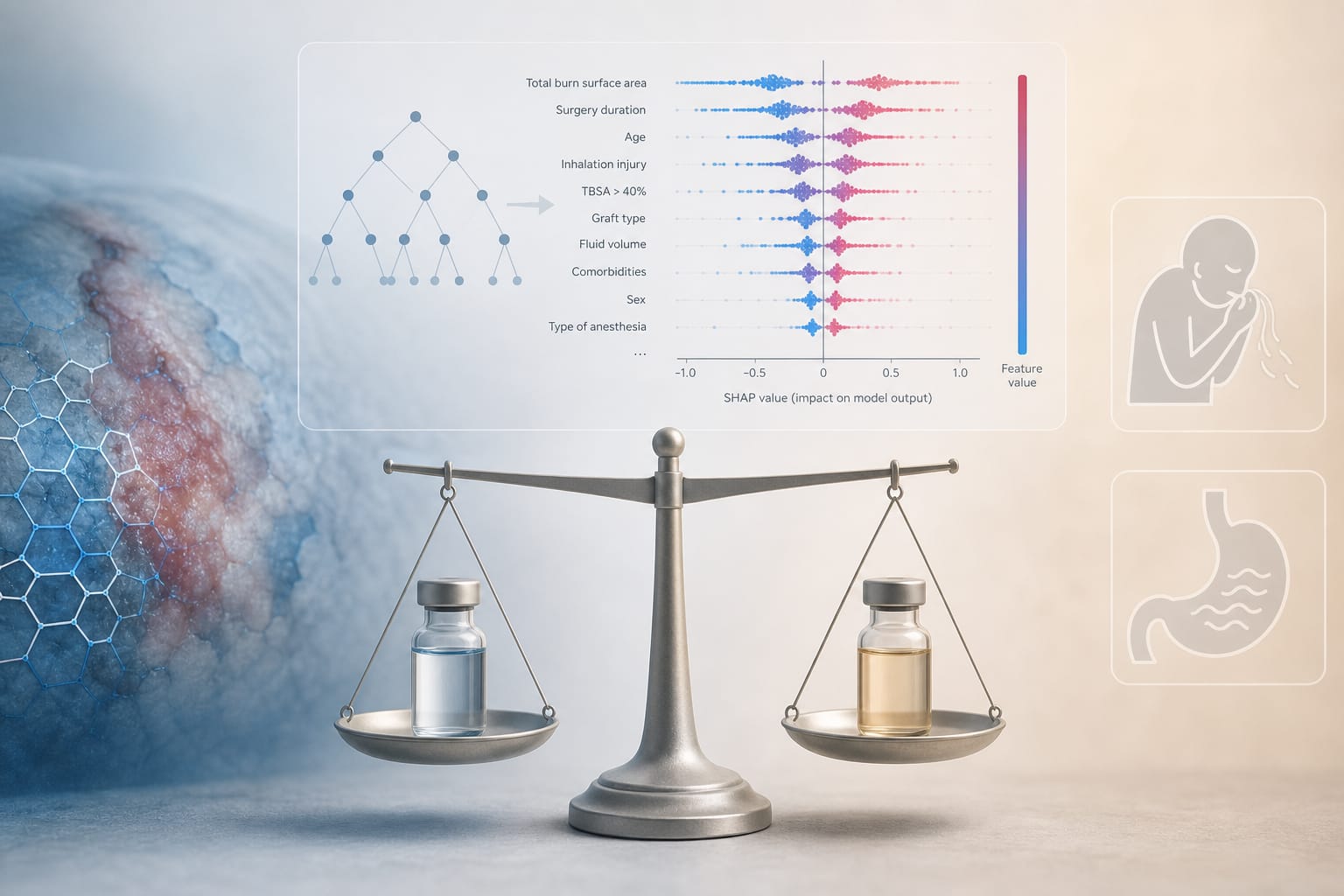
The XGBoost efficacy model (AUC = 0.843) identified total burn surface area and surgery duration as dominant predictors, highlighting the importance of these factors in pain management.
Opioid choice had negligible SHAP impact, indicating a comparable analgesic profile between Oliceridine and Sufentanil.
The XGBoost PONV model (AUC = 0.788) identified Sufentanil administration and female patients as key risk factors, suggesting targeted approaches for these groups.
Substituting Sufentanil with Oliceridine correlated with a significantly lower predicted PONV risk in female patients.
Interpretation:
Machine learning evaluation suggests a distinction between opioid predicted efficacy and safety profiles, with Oliceridine showing similar analgesic outcomes to Sufentanil but a lower predicted risk of PONV, which may influence clinical decision-making.
Limitations:
The study is retrospective and may not establish clinical validity, introducing potential biases.
Further prospective trials are required to confirm findings and validate the predictive models.
Conclusion:
Exploratory insights provide frameworks for risk stratification in severe burn management, potentially guiding future clinical practices.