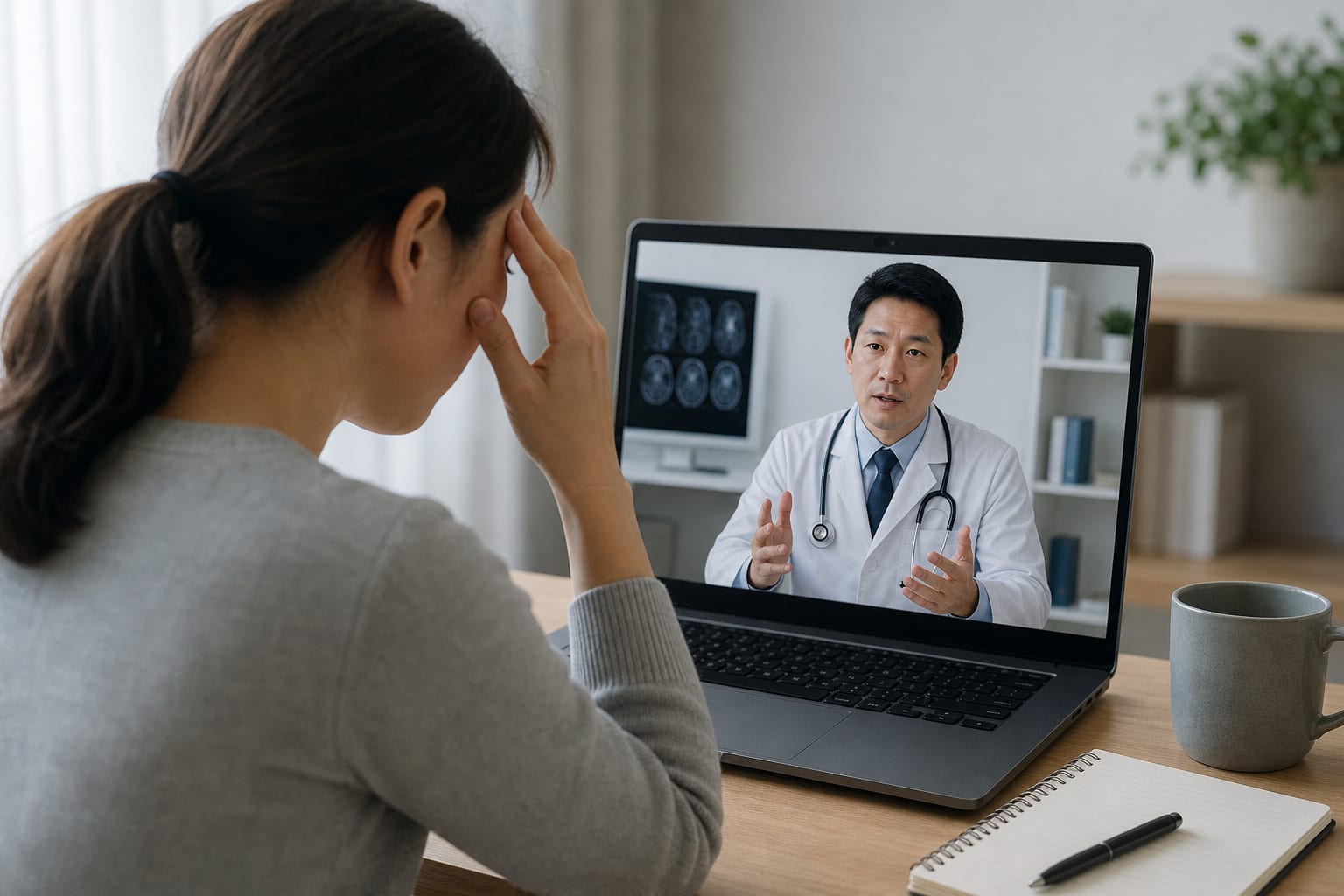
Specialist care at a distance: Patient-reported experience with telemedicine video consultations for neurological symptoms associated with post-COVID-19 condition or in temporal association with COVID-19 vaccination in a single-center retrospective cross-sectional study - Summary - MDSpire
Advertisement
Specialist care at a distance: Patient-reported experience with telemedicine video consultations for neurological symptoms associated with post-COVID-19 condition or in temporal association with COVID-19 vaccination in a single-center retrospective cross-sectional study
To describe patient-reported experiences with telemedicine video consultations (TVC) in routine neurological care for patients with new-onset neurological symptoms following SARS-CoV-2 infection or COVID-19 vaccination.
Key Findings:
Telemedicine has become essential for maintaining healthcare continuity during the COVID-19 pandemic.
Patients with neurological symptoms related to PCC or COVID-19 vaccination were included for descriptive characterization.
The study did not assess clinical effectiveness, safety, or equivalence to in-person care, highlighting a significant gap in understanding.
Interpretation:
The study highlights the need for understanding patient experiences with telemedicine in the context of neurological symptoms post-COVID-19, which can inform future telemedicine practices.
Limitations:
The study was observational and retrospective, limiting the ability to draw causal conclusions.
The lack of established diagnostic criteria and biomarkers for PVS complicates the characterization of the patient cohort.
Potential bias in patient self-reporting due to the retrospective nature of the study.
Conclusion:
The findings provide insights into patient experiences with TVC for neurological symptoms related to COVID-19, emphasizing the importance of remote care in this context.