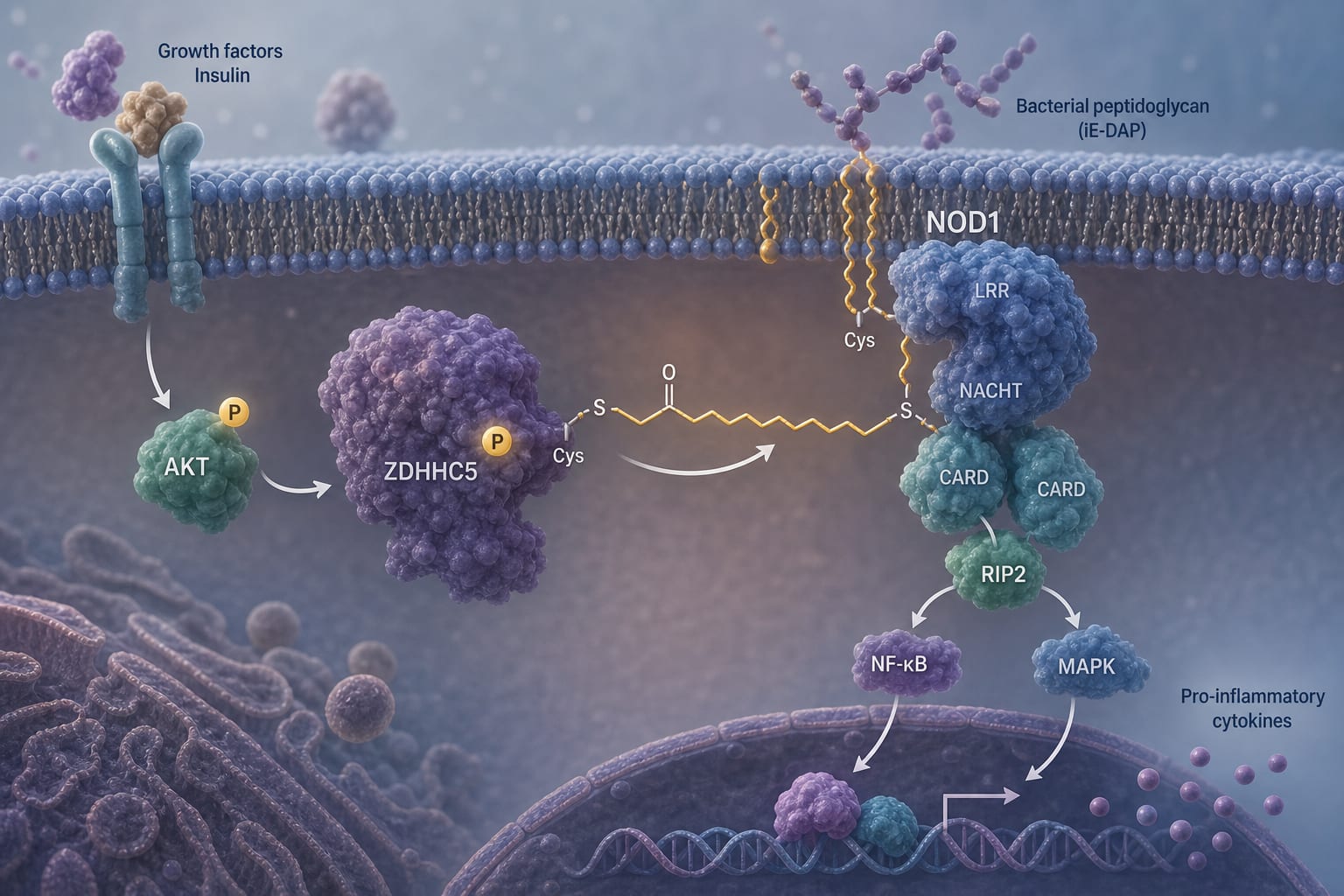
To investigate the effects of growth factors and insulin on NOD1 signaling, specifically focusing on the role of AKT-mediated phosphorylation of ZDHHC5 in enhancing NOD1 activation.
Key Findings:
Growth factors and insulin positively regulate NOD1 activation through an AKT-ZDHHC5-NOD1 signaling axis, highlighting a critical link between metabolism and immune response.
AKT phosphorylates ZDHHC5 at Ser345 and Ser380, enhancing its retention at the plasma membrane and enzymatic activity, which is crucial for NOD1 function.
AKT-dependent phosphorylation increases NOD1 palmitoylation and membrane recruitment, facilitating downstream innate immune signaling, thus revealing a novel regulatory mechanism.
Interpretation:
The study identifies a novel mechanism linking growth factor- and insulin-mediated AKT activation to NOD1 signaling, suggesting a regulatory axis that integrates metabolic cues with innate immune responses, which could inform future therapeutic strategies.
Limitations:
The upstream pathways controlling ZDHHC5 activity remain poorly understood, indicating a gap in the current knowledge.
Further investigation is needed to fully elucidate the implications of AKT-ZDHHC5-NOD1 signaling in inflammatory diseases, particularly in clinical contexts.
Conclusion:
AKT-mediated phosphorylation of ZDHHC5 enhances NOD1 palmitoylation and activation, revealing a potential target for modulating NOD1-driven inflammatory diseases, which could lead to novel therapeutic approaches.