To discuss innovative therapeutic strategies targeting metabolic cell death in cancer treatment, as outlined in the source material.
Key Findings:
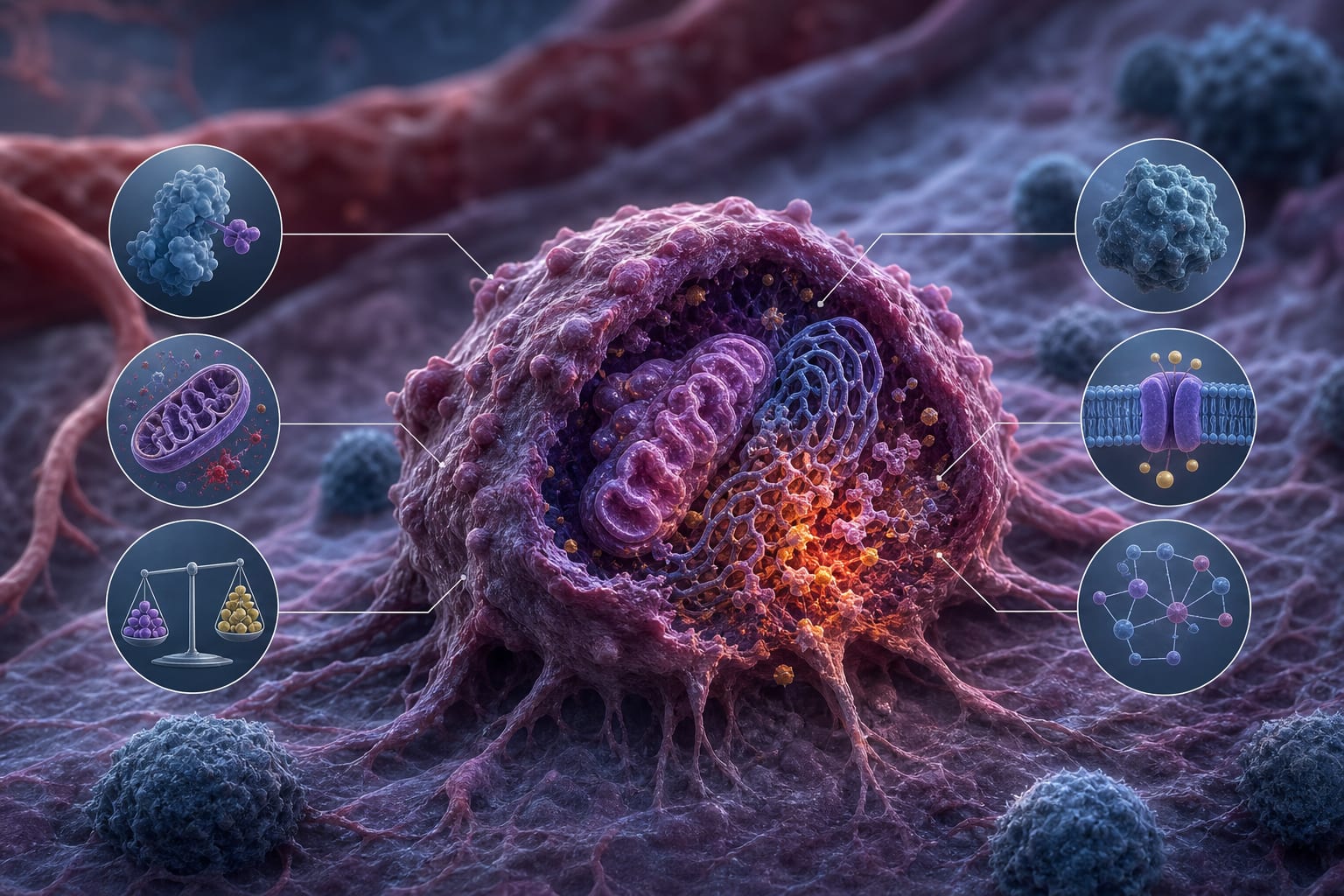
Metabolic adaptations in tumors create vulnerabilities that can be targeted therapeutically, as indicated in the source.
Serine dependency in tumors represents a metabolic liability that can be exploited, according to Liu et al.
HIF-1α is a critical regulator of cell death susceptibility in hypoxic conditions, as discussed in the study by Song et al.
Genetic context influences metabolic vulnerabilities and potential therapeutic targets, as noted in the work by Feldmann et al.
Ferroptosis is emerging as a significant non-apoptotic cell death pathway with therapeutic implications, as highlighted by Tang et al.
Interpretation:
The studies collectively redefine metabolic cell death as a regulatable vulnerability shaped by tumor evolution and microenvironmental adaptation, as suggested in the source material.
Limitations:
Direct connections between genetic factors and metabolic cell death mechanisms are not fully defined, as noted in the source.
Further research is needed to explore lineage-specific metabolic constraints, as indicated in the source.
Conclusion:
Exploiting cancer's metabolic flexibility may lead to more effective and precise anticancer therapies, as suggested in the source.