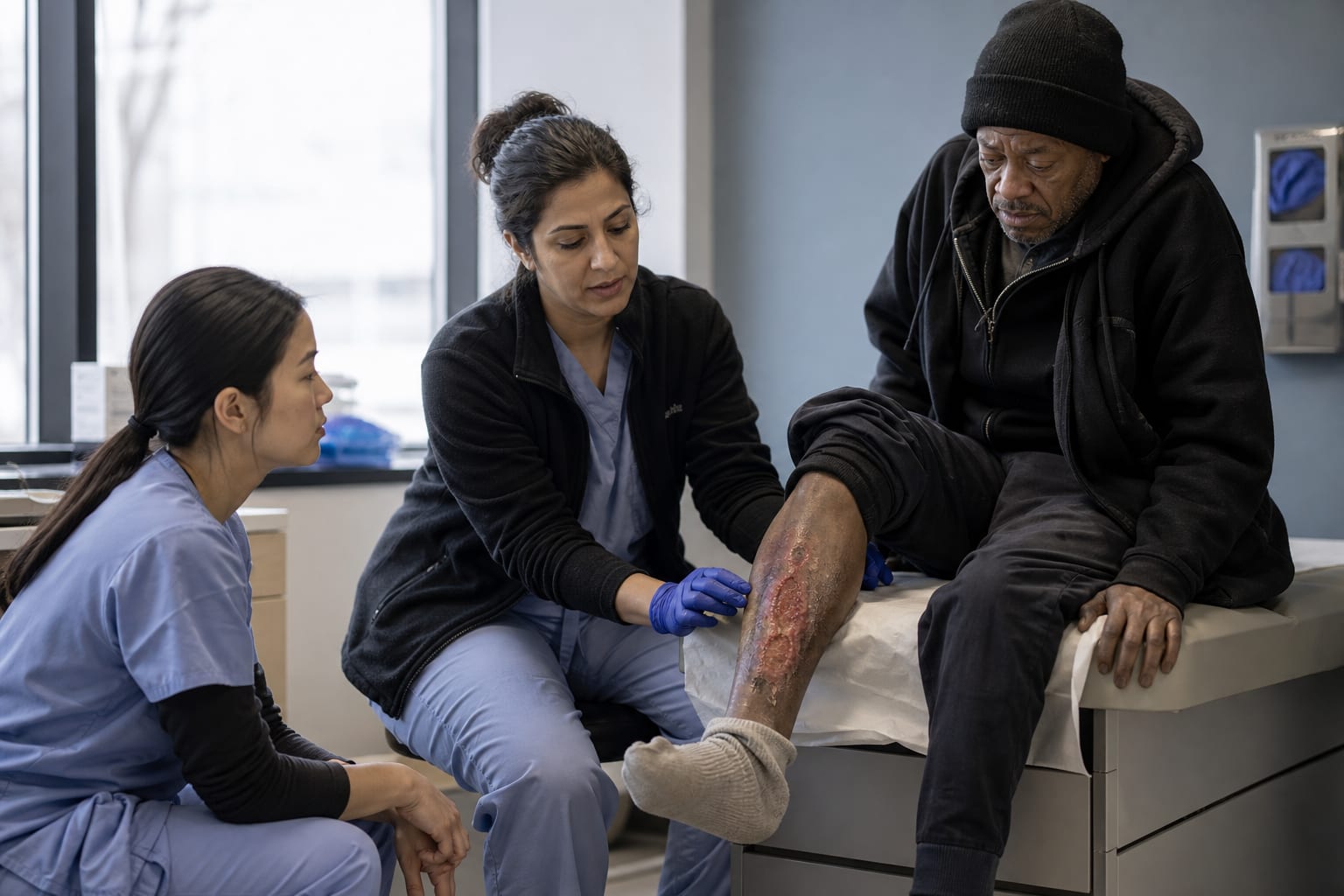
To provide urgent care for homeless individuals with vascular conditions to prevent limb loss and improve health outcomes.
Key Findings:
The clinic has treated 125 to 150 patients since its inception in 2023.
Patients often present with non-healing wounds, indicating underlying vascular issues.
The clinic serves as a bridge between primary care and emergency services, addressing gaps in care for homeless individuals.
Interpretation:
The clinic's approach challenges the traditional ER-first model, aiming to provide preventive care and build trust with homeless patients.
Limitations:
The clinic operates quarterly, which may limit immediate access for urgent cases.
Patients may still face barriers to care, including transportation and trust issues.
Conclusion:
The clinic represents a novel approach to urgent limb preservation care for homeless individuals, emphasizing prevention and integrated health services.