To systematically compare the protective effects of four major theaflavin subtypes against free fatty acid-induced oxidative-inflammatory injury in endothelial cells and hepatocytes, emphasizing the comparative analysis.
Key Findings:
All theaflavin subtypes significantly reduced FFA-induced ROS overproduction, lipid peroxidation, and inflammatory mediator release, with TF1 showing the strongest effects.
TF1 exhibited the strongest and most consistent cytoprotective effects among the four subtypes, highlighting its superior efficacy.
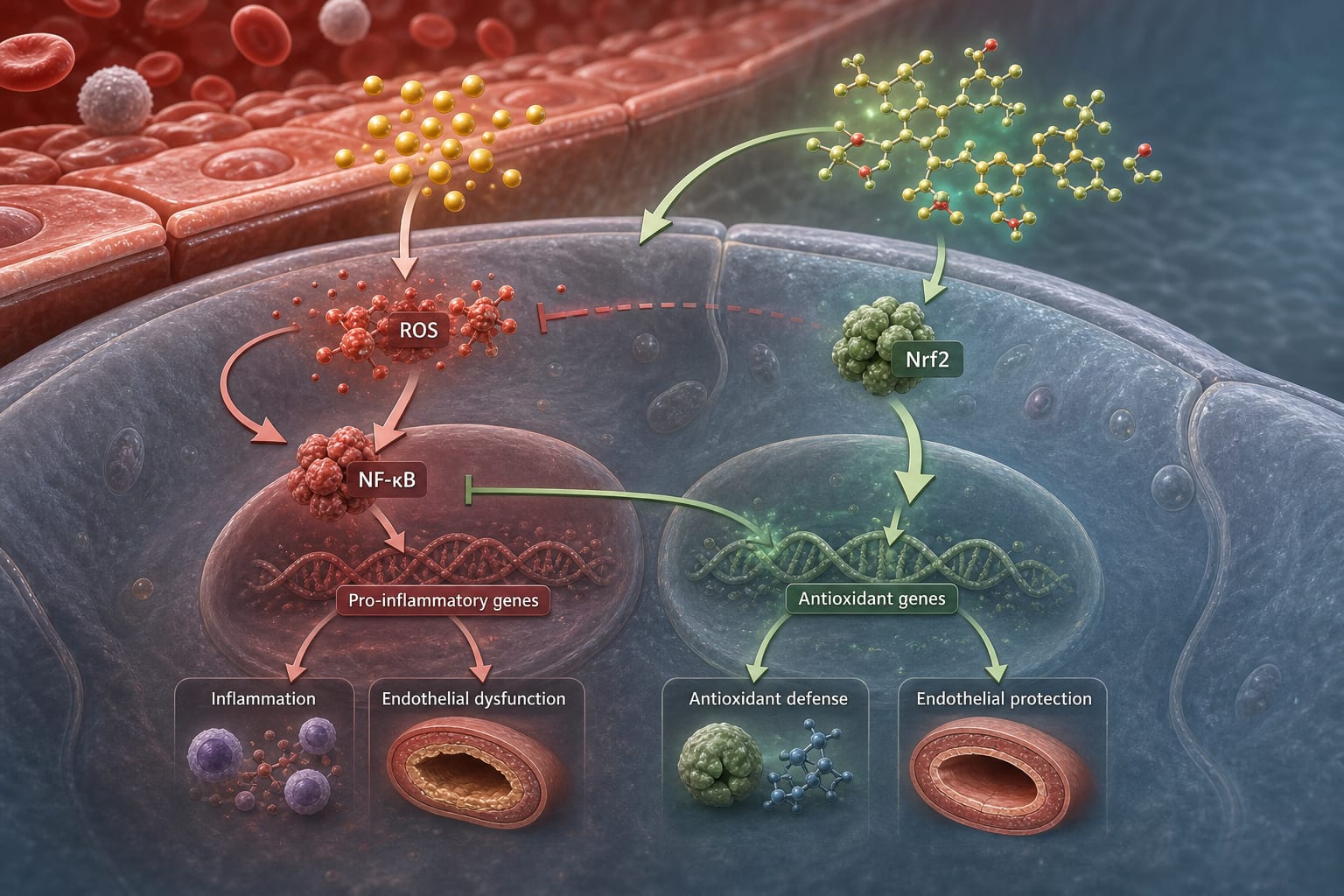
TF1 restored cellular redox homeostasis through direct free radical scavenging and activation of endogenous antioxidant defenses.
Transcriptomic analyses indicated TF1 enhanced antioxidant-related gene expression while suppressing inflammatory genes, underscoring its protective role.
Silencing Nrf2 weakened the protective effects of TF1, emphasizing its critical role in endothelial protection.
Interpretation:
Theaflavins, particularly TF1, act as natural modulators of FFA-driven oxidative-inflammatory injury, with a mechanism involving enhanced antioxidant responses and attenuation of NF-κB-related inflammatory signaling, highlighting TF1's significance in endothelial protection.
Limitations:
Existing evidence primarily focuses on total theaflavin mixtures or single subtypes, limiting understanding of structure-activity relationships and their implications.
Endothelial and hepatic effects are rarely compared under matched lipotoxic conditions, which may affect the generalizability of the findings.
Conclusion:
TF1 is the most potent subtype of theaflavins in protecting against FFA-induced endothelial dysfunction via an Nrf2-associated mechanism.