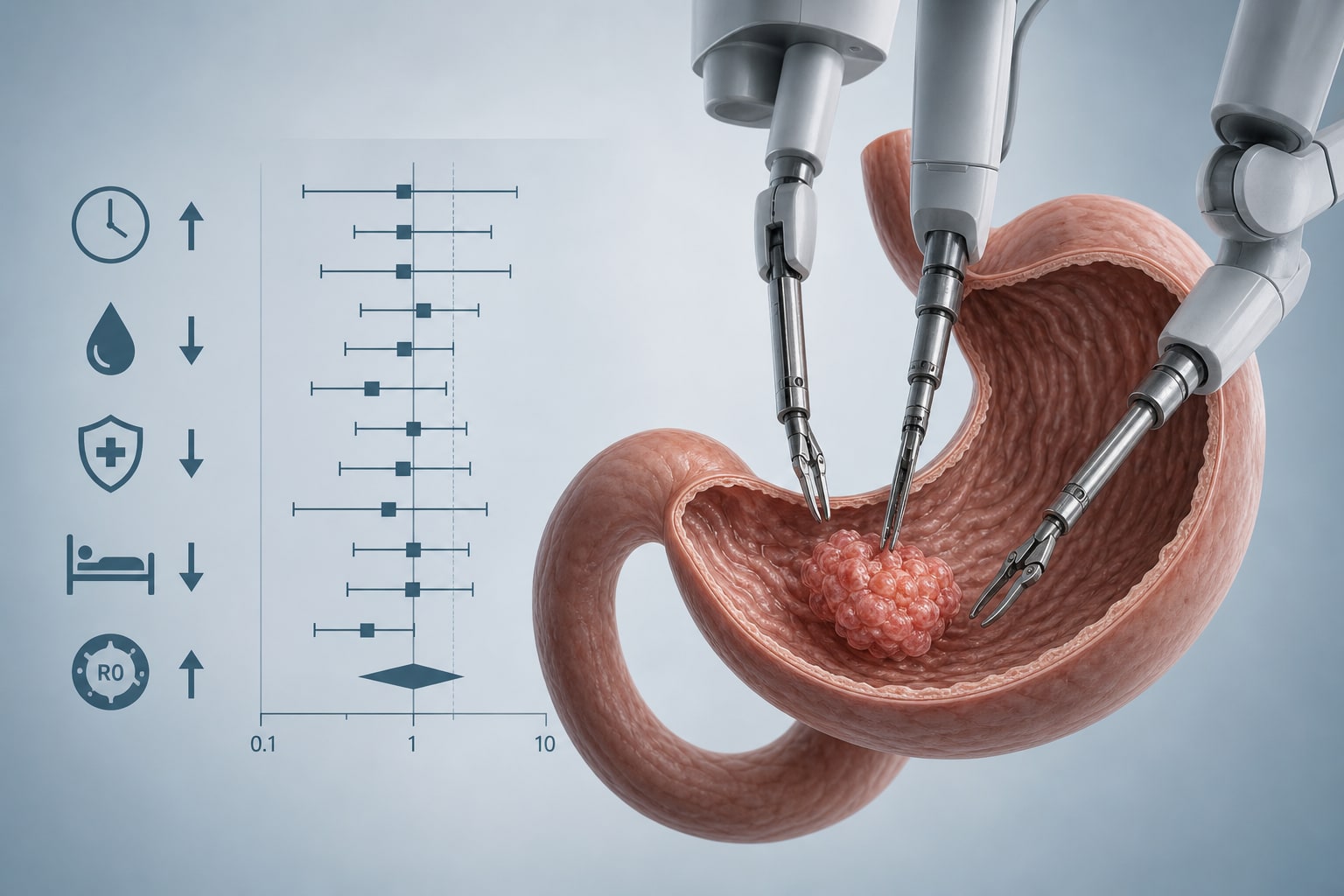
To evaluate the clinical application value of robot-assisted gastrectomy (RG) compared to open gastrectomy (OG) in gastric cancer management.
Key Findings:
RG had a longer operative time (WMD: 93.4; 95% CI: 65.89–120.9; P < 0.001).
RG resulted in less blood loss (WMD: -86.71; 95% CI: -120.91–-52.52; P < 0.001).
Patients undergoing RG had a shorter hospital stay (WMD: -3.17 days; 95% CI: -4.17–-2.16; P < 0.001).
RG had a lower postoperative complication rate (OR: 0.61; 95% CI: 0.43–0.87; P = 0.006).
RG achieved a higher R0 resection rate (OR: 1.88; 95% CI: 1.57–2.24; P = 0.000).
No significant differences were found in lymph nodes, positive lymph nodes, postoperative mortality, or 5-year survival.
Interpretation:
RG is a reasonable choice for proficient robotic surgery centers, balancing invasiveness and oncological precision.
Limitations:
The study lacks evaluation of long-term outcomes.
There is a limited number of studies directly comparing oncological outcomes between RG and OG.
Conclusion:
Future studies should focus on long-term outcomes and quality of life, including randomized controlled trials and cohort studies, to guide clinical decision-making.