To delineate multimodal neuroimaging abnormalities in prolonged disorders of consciousness (pDoC), integrating structural and functional aspects, and identify potential neuroimaging biomarkers.
Key Findings:
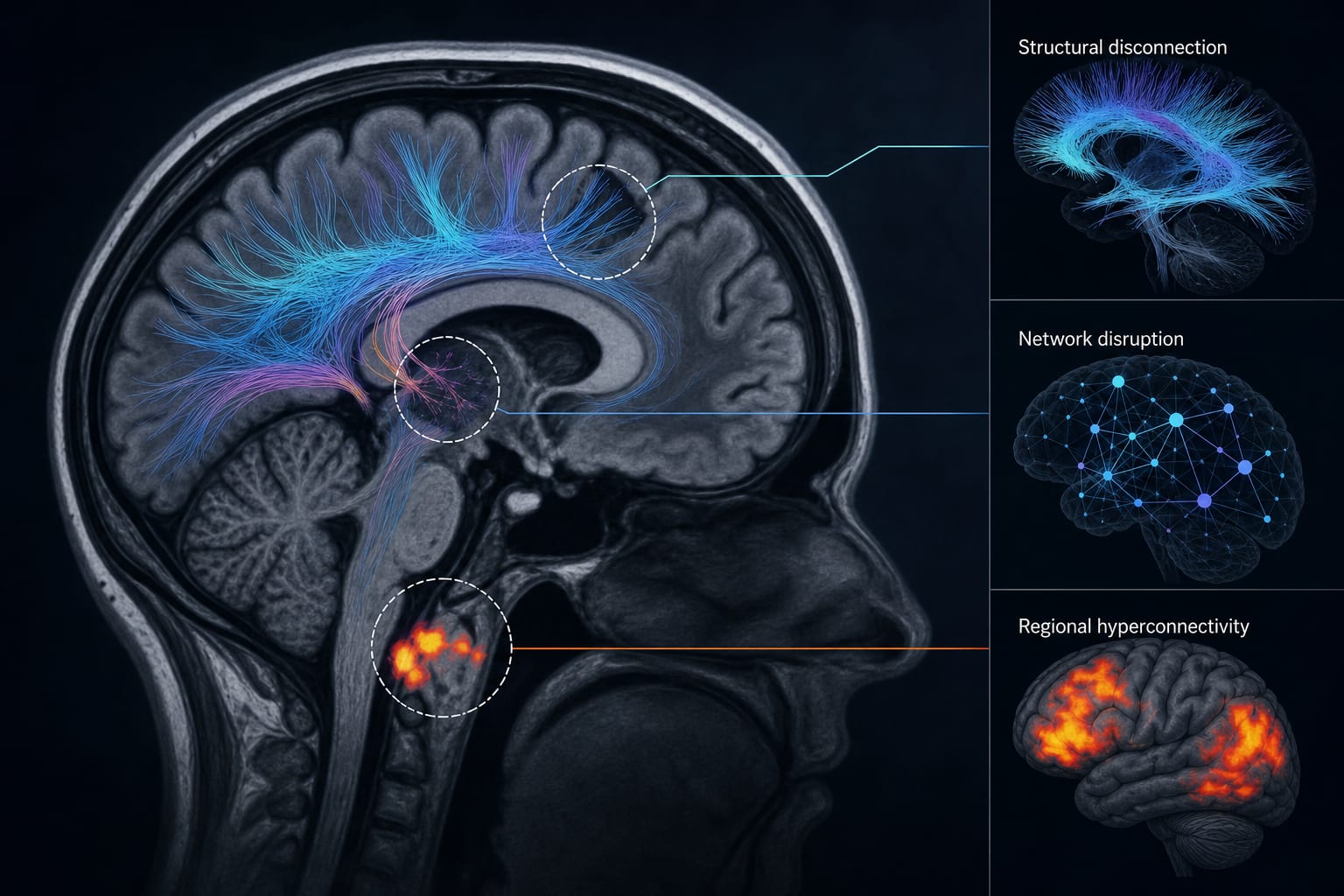
pDoC patients exhibited reduced FA in the left anterior corona radiata (ACR-L) (p < 0.05).
Altered ALFF/fALFF/ReHo in prefrontal, cerebellar, and limbic regions (p < 0.05).
Disrupted FC within higher-order cortical networks (p < 0.05).
CRS-R scores positively correlated with ACR-L FA and prefrontal ReHo (p < 0.05).
CRS-R scores negatively correlated with cerebellar and limbic hyperactivity (p < 0.05).
Interpretation:
Patients with pDoC demonstrate three simultaneous tiers of pathological co-alterations: extensive white matter structural disruption, disintegration of higher-order cortical networks, and patterns of hyperactivity and hyperconnectivity in specific brain regions, providing insights into the mechanisms underlying consciousness impairment.
Limitations:
The study sample size was relatively small, which may limit the generalizability of the findings.
Findings may not generalize to all pDoC patients.
Conclusion:
The neuroimaging biomarkers identified facilitate objective assessment and prognostic evaluation of pDoC.