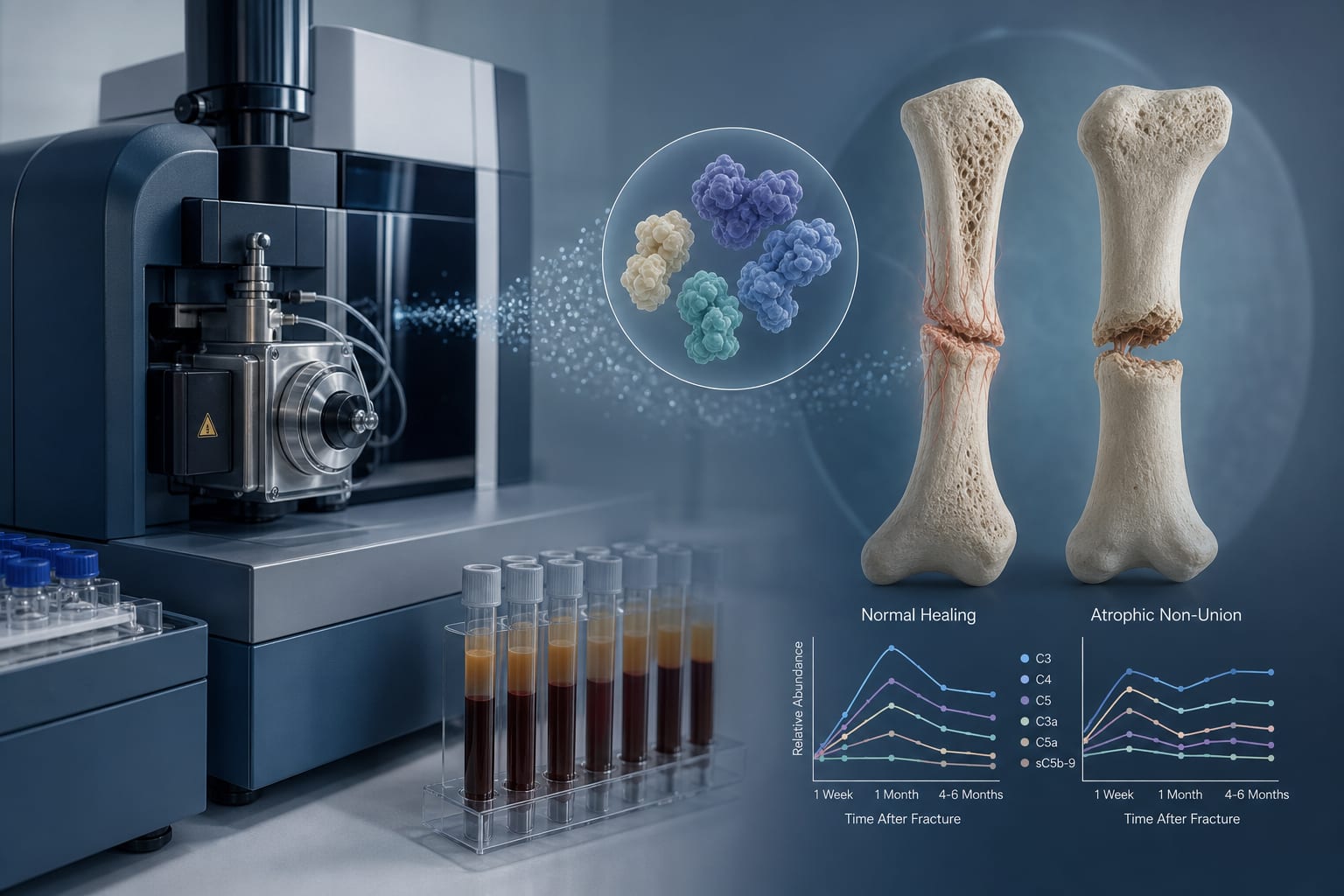
To investigate the activation levels of the serum complement system during the healing phases of normal long bone fractures and in patients with fracture non-union, highlighting its significance in human fractures.
Key Findings:
C1s and C1r levels increased during the inflammatory phase of normal healing but decreased later.
Serum levels of C3, C3a, and C9 were significantly higher in the inflammatory phase compared to other phases.
No significant differences were found for other complement components across the healing phases.
MASP1 levels were significantly higher in non-union patients compared to normal healers and healthy controls.
IPA analysis linked MASP1 to damage in bone and cartilage.
Interpretation:
The study indicates temporal changes in the serum complement system during fracture healing, with significant activation during the inflammatory phase and elevated MASP1 levels in non-union cases, suggesting potential clinical implications.
Limitations:
The study primarily focuses on serum complement levels without detailed exploration of local bone tissue responses, which may limit understanding of the full healing process.
The sample size and diversity of patient demographics were not specified, potentially affecting the generalizability of the findings.
Conclusion:
The findings suggest potential roles for complement system components as biomarkers and therapeutic targets in bone injuries and diseases, warranting further research.
UCI Health surgeons are among the earliest adopters in Orange County to use carbon fiber implants for complex spine reconstruction following tumor removal.
These 10 states make it more practical for physicians to participate in hospital ownership by aligning statutory structure, corporate practice of medicine rules, and population trends.