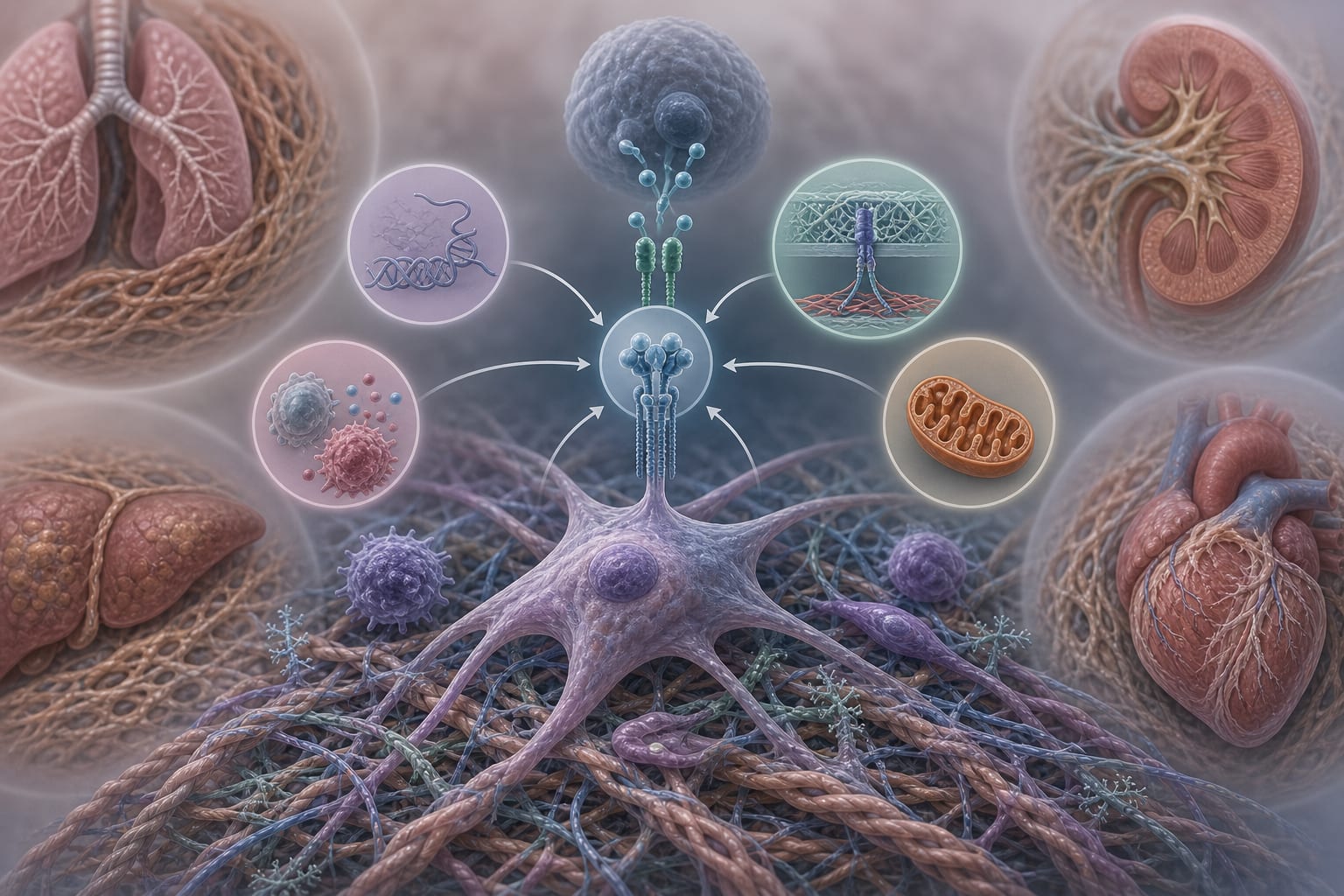
To uncover shared principles underlying pathological remodeling in different organs and provide a theoretical foundation for targeted intervention strategies across diseases.
Key Findings:
Pathological tissue remodeling is driven by persistent inflammation and dysregulation of ECM synthesis and degradation.
Fibroblast activation is central to remodeling, transforming from quiescent to myofibroblast states that produce excessive ECM.
Emerging regulatory networks, including mechanotransduction and metabolic reprogramming, play critical roles in tissue remodeling, with specific examples highlighted.
Interpretation:
The review synthesizes both classical and emerging mechanisms of tissue remodeling, highlighting the complexity and interconnectivity of these pathways.
Limitations:
The review primarily focuses on known mechanisms and may not encompass all potential pathways involved in tissue remodeling, indicating a need for further exploration.
Emerging mechanisms are still under investigation, and further research is needed to fully understand their roles.
Conclusion:
Understanding the shared mechanisms of tissue remodeling can facilitate the identification of therapeutic targets and innovative intervention strategies, emphasizing their importance in clinical applications.