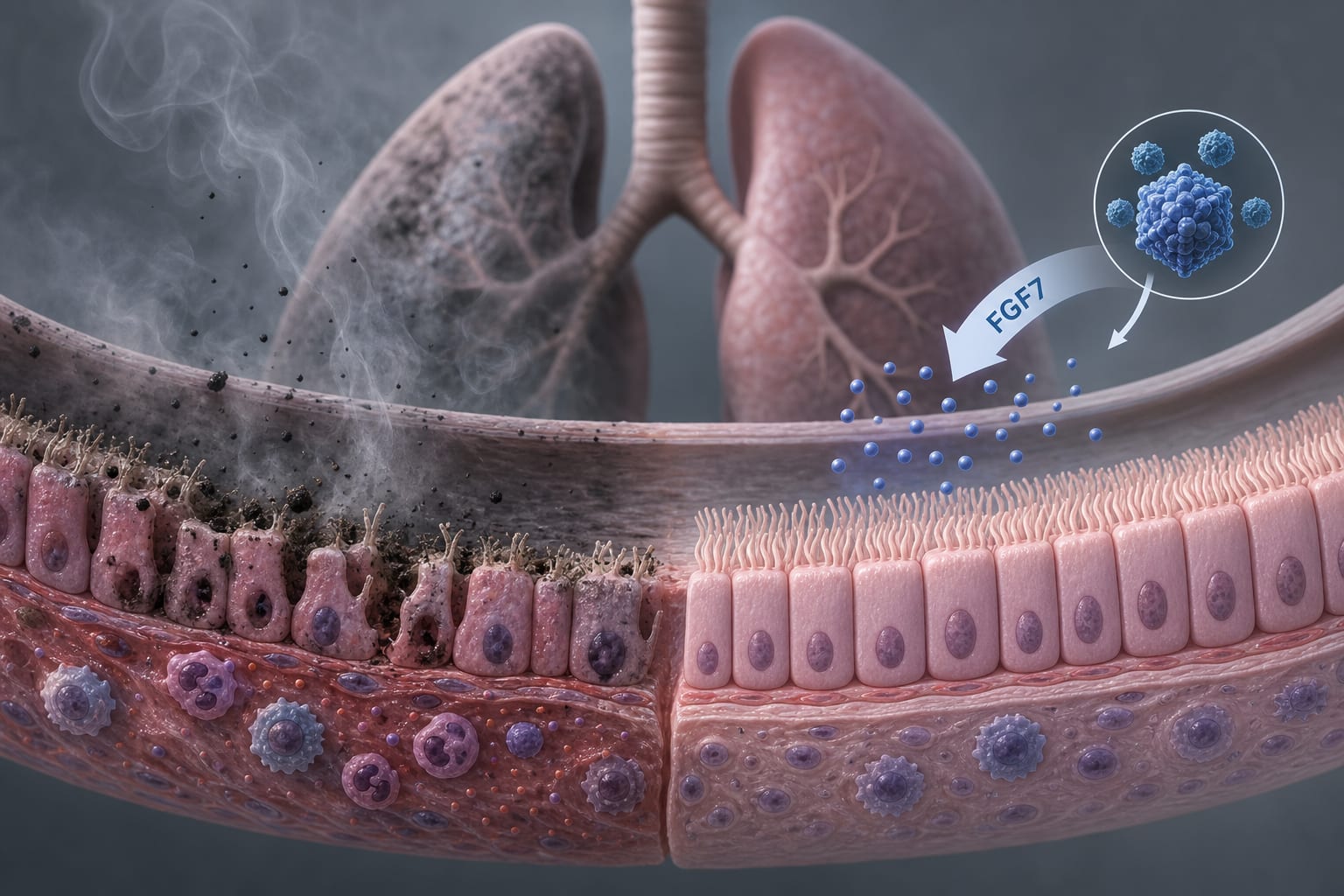
To investigate the role of FGF7 in protecting airway epithelial cells from cigarette smoke-induced injury in COPD, focusing on specific signaling mechanisms.
Key Findings:
COPD patients showed increased FGF7 levels in lung tissues but decreased levels in serum.
AAV-FGF7 administration improved lung function and reduced inflammation and fibrosis in the rat model.
Knockdown of FGF7 exacerbated airway inflammation and tissue damage.
FGF7 activated ADAM17 and EGFR signaling pathways, enhancing cell viability and migration in 16HBE cells.
Interpretation:
FGF7 mitigates cigarette smoke-induced airway epithelial damage and inflammation through specific signaling pathways, suggesting its potential as a therapeutic target in COPD management.
Limitations:
The study primarily focuses on animal and cell models, which may not fully replicate human COPD pathology, necessitating further validation in human studies.
The long-term effects and safety of FGF7 as a therapeutic agent require comprehensive investigation.
Conclusion:
FGF7 is upregulated in COPD lung tissues and plays a protective role against airway damage, highlighting its potential as a therapeutic target for COPD.