Chronic military stress and glandular epithelial tumor biology: an integrative neuroendocrine–inflammatory framework with insights from microgravity gene discovery - Summary - MDSpire
Advertisement
Chronic military stress and glandular epithelial tumor biology: an integrative neuroendocrine–inflammatory framework with insights from microgravity gene discovery
To review the relationship between chronic military stress and key molecular factors influencing the development of PTSD and glandular epithelial tumors, emphasizing their interconnection.
Key Findings:
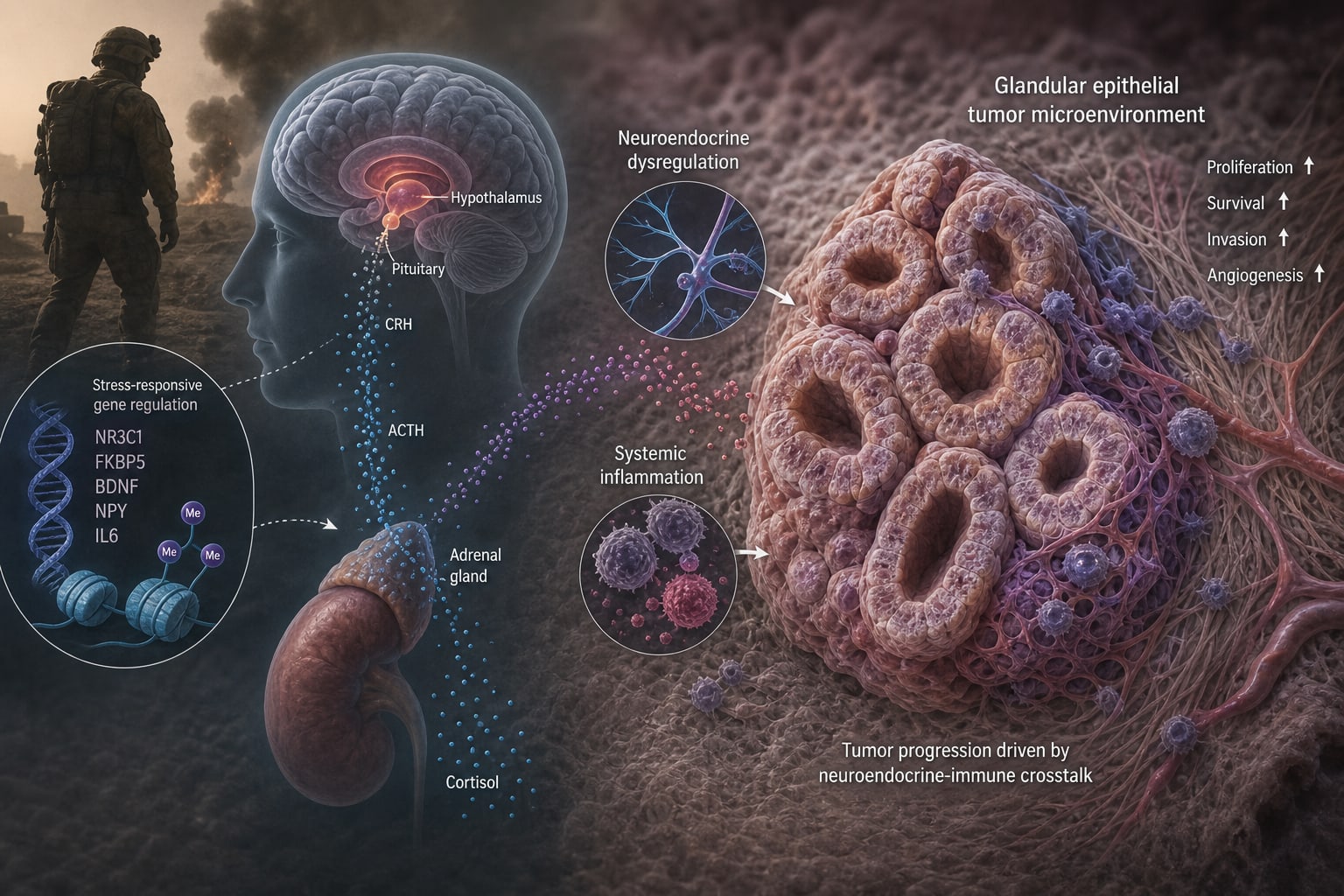
Chronic military stress dysregulates neuroendocrine and inflammatory pathways, contributing to PTSD and facilitating tumor progression.
Key molecules such as NR3C1, FKBP5, BDNF, NPY, and IL6 are implicated in both stress responses and tumor progression, with specific mechanisms outlined.
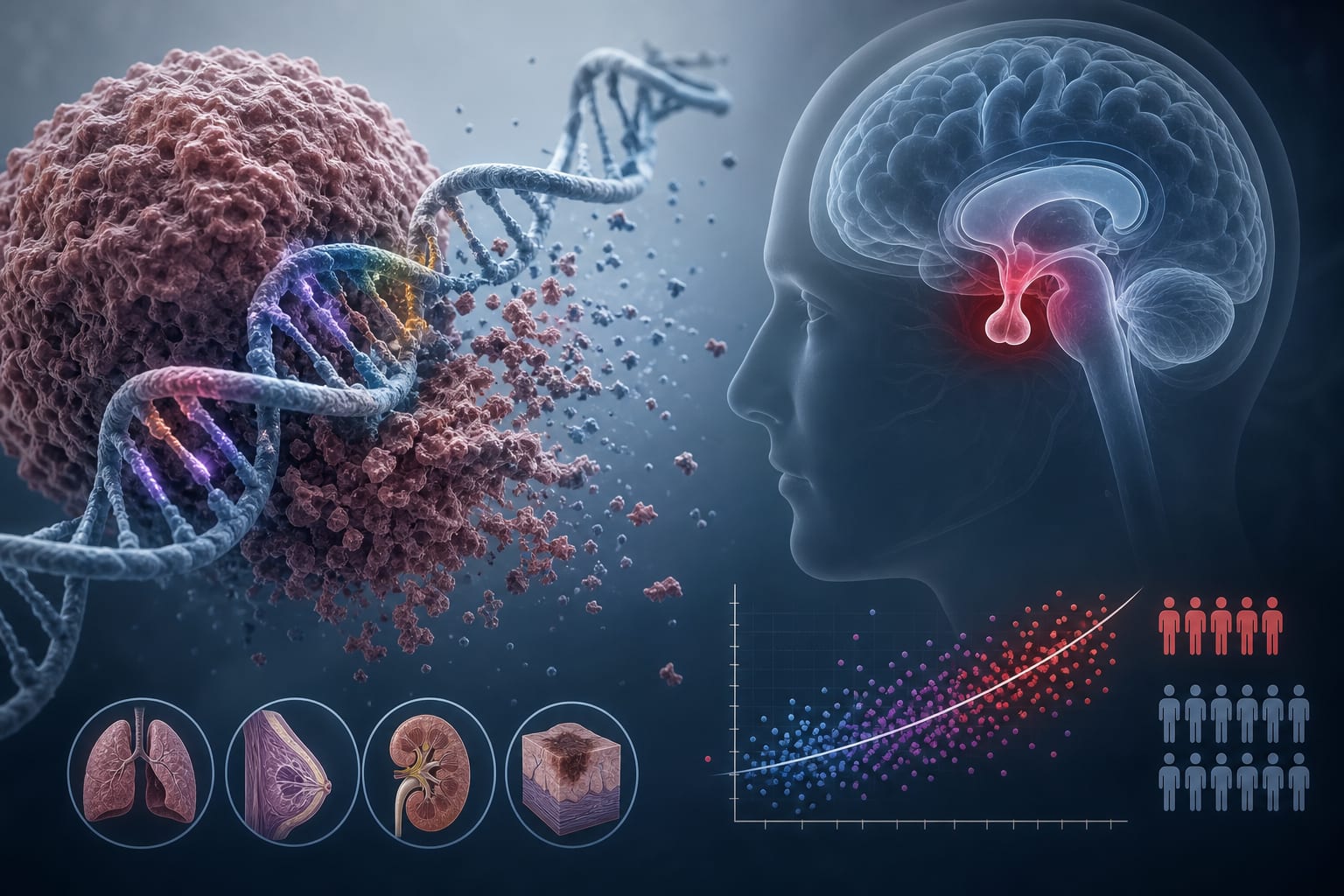
Oncogenic vulnerabilities in human tumors are associated with genes identified in microgravity studies, highlighting translational relevance.
Interpretation:
The systemic effects of prolonged military stress may exploit vulnerabilities in epithelial tumors, suggesting a direct link between stress and cancer progression through specific molecular pathways.
Limitations:
The study primarily focuses on molecular mechanisms without extensive clinical data, which may limit applicability.
Findings from model organisms may not fully translate to human biology, necessitating further research.
Conclusion:
Understanding the interplay between chronic stress and tumor biology is crucial for developing predictive biomarkers and targeted therapies, particularly for high-risk military populations.
by David Laván, Natalia Argüelles, Rosa Rea, José Morales, Sofia Montes, Daniel Huaman, Alexis Lluncor, Juan Moyano, Milton Peña, Vilma Herencia-Reyes, Alcides Guerra, Gabriela Calderón, José M. Vela-Ruiz, Aly Gallo