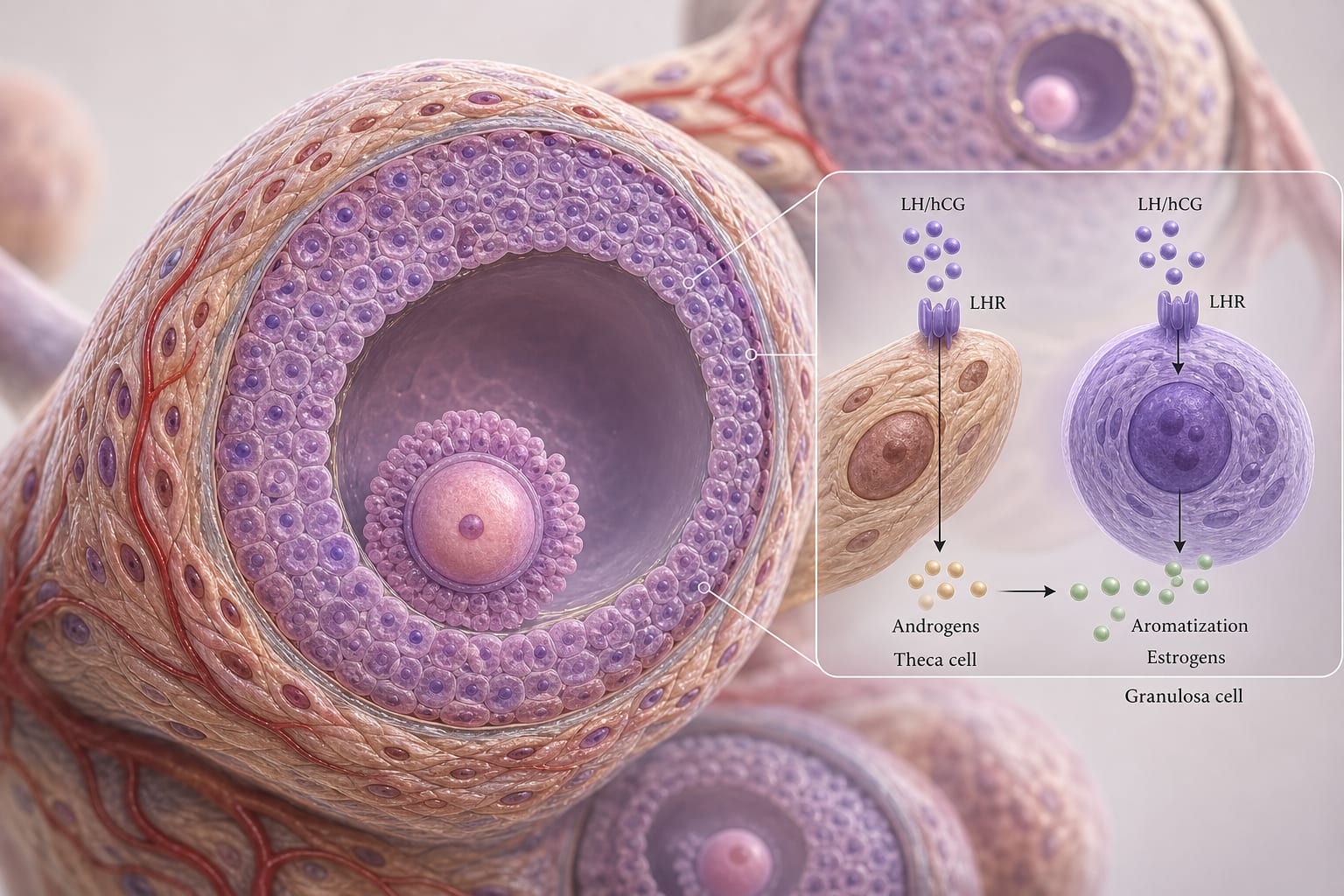
To provide a new mechanistic interpretation of the published data from the Rainbow RCT and formulate a hypothesis explaining divergent hormonal responses and reproductive outcomes, specifically focusing on LHR dynamics.
Key Findings:
Increasing doses of recombinant hCG resulted in a dose-dependent reduction in good-quality blastocysts and ongoing pregnancy rates.
Androstenedione, 17-OH-progesterone, testosterone, and oestradiol increased dose-dependently, while progesterone, inhibin-A, and inhibin-B declined.
Findings suggest attenuation of GC function by recombinant hCG despite preserved TC activity.
Interpretation:
The divergent hormonal responses reflect differences in LHR expression, density, and downstream signaling between GCs and TCs. Constant exposure to recombinant hCG alters receptor dynamics, impacting GC function.
Limitations:
Limited understanding of LHR function and activation in human follicles, particularly in vivo.
Complexities in studying LHR function during the follicular phase, including variations in receptor expression and hormonal interactions.
Conclusion:
The Rainbow RCT provides evidence supporting temporal and cell type-specific differences in LHR function in human TCs and GCs, highlighting the need for further investigation into LHR regulation and receptor dynamics to optimize ovarian stimulation protocols.