Endovascular Conversion of a Failed Fenestrated Anaconda Endograft Using a Branched Custom-Made Device - Takeaways - MDSpire

Endovascular Conversion of a Failed Fenestrated Anaconda Endograft Using a Branched Custom-Made Device

  • By

  • Alexia-Vasiliki Amvrazi

  • Baban Assaf

  • Natasha Hasemaki

  • Jan Stana

  • Ryan Gouveia E Melo

  • Nikolaos Tsilimparis

  • June 8, 2026

  • 0 min

Share

  • 1

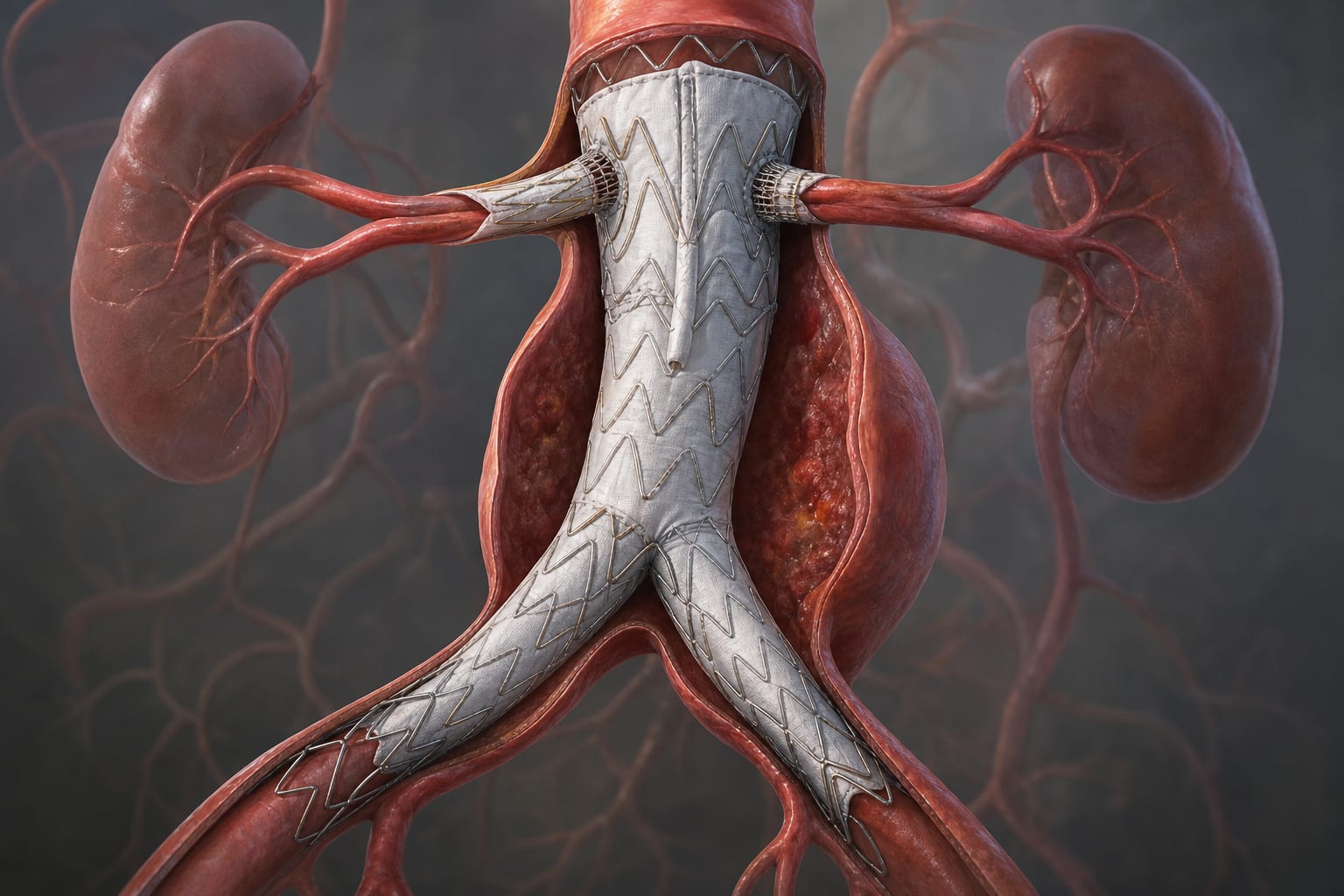
    Fenestrated and branched endovascular aneurysm repair are preferred for complex abdominal aortic pathologies in high-risk patients.

  • 2

    A 66-year-old male with a type Ia endoleak after fEVAR was treated with a custom branched device due to his high surgical risk.

  • 3

    The patient's complex medical history included coronary artery disease, diabetes, and peripheral artery disease, complicating surgical options.

  • 4

    A custom-made 5-branched device was selected to address anatomical challenges from the previous Anaconda graft.

  • 5

    The procedure utilized general anesthesia, bilateral femoral access, and advanced imaging techniques for successful device deployment.

Original Source(s)

Related Content