Plasticity and antigen presentation by group 3 innate lymphoid cells in colorectal cancer - Takeaways - MDSpire

Plasticity and antigen presentation by group 3 innate lymphoid cells in colorectal cancer

  • By

  • Lu Qiao

  • Jingwen Zhang

  • Jiaxi Li

  • Xia Li

  • Xiaoxia He

  • Mingyu Zhang

  • Jingkun Lu

  • Xuan Zhang

  • Jing Dong

  • Gesi Tao

  • Yue Wang

  • Jiaxian Cui

  • Lili Bao

  • Pengwei Zhao

  • June 9, 2026

  • 0 min

Share

  • 1

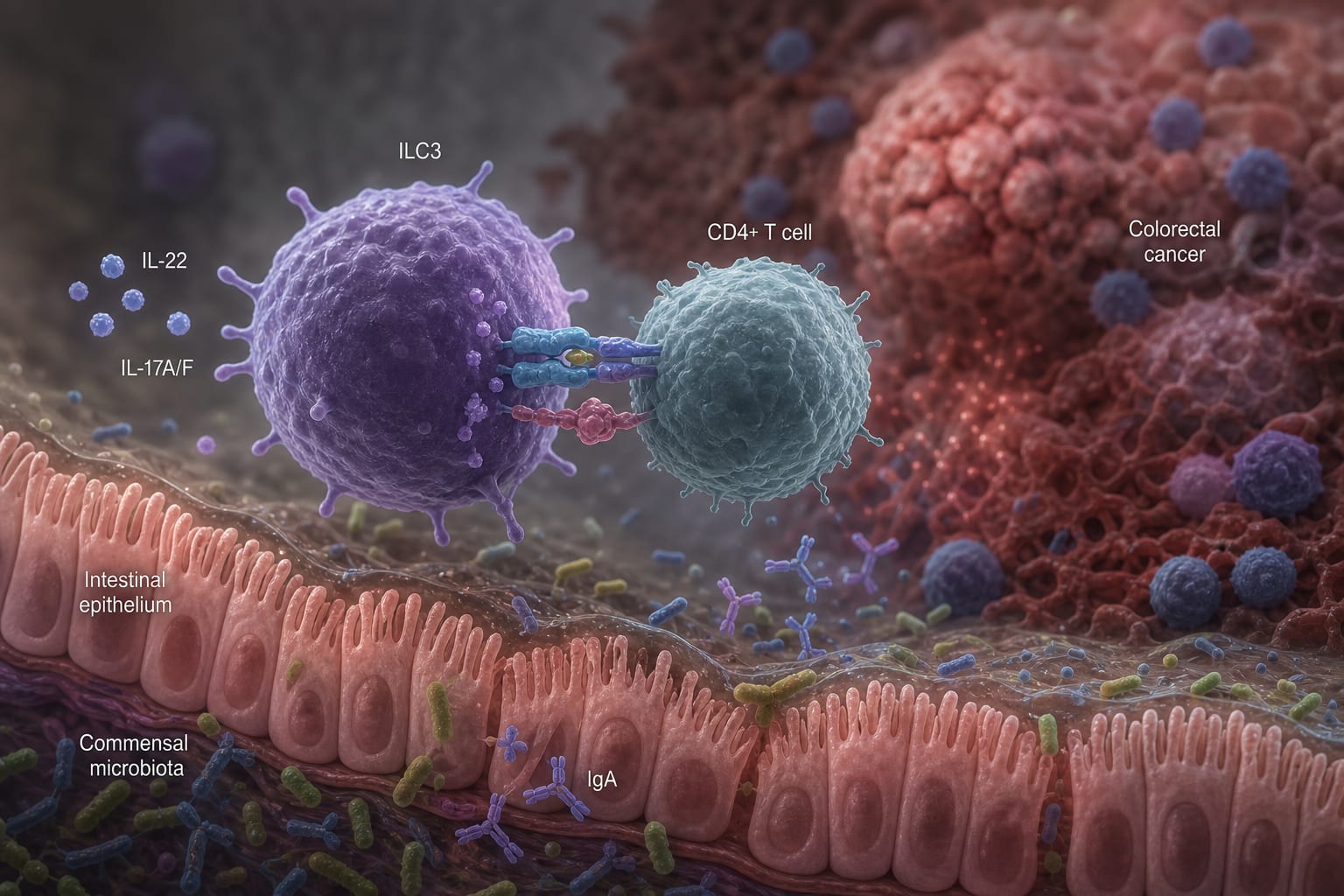
    Colorectal cancer develops within a mucosal ecosystem influenced by microbiota, epithelial barriers, and group 3 innate lymphoid cells (ILC3).

  • 2

    ILC3 exhibit plasticity that allows them to switch between tissue-protective and inflammatory states, impacting tumor behavior and immune responses.

  • 3

    MHC II-dependent antigen presentation by ILC3 is crucial for effective CD4+ T cell and IgA responses against microbiota-associated antigens.

  • 4

    Chronic inflammation and dysbiosis in CRC lead to barrier-damaging ILC3 programs, correlating with aggressive tumor behavior and poor immune checkpoint therapy responses.

  • 5

    The review proposes a tri-directional framework for understanding ILC3 plasticity, antigen presentation, and the epithelium-microbiota barrier in CRC.

Original Source(s)

Related Content