Theaflavins counteract free fatty acid-driven oxidative-inflammatory injury in endothelial cells through Nrf2-NF-κB axis - Takeaways - MDSpire

Theaflavins counteract free fatty acid-driven oxidative-inflammatory injury in endothelial cells through Nrf2-NF-κB axis

  • By

  • Yufei Zhao

  • Biao Qu

  • June 9, 2026

  • 0 min

Share

  • 1

    Chronically elevated free fatty acids (FFAs) induce oxidative stress and inflammation, contributing to endothelial dysfunction and metabolic diseases.

  • 2

    Theaflavins (TFs) from black tea exhibit antioxidant and anti-inflammatory properties, with TF1 showing the strongest protective effects against FFA-induced damage.

  • 3

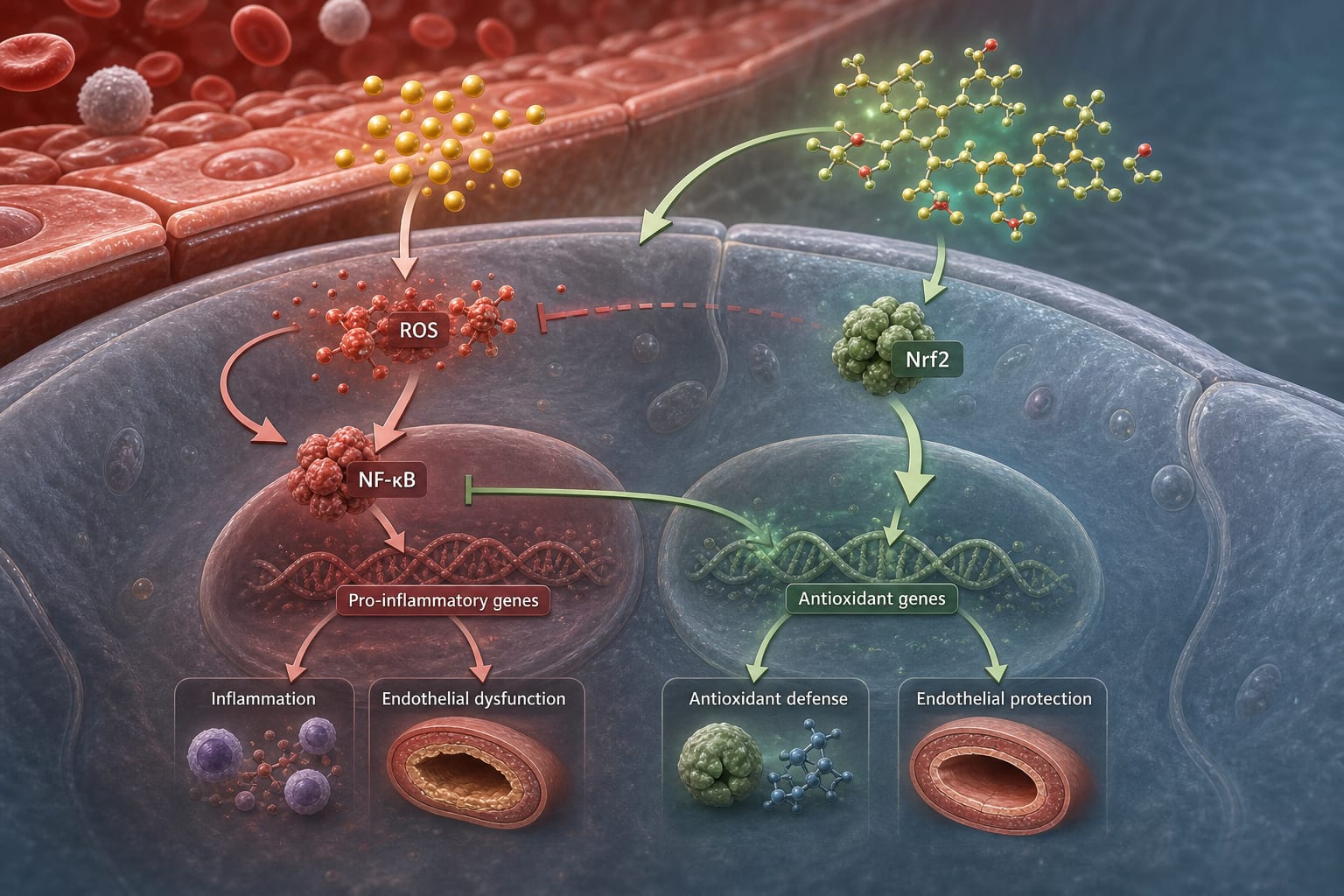
    TF1 mitigates oxidative stress by enhancing antioxidant defenses and suppressing inflammatory gene expression through the Nrf2-NF-κB pathway.

  • 4

    TF1 promotes Nrf2 nuclear translocation and HO-1 expression while reducing mitochondrial ROS and NF-κB activation, supporting endothelial protection.

  • 5

    The study highlights TFs as potential natural modulators of FFA-induced oxidative-inflammatory injury, with TF1 being the most effective subtype.

Original Source(s)

Related Content