Chronic military stress and glandular epithelial tumor biology: an integrative neuroendocrine–inflammatory framework with insights from microgravity gene discovery - Takeaways - MDSpire

Chronic military stress and glandular epithelial tumor biology: an integrative neuroendocrine–inflammatory framework with insights from microgravity gene discovery

  • By

  • David Laván

  • Natalia Argüelles

  • Rosa Rea

  • José Morales

  • Sofia Montes

  • Daniel Huaman

  • Alexis Lluncor

  • Juan Moyano

  • Milton Peña

  • Vilma Herencia-Reyes

  • Alcides Guerra

  • Gabriela Calderón

  • José M. Vela-Ruiz

  • Aly Gallo

  • June 9, 2026

  • 0 min

Share

  • 1

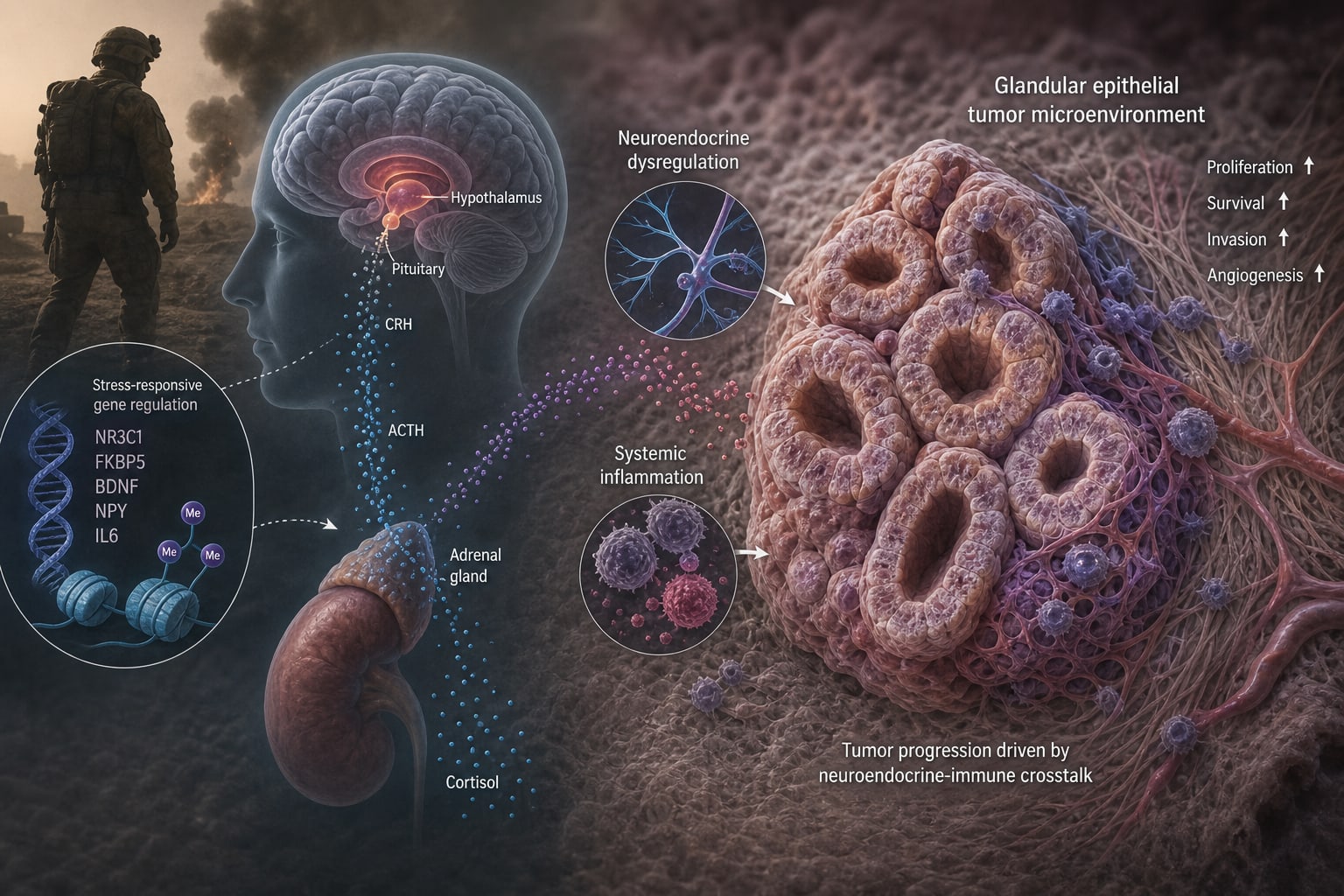
    Prolonged military stress can lead to PTSD, which is linked to dysregulation of neuroendocrine and inflammatory pathways.

  • 2

    Chronic stress is associated with increased incidence of glandular epithelial tumors, including hepatocellular carcinoma and prostatic adenocarcinoma.

  • 3

    Key molecules such as NR3C1, FKBP5, and IL-6 play critical roles in the relationship between chronic stress and tumor biology.

  • 4

    The glucocorticoid receptor and FKBP5 influence metabolic and proliferative networks, affecting cancer progression under chronic stress.

  • 5

    Understanding the interplay between stress and tumor dynamics is essential for developing targeted therapies in high-risk populations.

Original Source(s)

Related Content