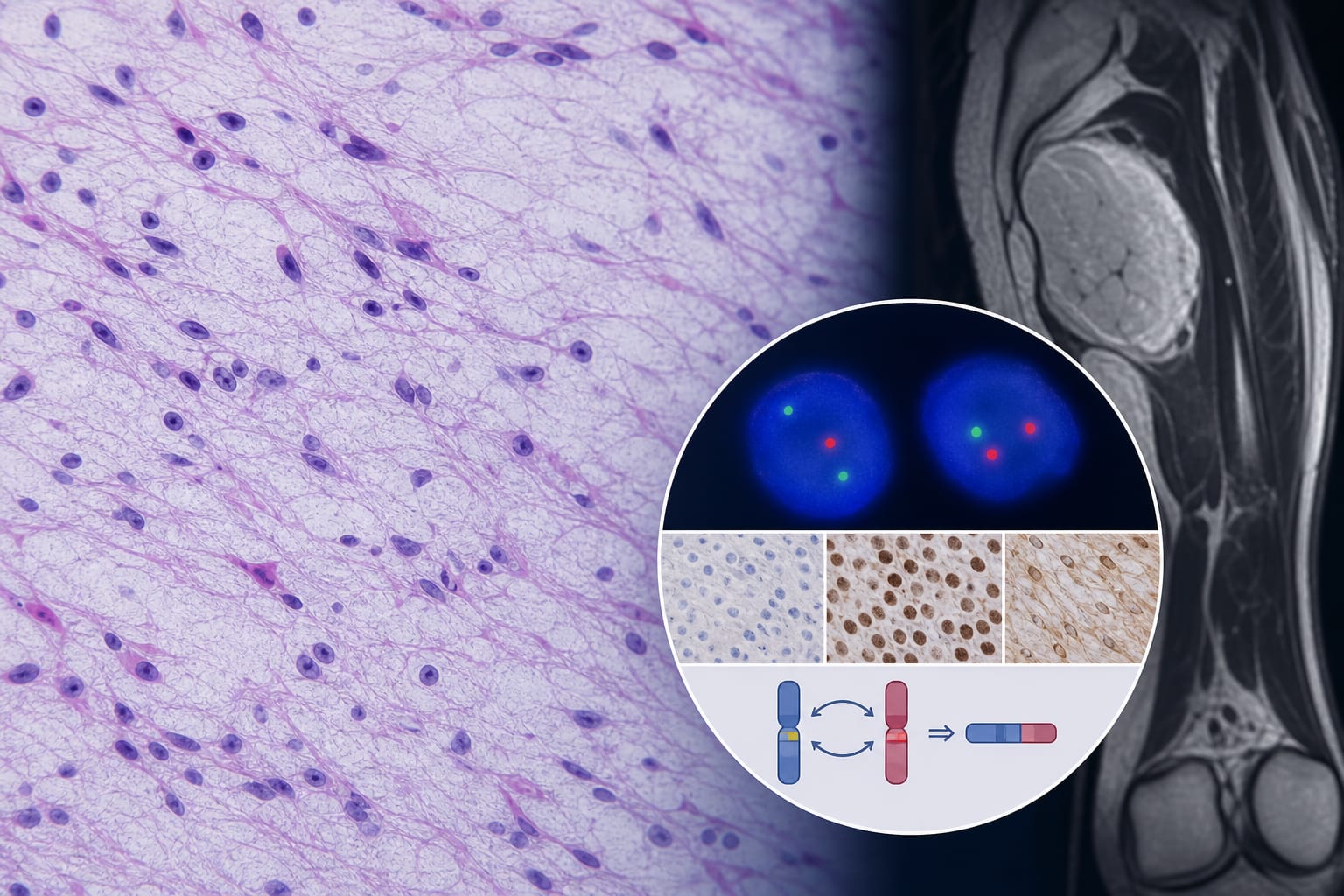
Clinical Report: Beating Tissue Failure in Oncology
Overview
Revise to focus solely on the development of the AI-powered platform without implications about clinical trial efficiency.
Background
Tissue failure in oncology occurs when biopsy samples are insufficient for molecular characterization, leading to missed opportunities for targeted therapies. In the US, 75% of patients do not receive next-generation sequencing (NGS) testing, a figure that rises to 98% outside the US, primarily due to cost and access issues. Addressing these challenges is crucial for advancing precision medicine in oncology.
Data Highlights
No numerical data provided in the source material.
Key Findings
- 25% of oncology cases in the US exhaust biopsy tissue before molecular characterization.
- 75% of patients in the US and 98% outside the US do not receive NGS-based mutational testing.
- The Imagenomix Predict platform can prescreen for actionable mutations, potentially reducing costs and accelerating treatment.
- AI prescreening can significantly improve clinical trial efficiency by preserving tissue for molecular testing.
- The platform can run mutation scans in about three minutes, compared to 7-14 days for NGS tests.
Clinical Implications
The AI-driven platform could enhance the diagnostic workflow by preserving biopsy tissue and reducing costs associated with molecular testing. This may lead to faster identification of actionable mutations, improving patient outcomes in oncology.
Conclusion
The integration of AI in molecular oncology has the potential to overcome significant barriers in cancer diagnostics and treatment, ultimately improving access to precision medicine.
Related Resources & Content
- Imagenomix, Source, 2023 -- Beating Tissue Failure in Oncology
- conexiant — And the Beat Goes On
- Clinical Research in Cardiology — Cardio-Oncology: Balancing Anticancer Therapy and Cardiovascular Health Outcomes
- Basic Research in Cardiology — Cardiac Impairment Associated with Cancer and Its Treatments: Emerging Strategies for Preventing Long-Term Cardiotoxic Effects
- The ASCO Post — Patient and Survivor Care Studies Yield Useful Results to Improve Quality of Life Related Articles
- And the Beat Goes On
- Cardio-Oncology: Balancing Anticancer Therapy and Cardiovascular Health Outcomes
- Cardiac Impairment Associated with Cancer and Its Treatments: Emerging Strategies for Preventing Long-Term Cardiotoxic Effects
- ESMO basic requirements for AI-based biomarkers in oncology (EBAI)
- NCCN Guidelines
- Systematic review and meta-analysis of deep learning for MSI-H in colorectal cancer whole slide images
- Accuracy of machine learning in diagnosing microsatellite instability in gastric cancer: A systematic review and meta-analysis - ScienceDirect
- Deepath-MSI: a clinic-ready deep learning model for microsatellite instability detection in colorectal cancer using whole-slide imaging | npj Precision Oncology
- Deep Gaussian process with uncertainty estimation for microsatellite instability and immunotherapy response prediction from histology | npj Digital Medicine
- Deep Learning Artificial Intelligence Predicts Homologous Recombination Deficiency and Platinum Response From Histologic Slides - PMC
- Epidemiology, pathogenesis, biology and evolving management of MSI-H/dMMR cancers | Nature Reviews Clinical Oncology
- EMQN best practice guidelines for analysis and reporting of microsatellite instability in solid tumours - PMC
This content is an AI-generated, fully rewritten summary based on a published scholarly article. It does not reproduce the original text and is not a substitute for the original publication. Readers are encouraged to consult the source for full context, data, and methodology.