Clinical Report: Mapping Cancer Through Cell Surface Sugars
Overview
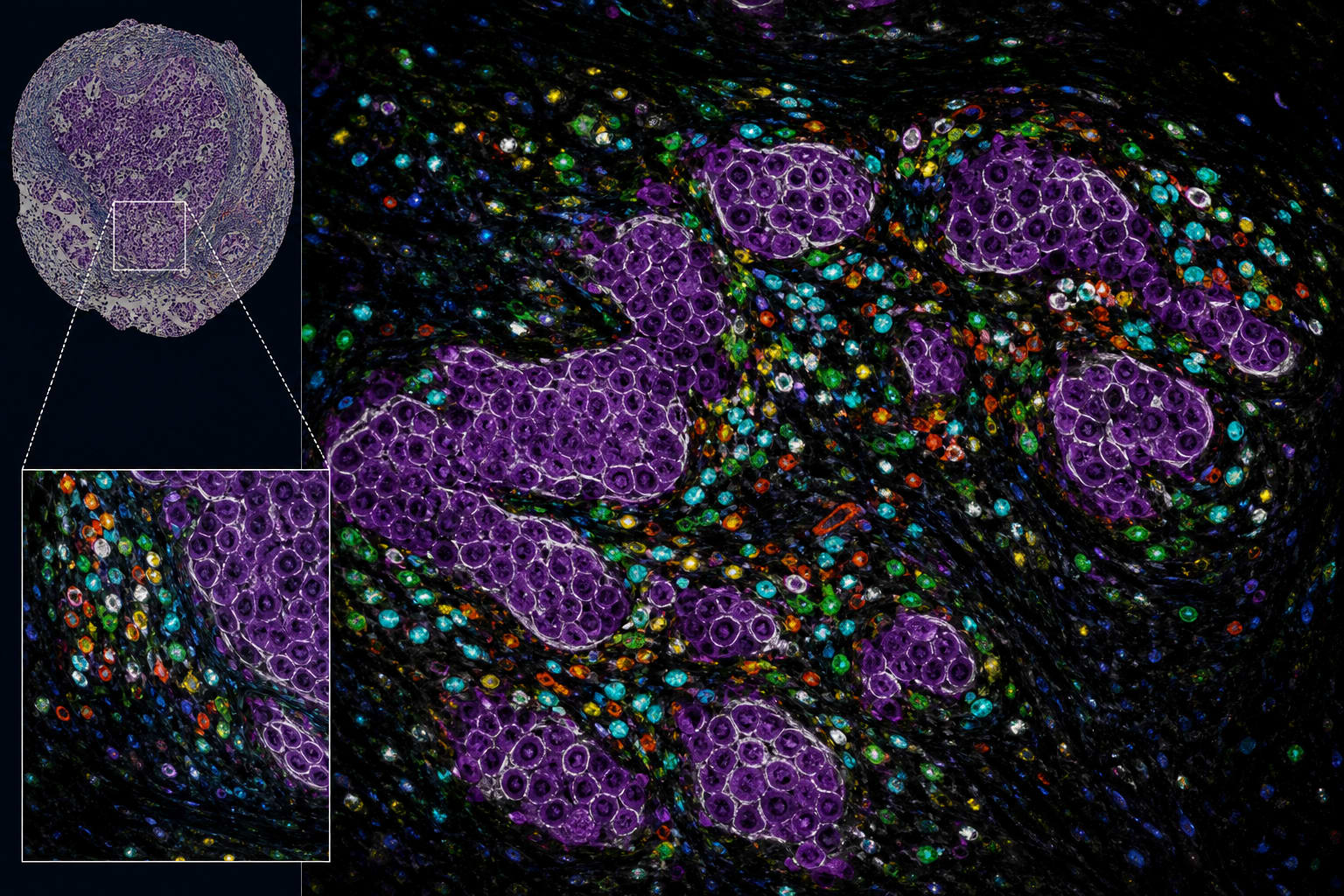
A novel microscopy-based method called 'glycan atlassing' has been developed to map the organization of glycans on cell surfaces at nanometer-scale resolution. This technique links glycan patterns to cellular behavior and disease states.
Background
Glycans, sugar molecules on cell surfaces, play critical roles in various biological processes, including immune signaling and cancer progression. Understanding their spatial organization is essential for elucidating tumor biology and immune responses. Traditional methods have struggled to provide the necessary resolution and spatial context.
Data Highlights
The study utilized a combination of DNA-tagged lectins, metabolic glycan labeling, and super-resolution microscopy to analyze glycan distribution in various cell types, including human breast cancer tissue.
Key Findings
- The glycan atlassing technique can distinguish different biological conditions based solely on glycan organization.
- Glycan patterns in breast epithelial cells varied between normal and transformed states, and during epithelial-to-mesenchymal transition.
- Immune cell activation led to rapid glycan reorganization, observable within minutes.
- Distinct glycan signatures were identified in activated CD4-positive T cells and neutrophils compared to resting cells.
- Human breast adenocarcinoma tissue exhibited different glycan organization patterns between tumor and non-tumor regions.
Clinical Implications
The technique's complexity and the need for specialized equipment currently limit its clinical application.
Conclusion
Glycan atlassing offers insights into the role of glycans in cellular behavior and disease states.
Related Resources & Content
- Glycan atlassing enables functional tracing of cell state, Nature Nanotechnology, 2026 -- Mapping Cancer Through Cell Surface Sugars
- the pathologist — A New Molecular Barcode for Cancer?
- The ASCO Post — Study Examines Role of Hyaluronic Acid in Pancreatic Cancer Growth
- Gastric Cancer — Cells Lacking E-cadherin Exhibit Synthetic Lethal Weaknesses in Plasma Membrane Structure, Dynamics, and Functionality
- Frontiers in Oncology — Methylation-regulated miR-374a-5p and miR-374b-5p Suppress Glycolysis and Malignant Progression of Head and Neck Squamous Cell Carcinoma by Targeting DEPDC1
- NCCN Guidelines for Patients: Pancreatic Cancer
- Quality statements | Ovarian cancer | Quality standards | NICE
- Hepatology
- The Role of AFP-L3 and DCP Biomarkers in the Diagnosis and Management of Hepatocellular Carcinoma
- 758 GLIMMER-01: phase 1/2 trial of a first-in-class bi-sialidase (E-602) in combination with cemiplimab in patients with PD-(L)1-resistant solid tumors | Journal for ImmunoTherapy of Cancer
- Palleon Pharmaceuticals Presents First-in-Class B7-H3 Targeted Sialidase at the 2026 AACR Annual Meeting
- Anti-Tumor Activities of Anti-Siglec-15 Chimeric Heavy-Chain Antibodies - PMC
- Glycan atlassing enables functional tracing of cell state | Nature Nanotechnology
This content is an AI-generated, fully rewritten summary based on a published scholarly article. It does not reproduce the original text and is not a substitute for the original publication. Readers are encouraged to consult the source for full context, data, and methodology.