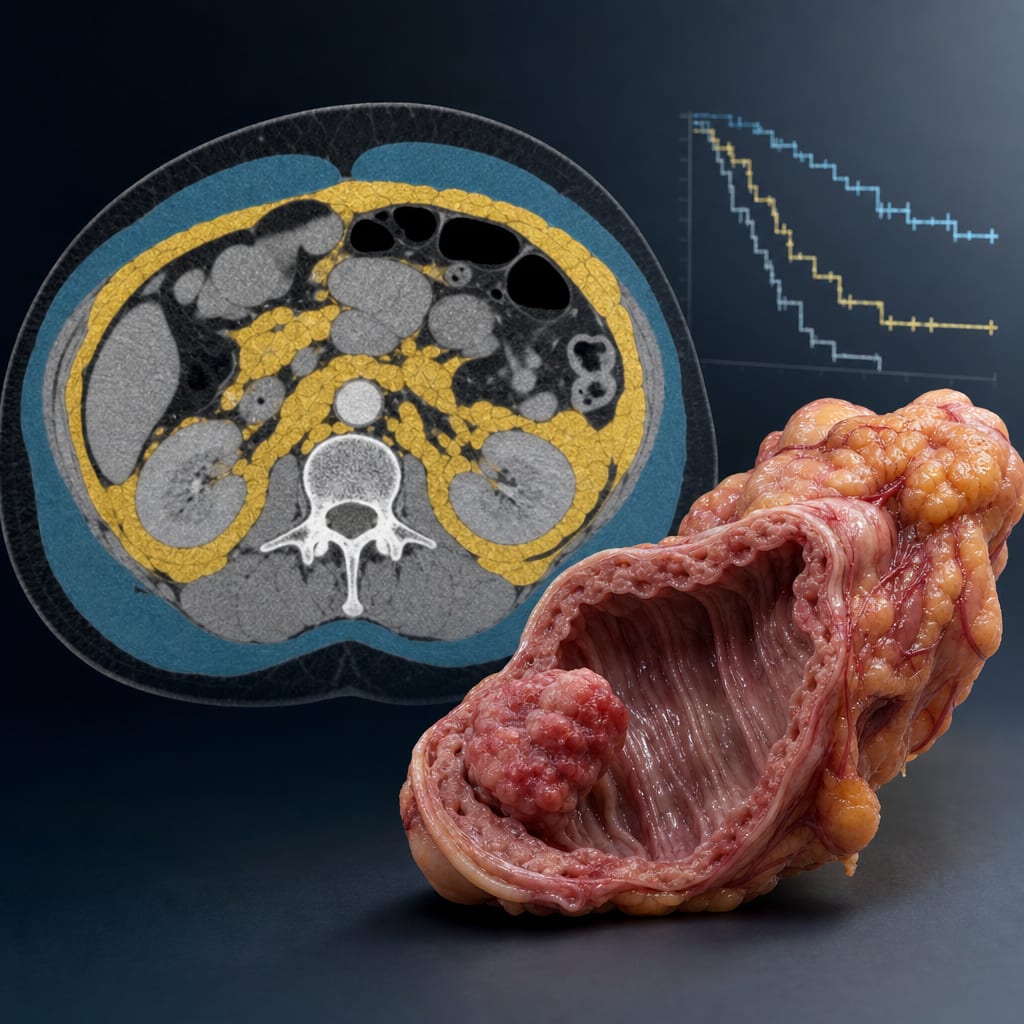
WHtR May Aid OSA Risk Screening
Overview
Expand on the implications of further validation and what broader application means.
Background
Obstructive sleep apnea (OSA) is a prevalent condition that poses significant health risks, including cardiovascular complications and impaired quality of life. Accurate screening methods are crucial for early identification and management of OSA, especially in high-risk populations. This study explores the utility of WHtR as a potential screening marker compared to traditional measures like body mass index (BMI).
Data Highlights
| Cohort | WHtR Odds Ratio for OSA | Area Under Curve (AUC) | Sensitivity | Specificity |
|---|---|---|---|---|
| NHANES | 2.8 | 0.86 (WHtR), 0.87 (Waist Circumference) | - | - |
| Tianjin Clinical Cohort | 12 | 0.88 (WHtR), 0.59 (BMI) | 93% | 81% |
Key Findings
- Each 0.1-unit increase in WHtR was associated with 2.8 times the odds of OSA in NHANES and 12 times in the clinical cohort.
- WHtR showed stronger discrimination for OSA than BMI in the clinical cohort (AUC 0.88 vs 0.59).
- At a WHtR cutoff of 0.501, sensitivity was 93% and specificity was 81% in the clinical cohort.
- Subgroup analyses indicated WHtR's predictive performance was consistent across genders and age groups.
- WHtR's performance varied by population, with different analytic inflection points identified.
- Limitations include potential misclassification of OSA and the need for external validation of WHtR cutoffs.
Clinical Implications
WHtR may serve as a valuable screening tool for OSA, particularly in clinical settings where patients are referred for suspected OSA. However, clinicians should interpret WHtR cutoffs cautiously and consider the need for further validation before integrating it into routine screening practices.
Conclusion
The findings support WHtR as a promising marker for OSA risk, particularly in sleep-center populations, but underscore the necessity for additional research to establish its role in broader screening contexts.
Related Resources & Content
- Frontiers in Medicine, 2026 -- Waist-to-height ratio for OSA risk: a comparative analysis of NHANES and a clinical data
- Obesity Surgery, 2021 -- Utilizing Periocular Signs of Obstructive Sleep Apnea as an Innovative Screening Method in the Perioperative Context
- Obesity Surgery, 2020 -- Analysis of Obstructive Sleep Apnea Among Obese Individuals in the UK Population
- USPSTF Recommendation, 2022 -- Obstructive Sleep Apnea in Adults: Screening
- AASM Clinical Practice Guideline, 2025 -- Evaluation and management of obstructive sleep apnea in adults hospitalized for medical care
- AASM Position Statement, 2025 -- Clinical use of a home sleep apnea test
- Ophthalmology Management — Applying the evidence on OSA and glaucoma
- AASM Position Statement on Home Sleep Apnea Testing
- USPSTF Recommendation on OSA Screening
- Evaluation and management of obstructive sleep apnea in adults hospitalized for medical care: an American Academy of Sleep Medicine clinical practice guideline - PubMed
- https://www.healthquality.va.gov/guidelines/CD/insomnia/I-OSA-CPG_2025-Guideline_final_20250915.pdf
- The Obstructive Sleep Apnea Physical Exam: A Systematic Review and Meta‐Analysis - PMC
- Frontiers | Waist-to-height ratio for OSA risk: a comparative analysis of NHANES and a clinical data
- Predictive value of six anthropometric indicators for prevalence and mortality of obstructive sleep apnoea asthma and COPD using NHANES data | Scientific Reports
This content is an AI-generated, fully rewritten summary based on a published scholarly article. It does not reproduce the original text and is not a substitute for the original publication. Readers are encouraged to consult the source for full context, data, and methodology.