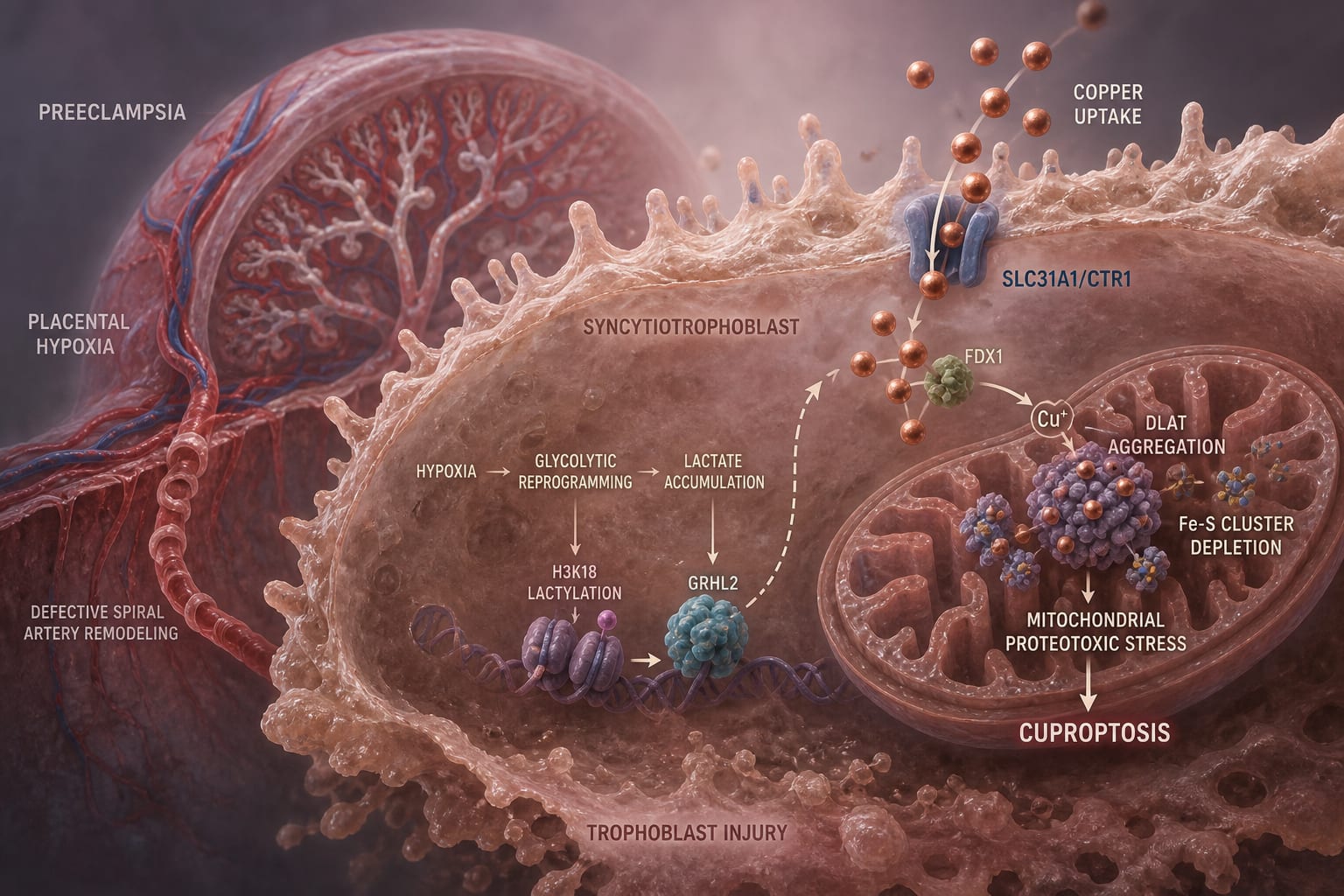
Clinical Report: Cuproptosis and Its Role in Preeclampsia
Background
Preeclampsia is a significant cause of maternal and perinatal morbidity and mortality, affecting 2-8% of pregnancies worldwide. The condition is characterized by impaired trophoblast function and placental hypoxia, leading to oxidative stress and vascular complications. Understanding the molecular mechanisms, such as cuproptosis, that connect these abnormalities is crucial for developing targeted interventions.
Data Highlights
No numerical data available in the provided text.
Key Findings
Cuproptosis is a regulated cell-death process linked to copper accumulation and mitochondrial stress.
Higher serum copper concentrations have been observed in women with preeclampsia, suggesting copper dyshomeostasis.
Transcriptomic analysis identified cuproptosis-associated genes that may play a role in preeclampsia pathology.
Histone lactylation and lactate accumulation in the placenta may activate pathways leading to trophoblast dysfunction.
Syncytiotrophoblasts are particularly vulnerable to cuproptosis due to their high metabolic activity.
Clinical Implications
Further research into cuproptosis may provide insights into biomarkers and therapeutic targets for managing preeclampsia.
Conclusion
Cuproptosis represents a mechanism that may link metabolic stress in the placenta to trophoblast injury in preeclampsia.