Clinical Report: Combined Genomic and Immunological Analyses Reveal Non-Coding Variants in CFB Associated with Pneumococcal Meningoencephalitis
Overview
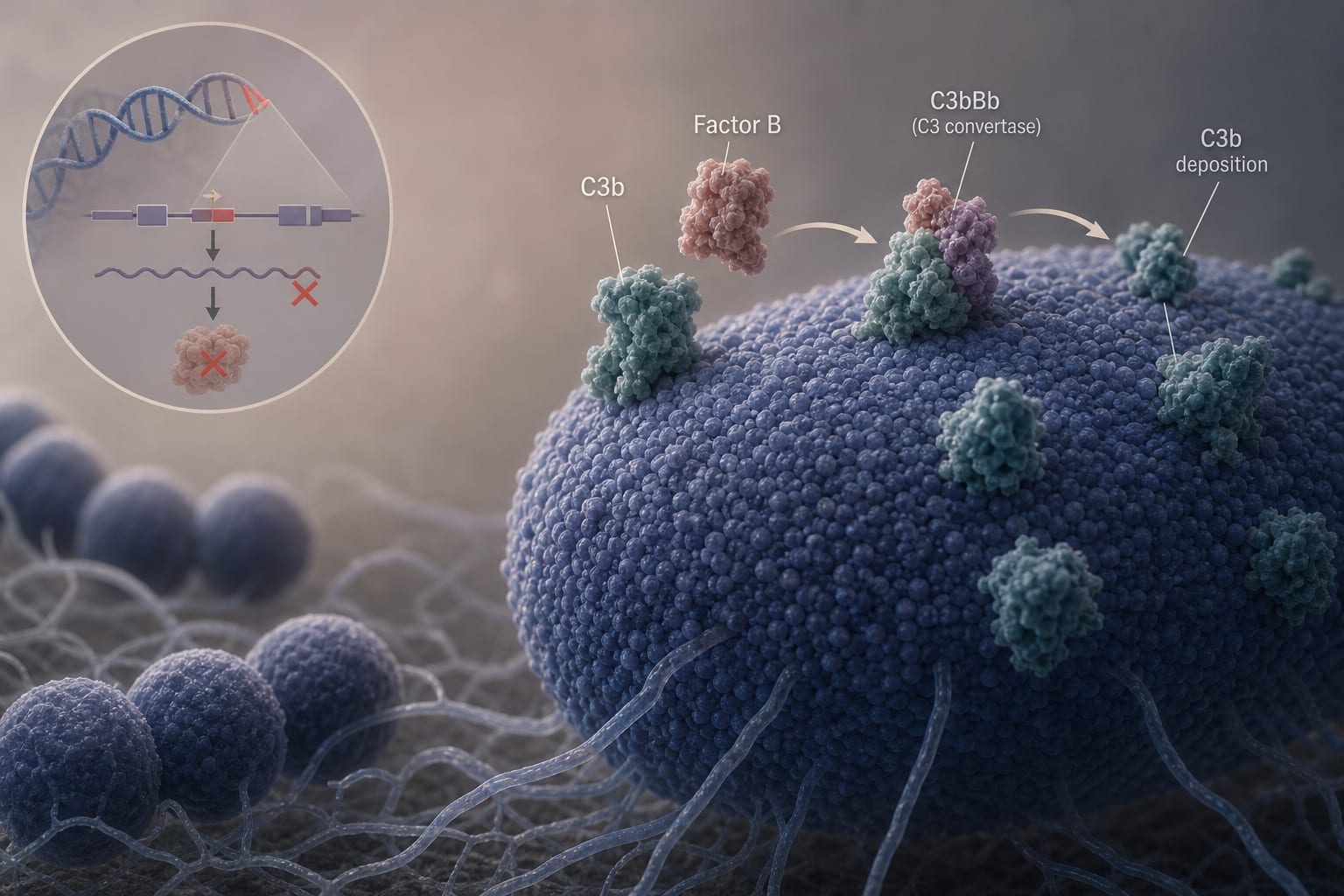
This report describes a rare case of complement factor B deficiency in an 8-month-old boy, revealing two non-canonical splice-site variants in the CFB gene. The findings underscore the importance of integrating genomic and immunological analyses for accurate diagnosis in rare inborn errors of immunity.
Background
Inborn errors of the complement system, particularly deficiencies in the alternative pathway, can lead to increased susceptibility to invasive infections by encapsulated bacteria. Complement factor B deficiency is exceptionally rare, with only three previous cases documented. Understanding the genetic underpinnings of such deficiencies is crucial for timely diagnosis and management.
Data Highlights
Case study of an 8-month-old boy with severe pneumococcal bacteremia and meningoencephalitis, revealing two pathogenic CFB variants.
Key Findings
Identification of a fourth case of autosomal recessive complement factor B deficiency.
Patient presented with severe pneumococcal bacteremia and meningoencephalitis.
Two non-canonical splice-site variants in the CFB gene were identified.
Complement studies showed absent alternative pathway activity with preserved classical and lectin pathway function.
Functional assays confirmed the molecular diagnosis and the critical role of advanced genomic analyses.
Clinical Implications
Clinicians should consider genetic testing for complement deficiencies in patients with invasive infections by encapsulated organisms, especially when conventional antibody responses are normal. This case highlights the need for comprehensive immunological and genomic evaluations in rare inborn errors of immunity.
Conclusion
The integration of genomic and functional analyses is essential for the accurate diagnosis of rare complement deficiencies, which can significantly impact patient management and outcomes.
by J. Barbieur, E. D’haenens, T. Jarayseh, L. Hoste, J. Smet, S. Lambrecht, E. Schiettecatte, P. Schelstraete, M. De Bruyne, F. Haerynck, S. J. Tavernier