Impact of anti-TNF and anti-IL-12/IL-23 antibody therapy on periodontal inflammation and gingival crevicular fluid IL-6 in patients with inflammatory bowel diseases - Report - MDSpire
Conexiant’s news site is now MDSpire News. Learn more
Advertisement
Effects of Anti-TNF and Anti-IL-12/IL-23 Antibody Treatments on Periodontal Inflammation and IL-6 Levels in Gingival Crevicular Fluid Among Inflammatory Bowel Disease Patients
Effects of Anti-TNF and Anti-IL-12/IL-23 Antibody Treatments on Periodontal Inflammation
Overview
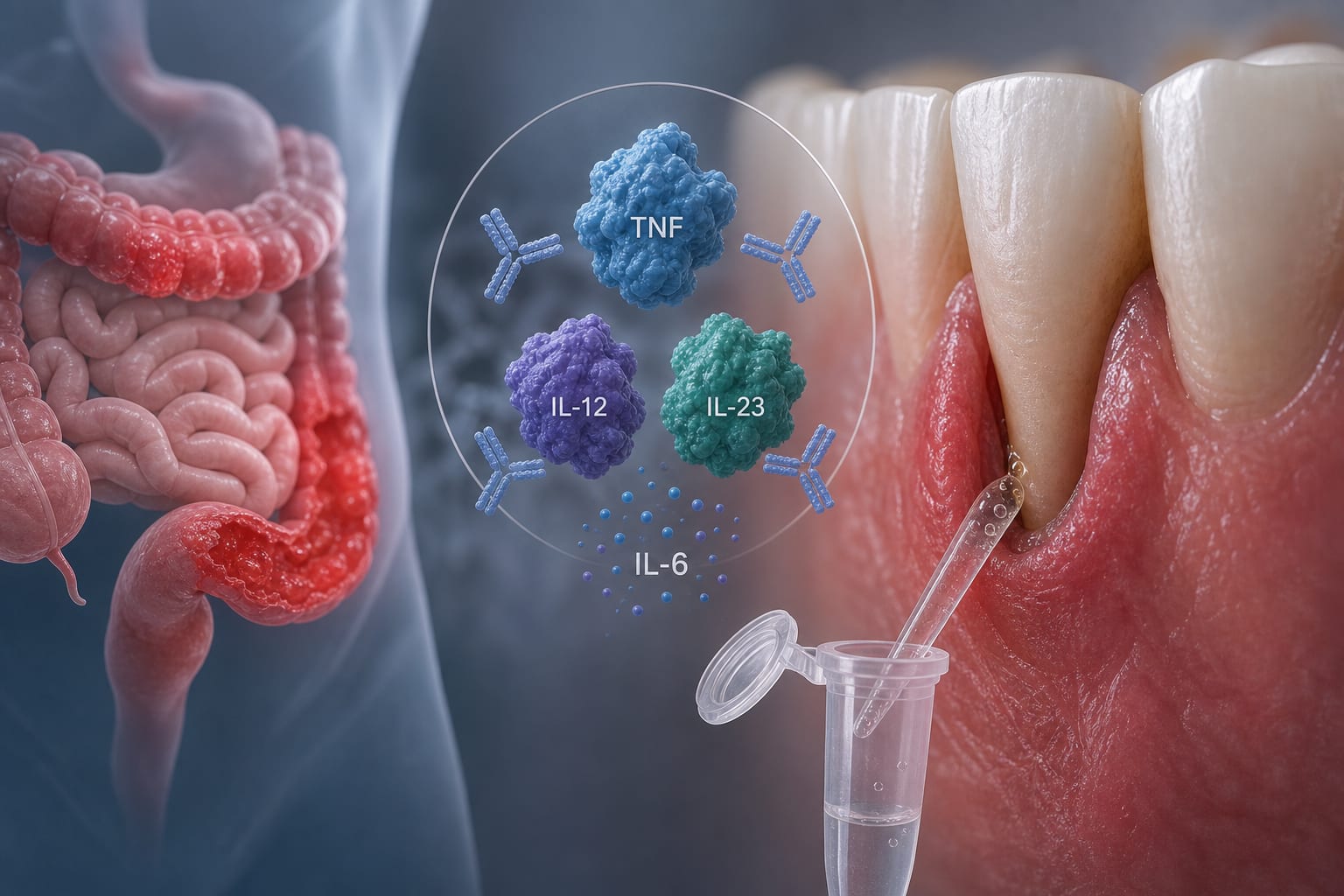
This study investigates the impact of anti-TNF and anti-IL-12/23 therapies on periodontal health in inflammatory bowel disease (IBD) patients. Findings indicate that anti-IL-12/23 therapy is associated with lower periodontal inflammation and reduced IL-6 levels in gingival crevicular fluid compared to anti-TNF therapy.
Background
Periodontitis is prevalent among patients with inflammatory bowel diseases (IBD), which include Crohn's disease and ulcerative colitis. The dysregulation of mucosal immunity in IBD may contribute to increased periodontal disease activity. Understanding the effects of biological therapies on periodontal health is crucial for comprehensive patient care.
Data Highlights
Group
Mean PSI Score
Max PSI Score
IL-6 Levels
Anti-TNF
Higher
Higher
Higher
Anti-IL-12/23
Lower
Lower
Lower
Control
Moderate
Moderate
Higher
Key Findings
16 patients had known or previously undiagnosed periodontitis.
Anti-IL-12/23 therapy resulted in lower mean and maximal PSI scores compared to anti-TNF therapy.
No sextants with advanced periodontal inflammation were found in the anti-IL-12/23 group.
Active or latent periodontitis was present in both anti-TNF and control groups.
IL-6 levels in gingival crevicular fluid were significantly reduced in the anti-IL-12/23 group compared to controls.
Clinical Implications
Clinicians should consider the effects of biological therapies on both intestinal and oral health when managing patients with IBD.
Conclusion
This study highlights the association between IL-12/23 inhibition and reduced periodontal inflammation in IBD patients.