Investigating the Links Between Blood Metabolites and Cirrhosis Risk: A Mendelian Randomization and Targeted Metabolomics Approach
-
By
-
Duoduo Lv
-
Ning Han
-
Hong Tang
-
July 2, 2026
Clinical Report: Investigating the Links Between Blood Metabolites and Cirrhosis Risk
Overview
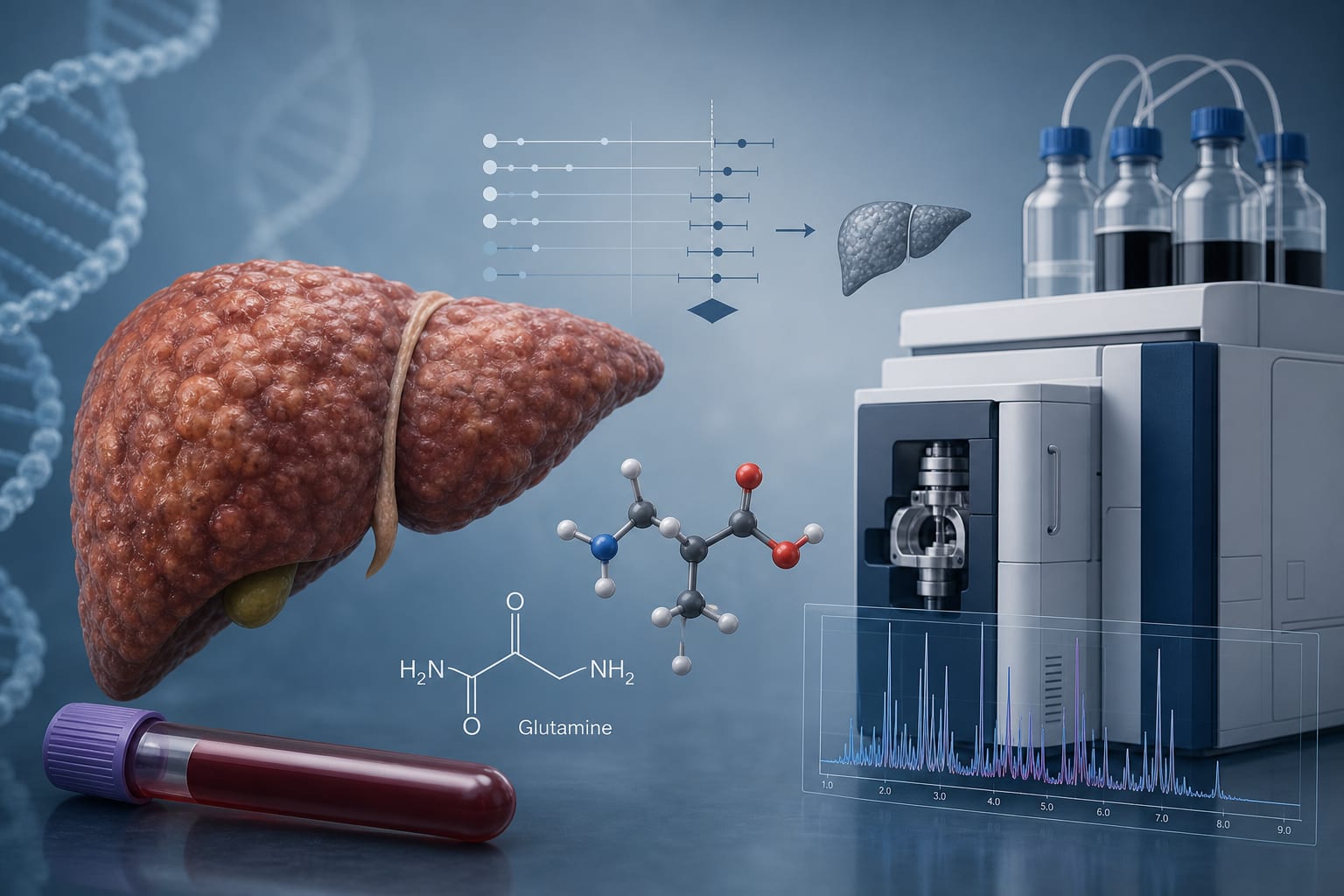
This study explores the associations between blood metabolites and cirrhosis risk using Mendelian randomization and targeted metabolomics. It identifies specific metabolites linked to increased or decreased risks of liver cirrhosis, particularly highlighting the role of glutamine-related metabolic alterations.
Background
Cirrhosis is a significant global health issue, accounting for 2.4% of deaths in 2019, and is associated with various metabolic processes. Understanding the metabolic factors contributing to cirrhosis could lead to insights into its development. This study aims to explore the causal relationships between specific metabolites and cirrhosis risk.
Data Highlights
The Mendelian randomization analysis identified 11 metabolites associated with increased cirrhosis risk and 3 metabolites linked to its prevention. Notably, higher levels of glutamine degradants were associated with a lower risk of cirrhosis (OR = 0.877, 95% CI: 0.784–0.981, p = 0.022).
Key Findings
- 11 metabolites/metabolic ratios were linked to increased risks of liver cirrhosis.
- 3 metabolites were associated with a reduced risk of liver cirrhosis.
- Higher glutamine degradant levels correlated with a lower risk of cirrhosis.
- Pathway analysis suggested involvement of arginine biosynthesis, proline metabolism, and nitrogen metabolism in cirrhosis-related metabolic alterations.
- Lower levels of glutamate and glutathione were observed in cirrhosis patients compared to healthy controls.
Clinical Implications
The findings suggest that monitoring specific blood metabolites may provide insights into cirrhosis risk. Further research could explore these metabolites as potential biomarkers for early detection and intervention strategies in at-risk populations.
Conclusion
This study provides evidence linking specific circulating metabolites to cirrhosis risk, with a focus on glutamine-related metabolic alterations.
Related Resources & Content
- Influence of Blood Metabolites on the Relationship Between Gut Microbiome and Survival in Metastatic Colorectal Cancer with RAS/BRAF Mutations, Springer, 2024
- The Role of LDL-C and TC in Modulating Cardiovascular Risk Associated with PNPLA3 Inhibition, The Journal of Clinical Endocrinology & Metabolism, 2025
- Metabolomic Analysis of Serum Biomarkers Linked to New Cases of Type 2 Diabetes Mellitus in the Multi-Ethnic Study of Atherosclerosis and the Rotterdam Study, The Journal of Clinical Endocrinology & Metabolism, 2025
- Clinical care pathway for the risk stratification and management of patients with MASLD, American Gastroenterological Association, 2026
- Evidence‐Based Clinical Practice Guidelines for Metabolic Dysfunction–Associated Steatotic Liver Disease (MASLD) 2026, Wiley Online Library, 2026
- Exploration of New Potential Therapeutic Targets for Inflammatory Bowel Disease Through Mendelian Randomization Analysis
- Clinical care pathway for the risk stratification and management of patients with MASLD
- Genetic analysis of circulating metabolic traits in 619,372 individuals
- Evidence‐Based Clinical Practice Guidelines for Metabolic Dysfunction–Associated Steatotic Liver Disease (MASLD) 2026 - Akuta - Hepatology Research - Wiley Online Library
- Clinical Practice Guidelines Archives - EASL-The Home of Hepatology.
- Frontiers | Exploring Potential Associations between Blood Metabolites and Cirrhosis Risk: A Mendelian Randomization and LC-MS/MS Analysis
- Plasma-targeted proteomic and lipidomic profiling of MASLD, MASH, and hepatitis C virus infection | Clinical Proteomics | Springer Nature Link
- Clinical Outcomes and Non-Invasive Testing in Metabolic Dysfunction-Associated Steatohepatitis With Cirrhosis: A Systematic Review - PubMed
Based on findings from:
Exploring potential associations between blood metabolites and cirrhosis risk: a Mendelian randomization and LC–MS/MS analysis
Duoduo Lv, Ning Han, Hong Tang. Frontiers In Medicine, 2026.
https://www.frontiersin.org/journals/medicine/articles/10.3389/fmed.2026.1809188/full
This content is an AI-generated, fully rewritten summary based on a published scholarly article. It does not reproduce the original text and is not a substitute for the original publication. Readers are encouraged to consult the source for full context, data, and methodology.