Analysis of factors influencing diabetic peripheral neuropathy in patients with type 2 diabetes mellitus and construction of a nomogram prediction model - Report - MDSpire
Advertisement
Analysis of factors influencing diabetic peripheral neuropathy in patients with type 2 diabetes mellitus and construction of a nomogram prediction model
Clinical Report: Investigation of Determinants of Diabetic Peripheral Neuropathy
Overview
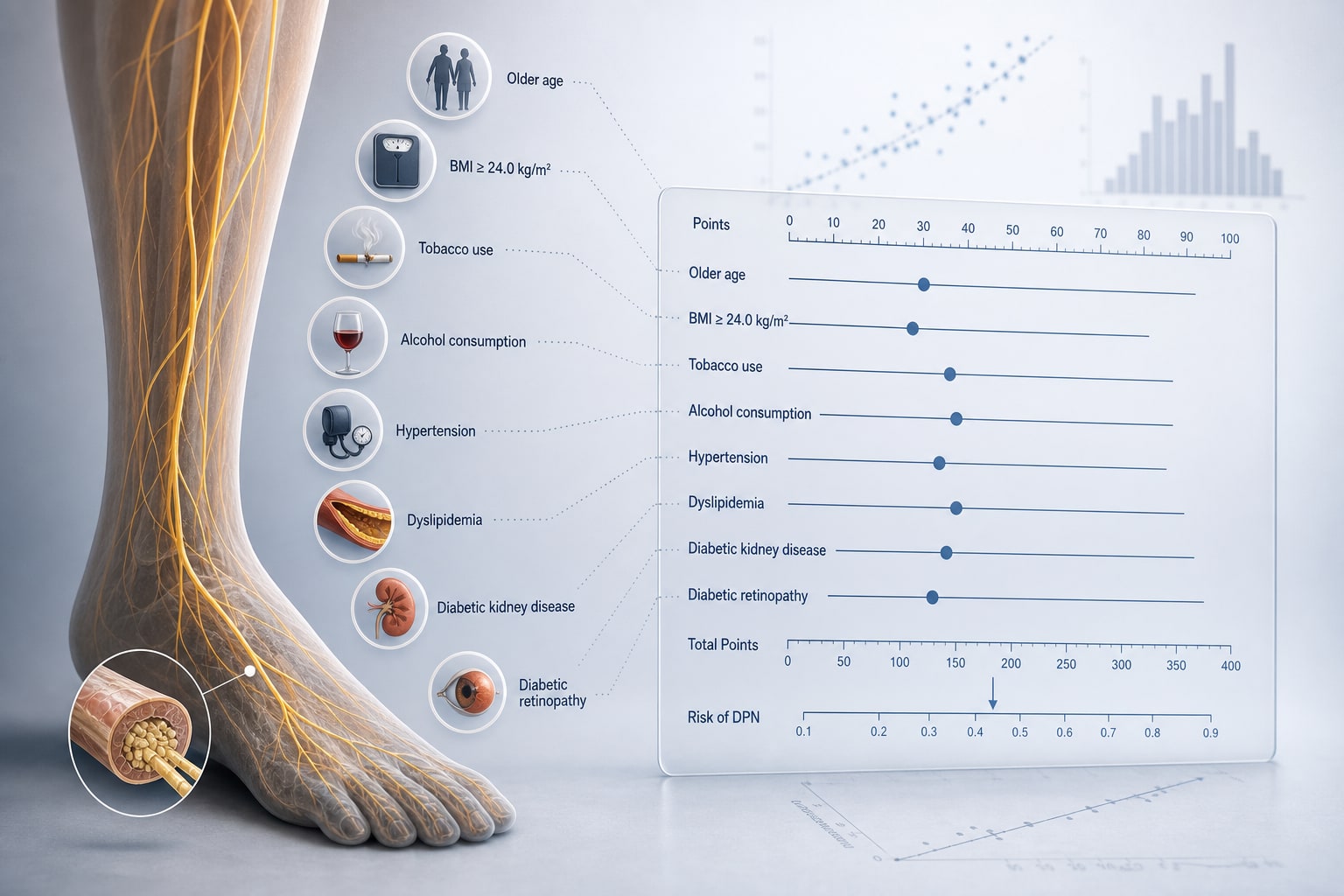
This study identifies independent risk factors for diabetic peripheral neuropathy (DPN) in type 2 diabetes mellitus (T2DM) patients. Key risk factors include advanced age, body mass index, and comorbid conditions such as hypertension and dyslipidemia.
Background
Diabetic peripheral neuropathy (DPN) is a common complication of type 2 diabetes mellitus (T2DM) that can lead to significant morbidity. Identifying risk factors for DPN can aid in the development of effective screening tools and treatment strategies.
Data Highlights
Risk Factor
Odds Ratio (OR)
Advanced Age
4.575
Body Mass Index ≥ 24.0 kg/m²
2.463
History of Smoking
2.585
History of Drinking
2.717
Concomitant Hypertension
2.925
Concomitant Dyslipidemia
2.393
Concomitant DKD
2.602
Concomitant DR
4.030
Key Findings
Advanced age is a significant risk factor for DPN (OR = 4.575).
Body mass index ≥ 24.0 kg/m² increases the risk of DPN (OR = 2.463).
History of smoking and drinking are associated with higher DPN risk (OR = 2.585 and OR = 2.717, respectively).
Comorbid conditions such as hypertension and dyslipidemia are independent risk factors for DPN (OR = 2.925 and OR = 2.393, respectively).
The developed nomogram effectively predicts DPN risk with ROC AUC values of 0.795 and 0.857 for training and validation sets, respectively.
Calibration curves indicate good agreement between predicted and actual DPN risk.
Clinical Implications
Healthcare professionals should consider these identified risk factors when assessing T2DM patients for DPN.
Conclusion
The study identifies key risk factors for DPN in T2DM patients.
An artificial intelligence–based optical coherence tomography pathway met noninferiority criteria for false-positive diabetic macular edema referrals and was associated with fewer referral decisions in a randomized clinical trial.
Federal prosecutors allege that a Florida physician and research staff fabricated clinical trial records that were submitted into database systems used to evaluate investigational drugs.