Preoperative CT markers and poor discharge functional status after burr-hole drainage for chronic subdural hematoma: a retrospective cohort study - Report - MDSpire
Preoperative CT Indicators and Adverse Functional Outcomes Following Burr-Hole Drainage for Chronic Subdural Hematoma
Overview
Expand on the implications of the findings in the context of current treatment protocols.
Background
Chronic subdural hematoma (CSDH) is a prevalent neurosurgical condition, particularly among older adults, with an increasing incidence due to aging populations and anticoagulant use. Identifying preoperative predictors of functional outcomes is crucial for effective patient management and resource allocation. Understanding these predictors can enhance clinical communication and postoperative care strategies.
Data Highlights
Variable
Adjusted Odds Ratio (aOR)
95% Confidence Interval (CI)
p-value
Midline Shift
1.11
1.01–1.22
0.036
Pre-hospital mRS
1.39
1.05–1.85
0.022
Age
1.08
1.04–1.12
<0.001
Hematoma Thickness
1.05
1.00–1.11
0.067
Key Findings
25.4% of patients experienced poor discharge functional status (mRS ≥3).
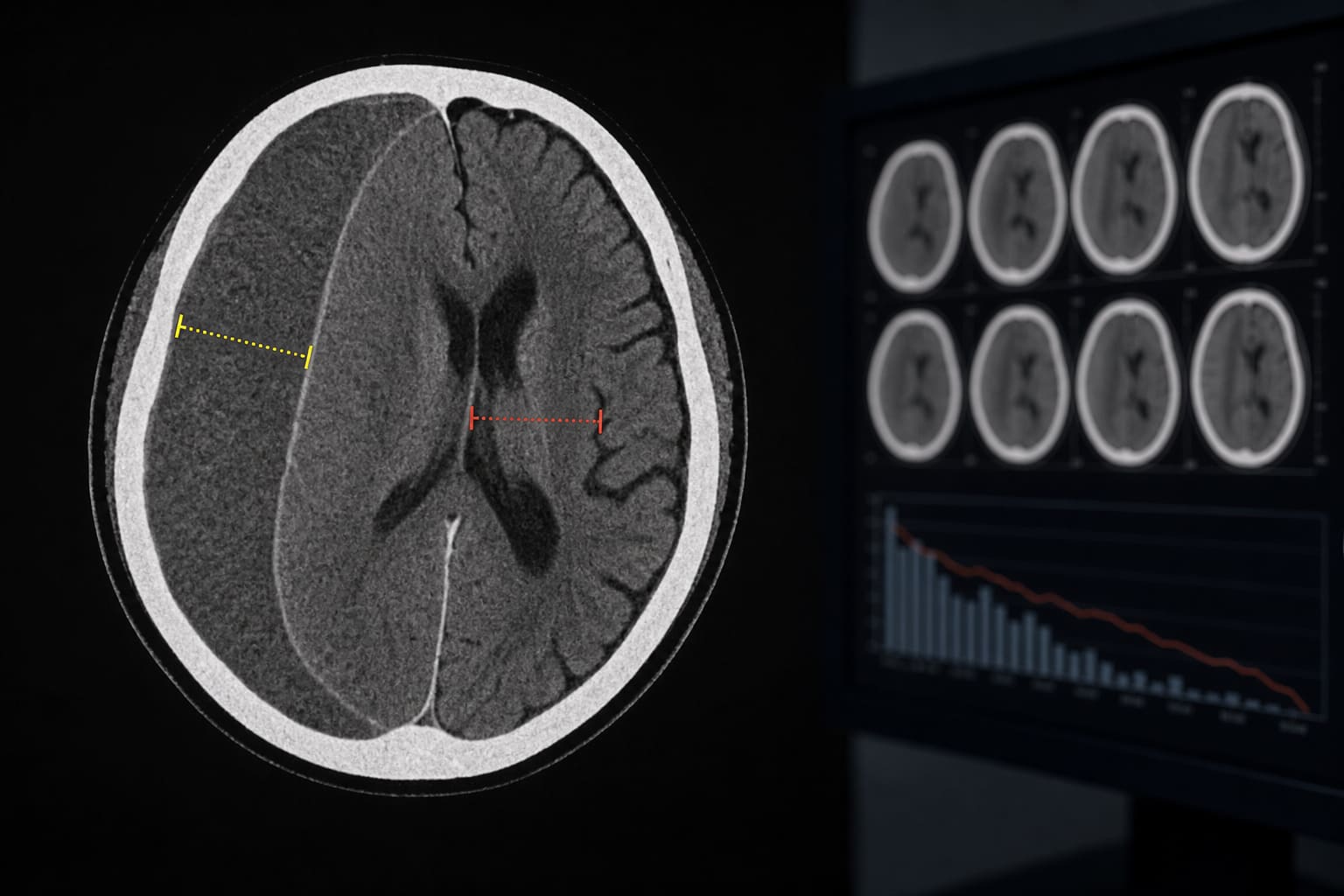
Midline shift was significantly associated with poor outcomes (aOR 1.11, p = 0.036).
Pre-hospital mRS scores were predictive of discharge status (aOR 1.39, p = 0.022).
Age was an independent predictor of poor functional outcomes (aOR 1.08, p < 0.001).
Hematoma thickness showed a numerical association with poor outcomes but did not reach statistical significance (p = 0.067).
Clinical Implications
The findings suggest that preoperative assessment of midline shift, functional status, and age can aid in risk stratification for patients undergoing burr-hole drainage for CSDH. These indicators may inform clinical decision-making and postoperative care planning, although they should not be the sole basis for treatment decisions.
Conclusion
This exploratory study highlights the importance of preoperative CT markers in predicting functional outcomes after burr-hole drainage for CSDH. Further validation in multicenter cohorts is necessary before clinical application.