Comprehensive Spectral Flow Cytometry Approach for Concurrent Analysis of Hematopoietic Stem, Progenitor, and Mature Cell Lineages in Murine Bone Marrow - Report - MDSpire
Advertisement
Comprehensive Spectral Flow Cytometry Approach for Concurrent Analysis of Hematopoietic Stem, Progenitor, and Mature Cell Lineages in Murine Bone Marrow
Clinical Report: Comprehensive Spectral Flow Cytometry for Hematopoiesis Analysis
Overview
Revise to better reflect the simultaneous identification capabilities of the panel.
Background
Hematopoiesis is crucial for lifelong blood cell production, and disruptions in this process can lead to significant health issues such as anemia and immunodeficiency. Traditional flow cytometry panels often focus on specific cell lineages, limiting the comprehensive understanding of hematopoietic populations. The development of a high-dimensional spectral flow cytometry panel addresses these limitations by allowing for the simultaneous analysis of multiple cell types within a single sample.
Data Highlights
The study validated the spectral flow cytometry panel on aged and β-thalassemic mouse models, confirming its ability to detect hematopoietic and erythropoietic alterations.
Key Findings
A 19-marker spectral flow cytometry panel was developed for comprehensive analysis of hematopoietic populations.
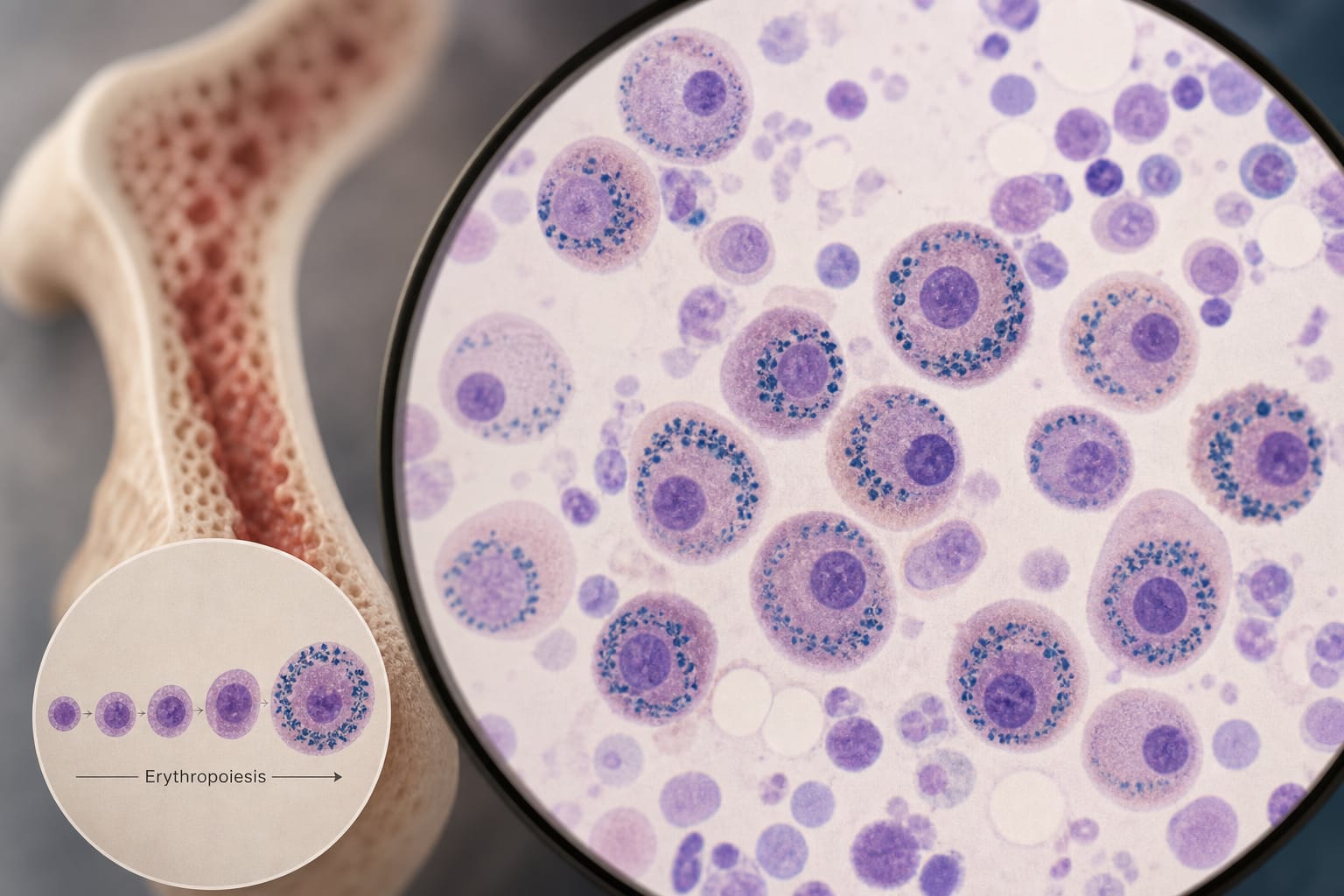
The panel accurately identifies long-term and short-term hematopoietic stem cells, multipotent progenitors, and all stages of erythroid maturation.
UMAP visualization effectively captures the differentiation trajectory from stem cells to mature cells.
Validation in aged and β-thalassemic mouse models demonstrated the panel's sensitivity to detect hematopoietic abnormalities.
This approach consolidates multiple conventional panels into a single assay, minimizing sample consumption and biological variability.
Clinical Implications
The integration of a multi-lineage flow cytometry panel can enhance diagnostic accuracy and facilitate the monitoring of hematopoietic disorders. This tool is particularly valuable for research and clinical applications, allowing for a more comprehensive understanding of hematopoiesis and its pathologies.
Conclusion
The novel spectral flow cytometry panel represents a significant advancement in the analysis of hematopoietic populations, providing a robust tool for both basic research and clinical applications in hematology.
by Léa Girondier, Manon Richaud, Julien MP Grenier, Ana Belen Pérez-Oliva, Jenny Van Asbeck-van der Wijst, Michel Aurrand-Lions, Maria De Grandis, Christophe Lachaud, Cyril Fauriat, Laura Braud