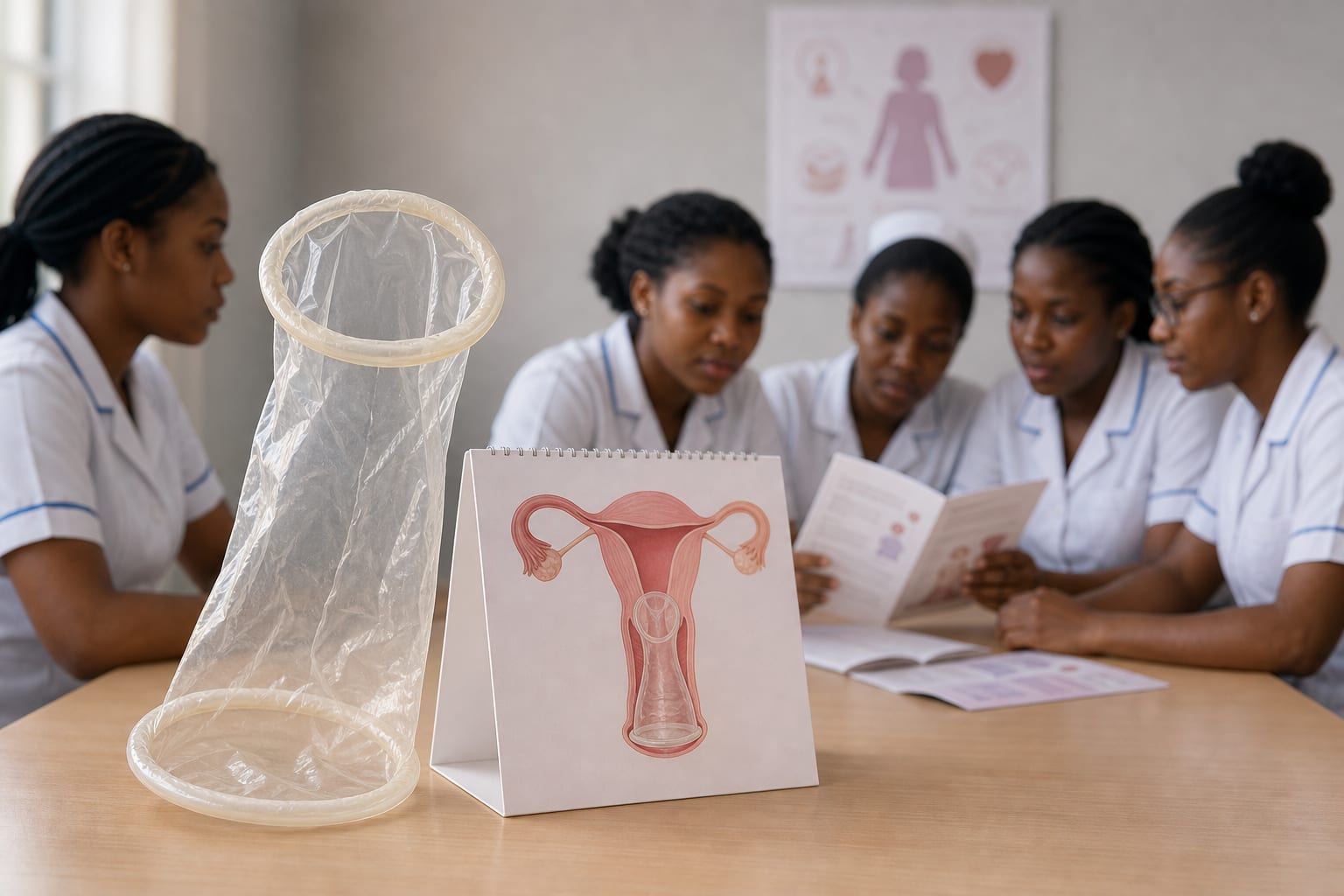
Clinical Report: Assessment of Awareness, Perspectives, and Usage of Female Condoms
Overview
This study evaluates the knowledge, attitudes, and utilization of female condoms among nursing students in Ghana. Despite a positive attitude towards female condoms, actual utilization remains low at 7.7%.
Background
Sexual and reproductive health (SRH) is a critical public health issue, particularly among young adults who face high rates of STIs and unintended pregnancies. Female condoms offer a unique method for dual protection against these risks, yet their global utilization is less than 1%. Understanding the factors influencing female condom use among future healthcare professionals is essential for improving SRH outcomes.
Data Highlights
Finding
Percentage
Poor knowledge of female condoms
55.5%
Positive attitude towards female condoms
57.7%
Utilization of female condoms
7.7%
Difficulty in access as a barrier
25.7%
Preference for male condoms
47.8%
Key Findings
55.5% of nursing students had poor knowledge regarding female condoms.
57.7% exhibited a positive attitude towards female condoms.
Only 7.7% reported actual utilization of female condoms.
Barriers to utilization included difficulty in access (25.7%) and preference for male condoms (47.8%).
Clinical Implications
Healthcare professionals should focus on enhancing education and practical skills related to female condom use among nursing students.
Conclusion
The study indicates a disparity between positive attitudes and low utilization of female condoms among nursing students.
These 10 states make it more practical for physicians to participate in hospital ownership by aligning statutory structure, corporate practice of medicine rules, and population trends.