Balancing lung recruitment and venous congestion in ARDS: rethinking the systemic effects of PEEP - Report - MDSpire

Balancing lung recruitment and venous congestion in ARDS: rethinking the systemic effects of PEEP

  • By

  • Martín H. Benites

  • Laurent Papazian

  • Jaime Retamal

  • June 22, 2026

  • 0 min

Share

Clinical Report: Optimizing Lung Recruitment and Managing Venous Congestion in ARDS

Background

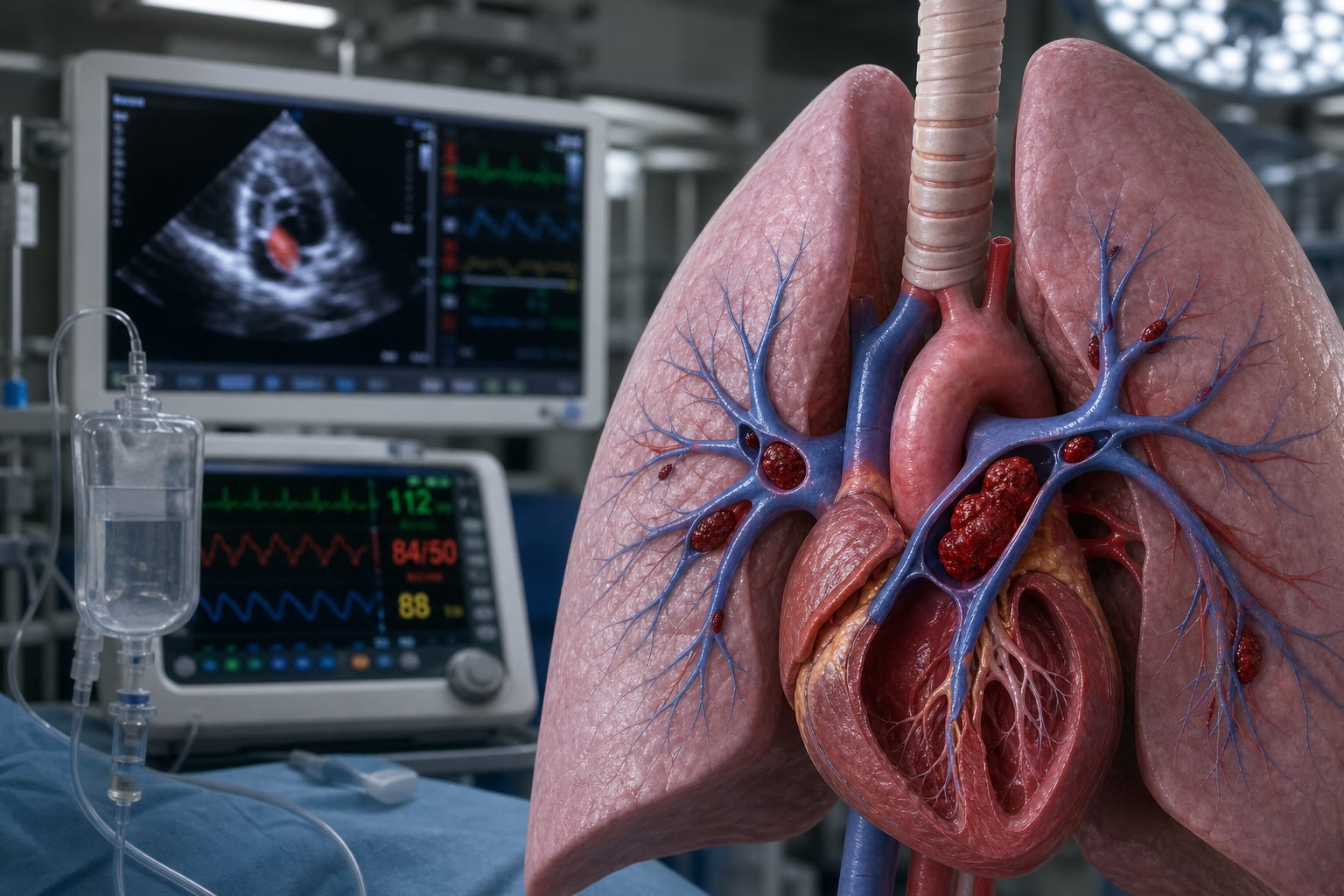
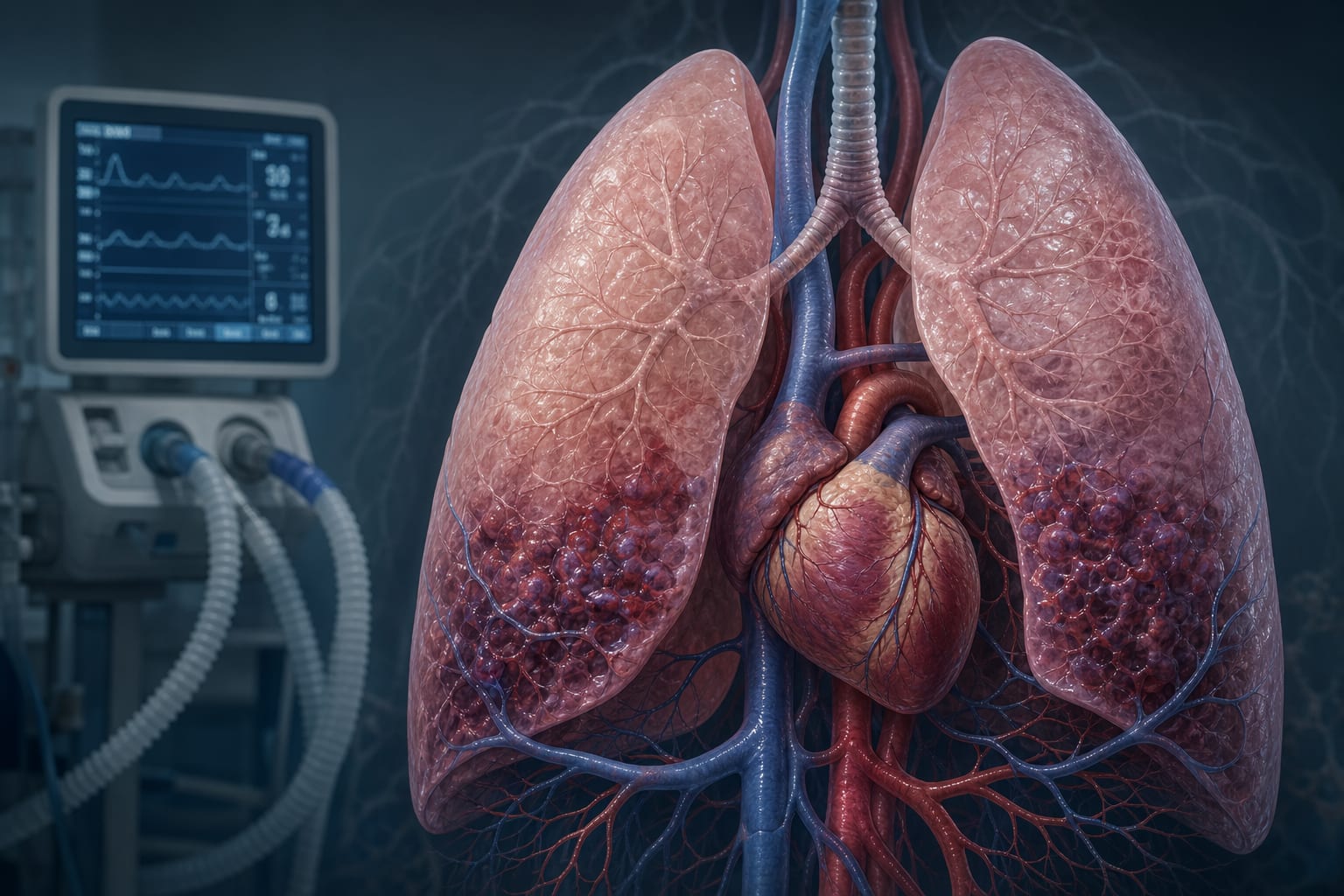
PEEP is essential in mechanical ventilation for ARDS, enhancing oxygenation and stabilizing alveoli. However, randomized trials have shown that higher PEEP does not necessarily improve survival.

Data Highlights

No numerical data provided in the source material.

Key Findings

  • PEEP can improve oxygenation but may not translate to survival benefits in ARDS patients.
  • Elevated PEEP levels can lead to adverse hemodynamic effects, including increased central venous pressure and reduced urine output.
  • Venous congestion is a significant pathophysiological pathway linking positive pressure ventilation to organ dysfunction.
  • Different mechanical phenotypes in ARDS patients influence the systemic effects of PEEP.
  • Impaired venous drainage from abdominal organs can occur even when arterial pressure and oxygenation are preserved.

Clinical Implications

Clinicians should consider the systemic effects of PEEP when managing ARDS, particularly the potential for venous congestion.

Conclusion

The interplay between PEEP, lung mechanics, and systemic hemodynamics in ARDS necessitates a nuanced approach to mechanical ventilation.

Related Resources & Content

  1. Guyton, A.C., 1986 -- Textbook of Medical Physiology
  2. Intensive Care Medicine, 2016 -- Management Strategies for ARDS Patients: Ventilation Approaches and Interventions for Persistent Hypoxemia
  3. Intensive Care Medicine, 2022 -- Exploring Optimal PEEP Levels in Patients on Mechanical Ventilation
  4. Intensive Care Medicine, 2024 -- Evaluating Lung Recruitability: Its Impact on PEEP Adjustments
  5. American Thoracic Society, 2017 -- An Official Clinical Practice Guideline: Mechanical Ventilation in Adult Patients with ARDS
  6. Intensive Care Medicine — Selecting Positive End-Expiratory Pressure in Acute Respiratory Distress Syndrome: Evaluating Respiratory System Compliance and Collapse/Hyperdistension Curves Without Correlation to Alveolar Recruitment
  7. Right Ventricular Hemodynamics in Acute Respiratory Distress Syndrome: Monitoring and Implications for Clinical Management
  8. ESICM Guidelines on Circulatory Shock and Hemodynamic Monitoring 2025
  9. Bedside Ventilatory Settings Guided by Respiratory Mechanics in Acute Respiratory Distress Syndrome
  10. An Official American Thoracic Society/European Society of Intensive Care Medicine/Society of Critical Care Medicine Clinical Practice Guideline: Mechanical Ventilation in Adult Patients with Acute Respiratory Distress Syndrome
  11. Higher versus Lower Positive End-Expiratory Pressures in Patients with the Acute Respiratory Distress Syndrome | New England Journal of Medicine
  12. Ventilation strategy using low tidal volumes, recruitment maneuvers, and high positive end-expiratory pressure for acute lung injury and acute respiratory distress syndrome: a randomized controlled trial - PubMed
  13. Positive End-Expiratory Pressure Setting in Adults With Acute Lung Injury and Acute Respiratory Distress Syndrome
  14. Effects of higher versus lower levels of pressure in the lungs at the end of each breath during mechanical ventilation in patients with acute respiratory distress syndrome (ARDS) | Cochrane
  15. Effect of Lung Recruitment and Titrated Positive End-Expiratory Pressure (PEEP) vs Low PEEP on Mortality in Patients With Acute Respiratory Distress Syndrome: A Randomized Clinical Trial
  16. Driving pressure-limited ventilation strategies versus conventional lung protective ventilation strategies for patients with ARDS/ARF: a systematic review and meta-analysis of randomized controlled trials - PubMed
  17. Mechanical power for ventilation - looking beyond the lung - ScienceDirect
  18. Mechanical ventilation patterns and outcomes in patients with right ventricular (RV) dysfunction: A cohort study - PubMed

Original Source(s)

Related Content