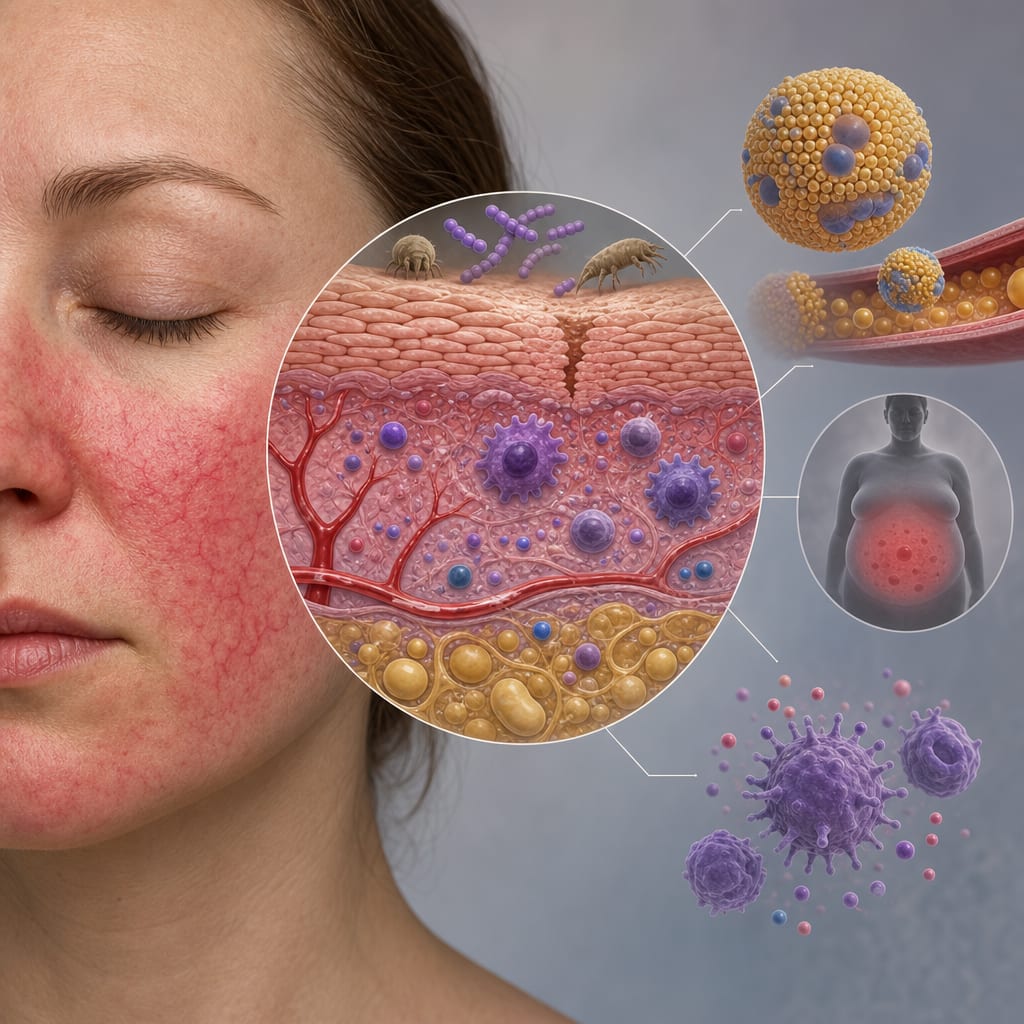
Clinical Report: Innovative Strategies for Long-Term Management of Rosacea
Overview
The REACH Global Scientific Committee has developed a comprehensive management pathway for rosacea, emphasizing the importance of patient communication and long-term care strategies. This approach aims to enhance adherence to treatment and improve quality of life for patients suffering from this chronic condition.
Background
Rosacea is a chronic skin condition that can significantly impact patients' quality of life. Despite existing guidelines, there is a noted gap in their uptake among healthcare professionals, necessitating a streamlined approach to management. The REACH initiative addresses these challenges by providing a structured framework for diagnosis, treatment, and maintenance of rosacea.
Data Highlights
No numerical data provided in the source material.
Key Findings
The REACH GSC identified key steps in the management pathway: self-management, diagnosis, treatment selection, and maintenance.
Effective communication between patients and healthcare professionals is crucial for understanding and managing rosacea.
Long-term management strategies are essential due to the chronic nature of rosacea.
Clinical trials often have time constraints that do not reflect the need for ongoing maintenance therapy.
Recent literature emphasizes a phenotype-first approach to treatment, integrating pharmacologic and holistic measures.
Clinical Implications
Healthcare professionals should prioritize clear communication with patients about the chronic nature of rosacea to enhance engagement in their care. Implementing a structured management pathway can improve adherence to treatment and overall patient outcomes.
Conclusion
The REACH initiative provides a valuable framework for the long-term management of rosacea, addressing both clinical and patient-centered needs. By fostering better communication and understanding, healthcare professionals can significantly improve the quality of life for patients with this condition.
by Martin Schaller, Belinda Welsh, Giuseppe Micali, Jerry Tan, James Del Rosso, Julie Harper, Thomas Dirschka, Soyun Cho, Luiz M. C. Almeida, Khen Kon, Wioletta Barańska-Rybak, Johannes Dayrit, Linda Stein Gold