Clinical features and treatment challenges of HER2-positive primary breast squamous cell carcinoma: a case report and literature review - Report - MDSpire
Characteristics and Treatment Obstacles in HER2-Positive PBSCC
Background
HER2-positive PBSCC is an exceptionally rare malignancy, constituting less than 0.1% of all breast carcinomas, with fewer than 100 cases reported globally. The rarity of this subtype leads to significant clinical challenges, including a lack of standardized treatment guidelines and limited data on therapeutic responses. Understanding the unique biology and treatment resistance of HER2-positive PBSCC is critical for developing effective management strategies. [1, 2, 3, 4]
Data Highlights
Key numerical data includes: HER2 positivity occurs in only 5.8-7.1% of PBSCC cases; the pathological complete response (pCR) rate for HER2-positive PBSCC to standard HER2-targeted therapy is only 12.5%; and a repeat biopsy revealed HER2 downregulation.
Key Findings
HER2 positivity occurs in only 5.8-7.1% of PBSCC cases.
The pathological complete response (pCR) rate for HER2-positive PBSCC to standard HER2-targeted therapy is only 12.5%.
The patient exhibited a poor response to neoadjuvant TCHP therapy, with a Miller-Payne grade of 2.
After mastectomy, local recurrence occurred within 3 months.
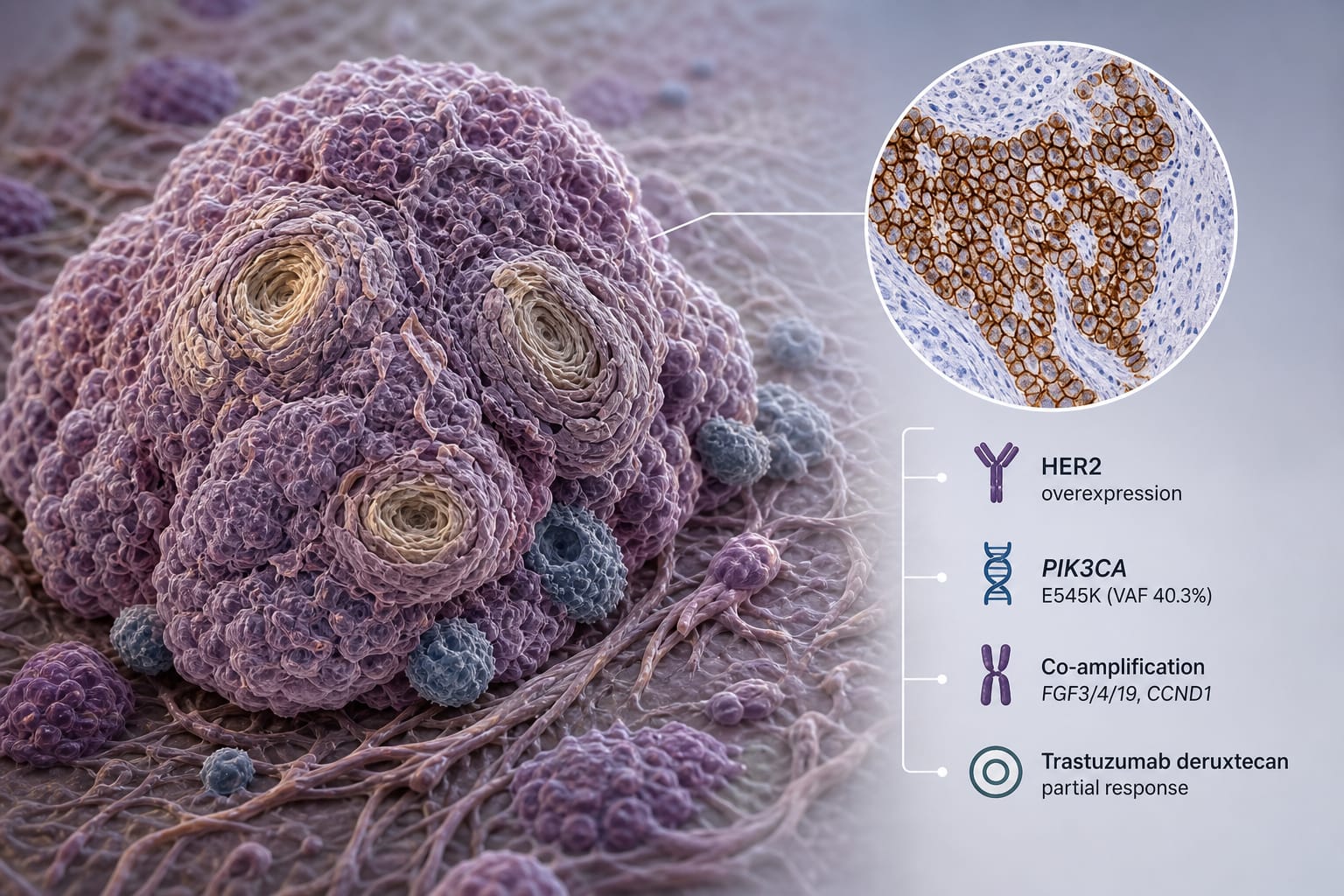
Third-line treatment with trastuzumab deruxtecan (T-DXd) achieved a partial response, but progression-free survival was limited to 5 months.
A repeat biopsy revealed HER2 downregulation, indicating antigen loss as a mechanism of acquired resistance.
Clinical Implications
The case illustrates the complexities in managing HER2-positive PBSCC. Clinicians should focus on the unique biological characteristics of the tumor and consider molecular profiling for treatment decisions.
Conclusion
This case highlights the complexities in managing HER2-positive PBSCC and the importance of understanding treatment resistance mechanisms.
he U.S. Food and Drug Administration (FDA) has approved daraxonrasib, an oral multi-selective RAS(ON) inhibitor, for adults with metastatic pancreatic adenocarcinoma who have received at least one prior systemic therapy or are not candidates for multiagent systemic therapy.