Conexiant’s news site is now MDSpire News. Learn more
Advertisement
Correction: Interactions Between the Microbiome and Innate Immunity During Acute Exacerbations of Idiopathic Pulmonary Fibrosis: A Framework for Amplification
Clinical Report: Correction on Microbiome-Innate Immune Crosstalk in AE-IPF
Overview
This report addresses a correction in the funding statement of a study on the interactions between the microbiome and innate immunity during acute exacerbations of idiopathic pulmonary fibrosis (AE-IPF). The corrected funding statement acknowledges support from the Anhui Province Graduate Education Quality Engineering Project.
Background
Acute exacerbation of idiopathic pulmonary fibrosis (AE-IPF) is a critical factor contributing to short-term mortality in affected patients. Understanding the biological mechanisms underlying AE-IPF is essential for improving patient outcomes. Recent studies suggest that the microbiome may play a significant role in the pathogenesis of AE-IPF through its interactions with the host immune system.
Data Highlights
No numerical or trial data presented in the correction article.
Key Findings
The original funding statement was corrected to acknowledge financial support from the Anhui Province Graduate Education Quality Engineering Project.
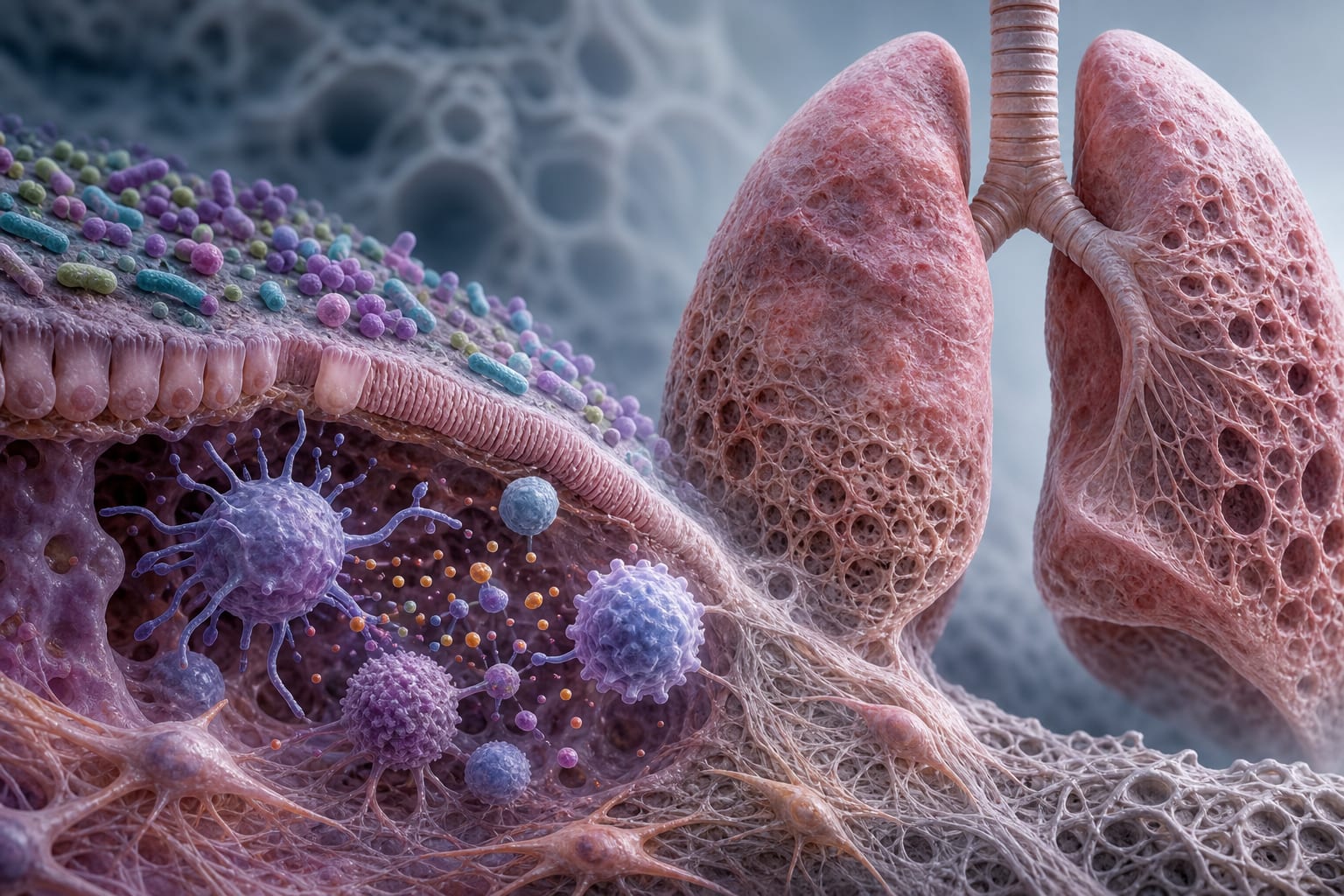
Microbial load and ecological imbalance may interact with host immune responses in the fibrotic lung environment.
AE-IPF is associated with significant short-term mortality, necessitating further research into its underlying mechanisms.
Current guidelines emphasize antifibrotic therapy as the foundation of IPF care, with acute exacerbation management focused on supportive care.
Robust randomized data on AE-IPF management remain lacking, highlighting the need for ongoing research.
Clinical Implications
Clinicians should be aware of the evolving understanding of microbiome interactions in AE-IPF, which may influence treatment strategies. The correction of the funding statement underscores the importance of transparency in research funding, which can impact the credibility of findings.
Conclusion
The correction of the funding statement is a vital step in maintaining the integrity of research on AE-IPF. Continued investigation into the microbiome's role in AE-IPF is essential for developing targeted therapies.