From proteome-wide Mendelian randomization and multi-omics integration to functional validation: TGFB3 as a prioritized candidate in gastric adenocarcinoma - Report - MDSpire

From proteome-wide Mendelian randomization and multi-omics integration to functional validation: TGFB3 as a prioritized candidate in gastric adenocarcinoma

  • By

  • Luming Zhao

  • Chenxi Mao

  • Yimeng Xu

  • Kangjie Zhou

  • Mingtong Liang

  • Yiqian Han

  • Jingzhou Zhang

  • Yidong Hong

  • Nan Hu

  • Fenglei Wu

  • July 6, 2026

  • 0 min

Share

Clinical Report: Integrating Multi-Omics and Mendelian Randomization to Identify TGFB3

Overview

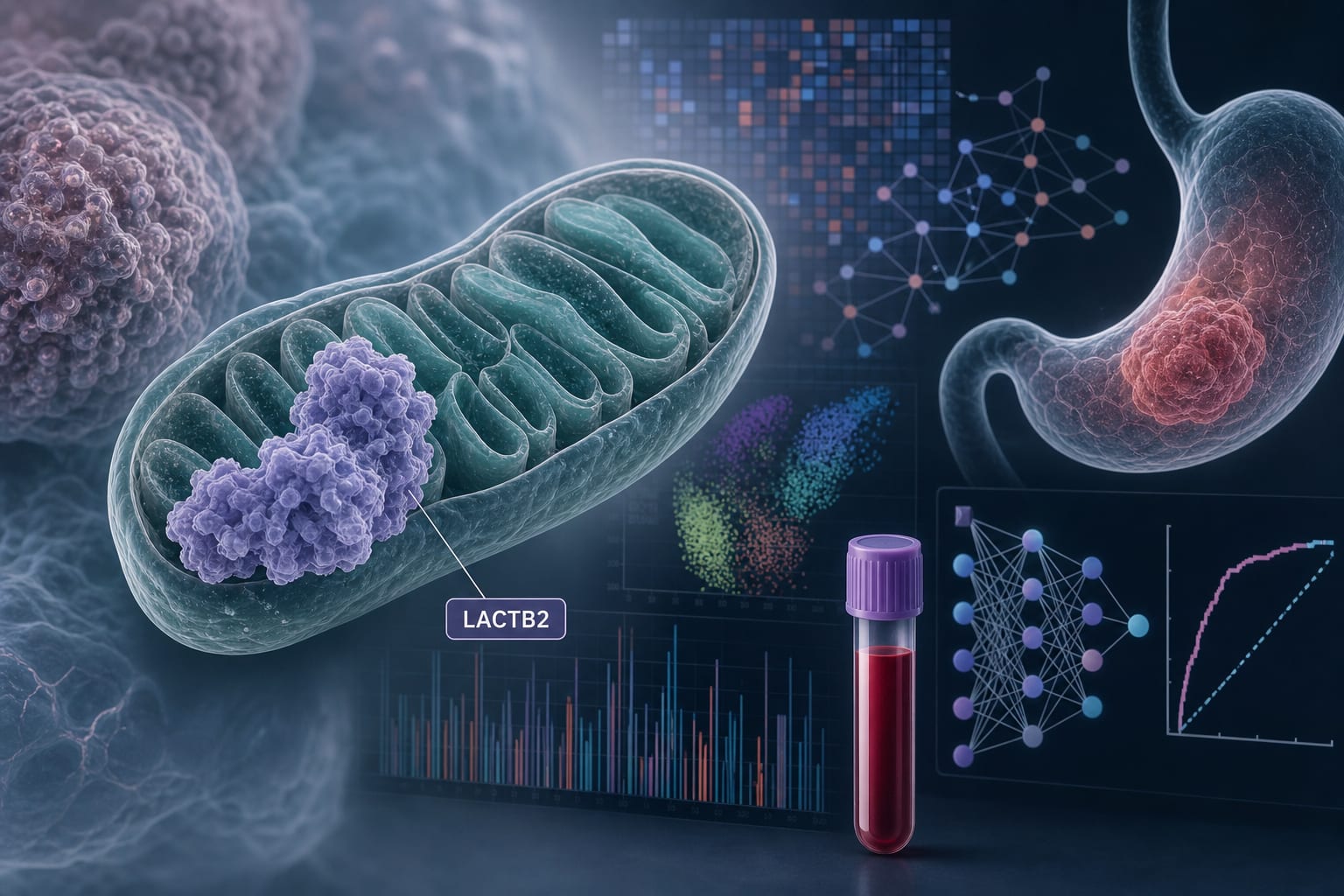
This study identifies TGFB3 as a key candidate in gastric adenocarcinoma through a proteome-wide Mendelian randomization framework. The findings highlight 29 circulating proteins with potential causal effects on gastric cancer.

Background

Gastric adenocarcinoma is a leading cause of cancer-related mortality, with significant challenges in early diagnosis and treatment. Current biomarkers have limited effectiveness.

Data Highlights

ProteinRole
ERBB3Hub protein in interaction network
LGR4Hub protein in interaction network
BMP4Hub protein in interaction network
CD248Hub protein in interaction network
MGPHub protein in interaction network
TGFB3Key candidate associated with poor survival
GRPHub protein in interaction network
ETS2Hub protein in interaction network

Key Findings

  • Proteome-wide Mendelian randomization identified 29 circulating proteins with potential causal effects on gastric cancer.
  • Eight hub proteins, including TGFB3, were prioritized based on protein–protein interaction topology.
  • The eight-gene artificial neural network classifier improved diagnostic performance beyond clinical variables.
  • TGFB3 was enriched at tumor–stroma interfaces and associated with poor survival outcomes.
  • Proflavine hemisulfate was identified as a chemical probe that attenuates TGFB3-driven signaling in gastric cancer cells.

Clinical Implications

The identification of TGFB3 as a significant player in gastric adenocarcinoma suggests avenues for further research.

Conclusion

This study identifies TGFB3 as a promising candidate for further investigation in gastric cancer.

Related Resources & Content

  1. Author(s)/Org, Source, Year -- Title
  2. Author(s)/Org, Source, Year -- Title
  3. Author(s)/Org, Source, Year -- Title
  4. Author(s)/Org, Source, Year -- Title
  5. New First-Line Targeted Therapy Recommendations Among Updated ASCO Guidance on Gastroesophageal Cancer Management - The ASCO Post
  6. New First-Line Targeted Therapy Recommendations Among Updated ASCO Guidance on Gastroesophageal Cancer Management - The ASCO Post
  7. Nivolumab (NIVO) + chemotherapy (chemo) vs chemo as first-line (1L) treatment for advanced gastric cancer/gastroesophageal junction cancer/esophageal adenocarcinoma (GC/GEJC/EAC): 5-year (y) follow-up results from CheckMate 649. | Journal of Clinical Oncology
  8. Drug Trials Snapshots: VYLOY | FDA

Original Source(s)

Related Content