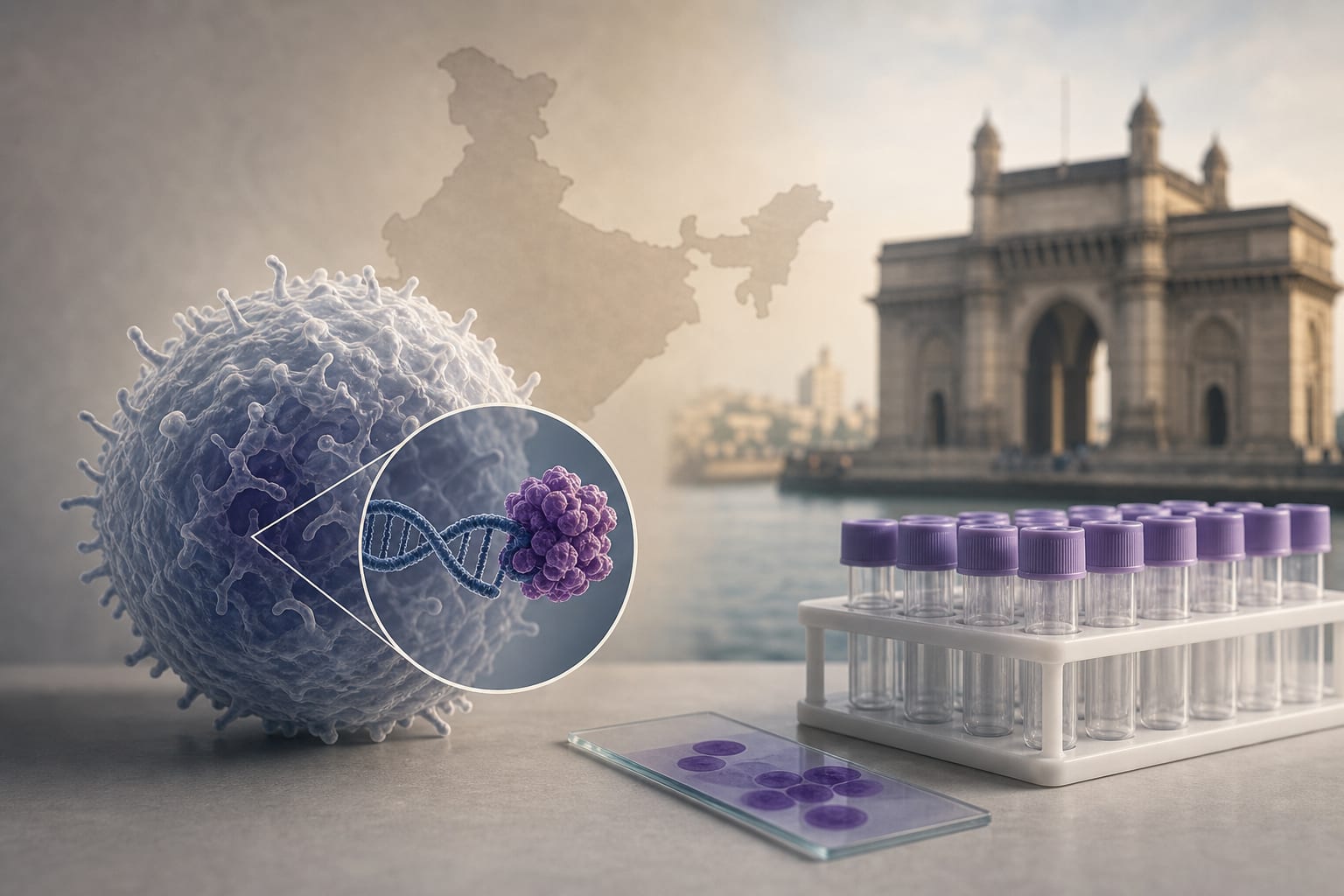
Clinical Report: Managing Chronic Lymphocytic Leukemia in India
Background
Chronic Lymphocytic Leukemia (CLL) is the most common adult leukemia in Western countries, yet it accounts for only about 5% of leukemias in India. The management of CLL has shifted towards precision medicine with targeted therapies, but disparities in healthcare infrastructure and access to treatments pose significant challenges in India. Understanding these differences is crucial for improving patient outcomes.
Data Highlights
No numerical data available in the article.
Key Findings
CLL incidence in India is approximately 0.14 per 100,000, significantly lower than in Western countries.
Indian patients present a decade younger and often at more advanced disease stages compared to Western cohorts.
Recent trends show a shift towards earlier diagnosis due to improved access to hematological testing.
Access to molecular profiling for risk stratification remains limited, affecting treatment decisions.
Bruton tyrosine kinase inhibitors (BTKi) and BCL-2 inhibitors are preferred over traditional chemoimmunotherapy.
Generic ibrutinib has improved treatment access for patients with TP53 mutated CLL.
Clinical Implications
Healthcare professionals should be aware of the unique challenges faced by CLL patients in India, including access to targeted therapies and molecular diagnostics.
Conclusion
The management of CLL in India is evolving, but significant barriers remain that must be addressed.