Leveraging Large Language Models to Integrate Clinical Knowledge and Machine Learning Predictions for Lymph Node Metastasis Prediction: Development of a Knowledge-Augmented Framework - Report - MDSpire
Conexiant’s news site is now MDSpire News. Learn more
Advertisement
Utilizing Advanced Language Models to Combine Clinical Insights and Machine Learning Forecasts for Predicting Lymph Node Metastasis: Creation of an Enhanced Knowledge Framework
Clinical Report: Utilizing Advanced Language Models for Predicting Lymph Node Metastasis
Overview
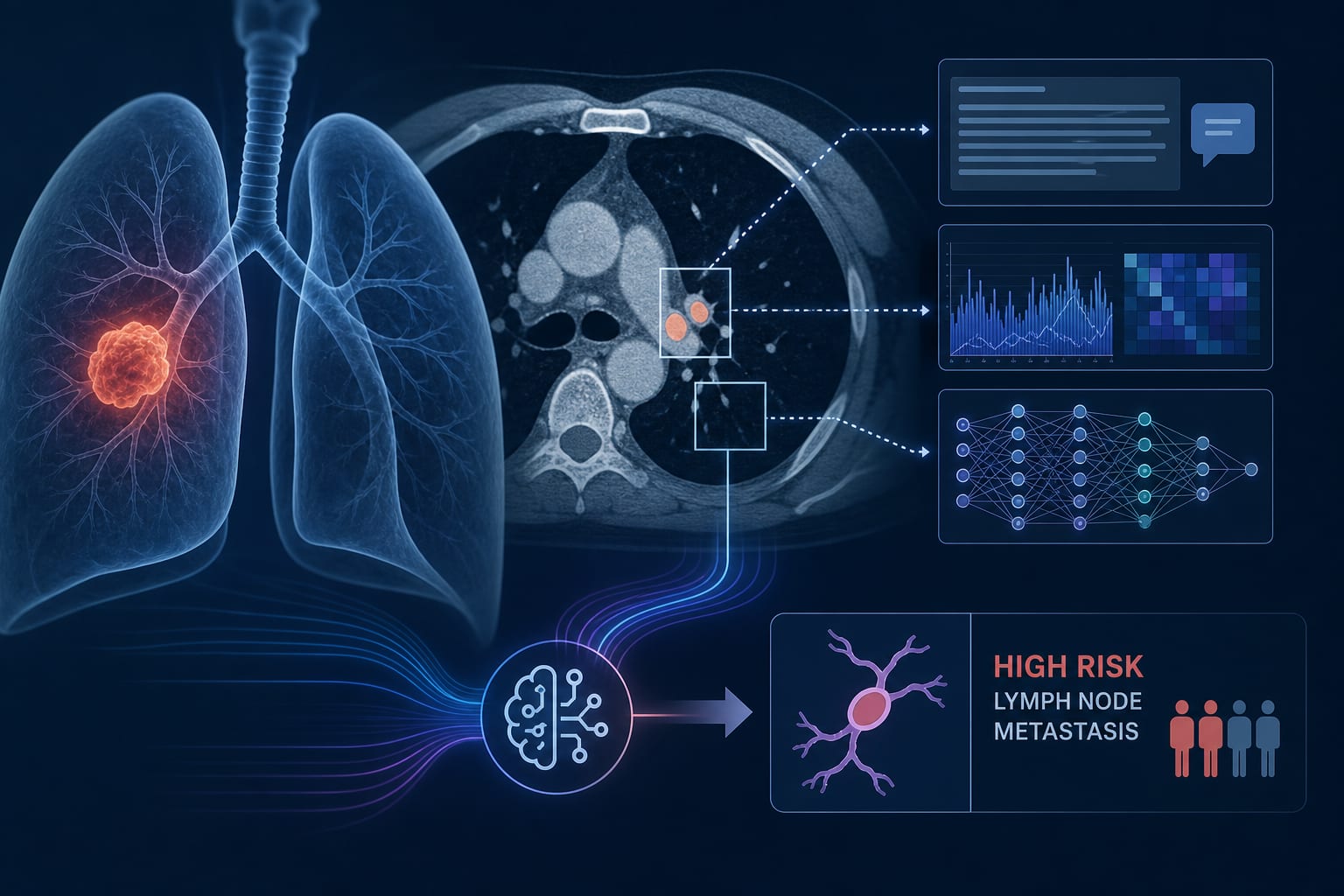
This study introduces a novel knowledge-augmented method that combines clinical characteristics and machine learning predictions to enhance the accuracy of lymph node metastasis (LNM) predictions in lung cancer.
Background
Lung cancer is the leading cause of cancer-related mortality globally, making accurate preoperative diagnosis of lymph node metastasis critical for treatment planning. Traditional diagnostic methods often fall short, leading to suboptimal treatment decisions.
Data Highlights
The study analyzed data from 767 lung cancer patients, focusing on clinical characteristics and imaging data to predict lymph node metastasis.
Key Findings
The proposed method integrates clinical characteristics with machine learning risk probabilities to enhance LNM prediction.
Deep learning techniques were utilized to automatically extract features from imaging data without manual delineation.
Large language models demonstrated potential in generating predictive results based on patient data.
Data quality was ensured through rigorous checks and clinician annotations.
Clinical Implications
The integration of advanced machine learning and language models may improve the preoperative assessment of lymph node metastasis in lung cancer patients.
Conclusion
The study highlights the potential of combining knowledge-based and data-driven models to enhance predictive performance for lymph node metastasis in lung cancer.