Conexiant’s news site is now MDSpire News. Learn more
Advertisement
Interleukin-34-Driven Interactions Between Fibroblast-Like Synoviocytes and Macrophages Promote Bone Erosion via RANKL-Dependent Osteoclast Formation in Rheumatoid Arthritis
Clinical Report: Interleukin-34-Driven Interactions in Rheumatoid Arthritis
Overview
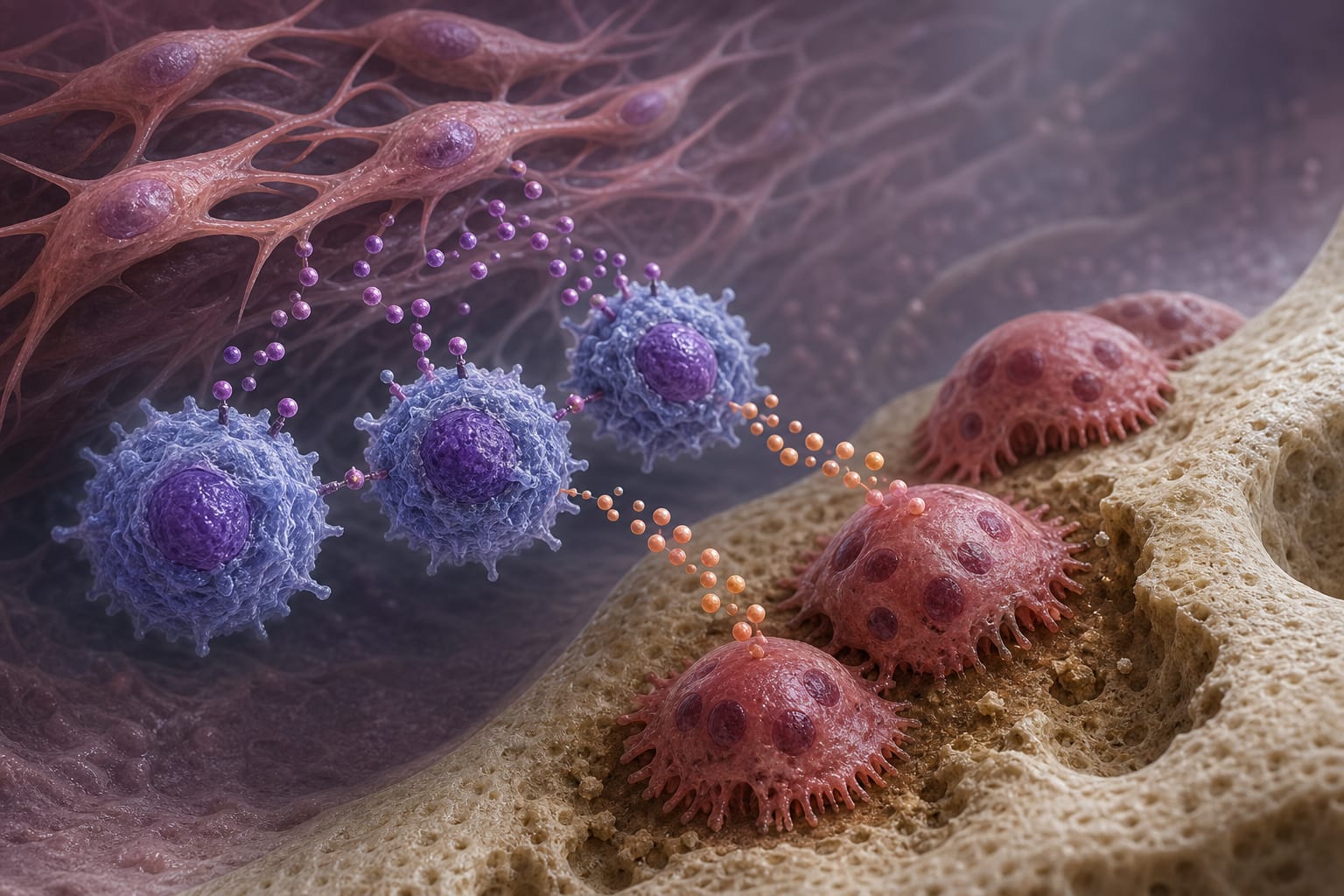
This study investigates the role of interleukin-34 (IL-34) in the crosstalk between fibroblast-like synoviocytes (FLS) and macrophages, highlighting its contribution to osteoclastogenesis and bone erosion in rheumatoid arthritis (RA). Elevated IL-34 levels correlate with disease severity and bone erosion.
Background
Rheumatoid arthritis (RA) is a chronic autoimmune disorder that leads to significant joint destruction and disability. The interplay between FLS and macrophages in the RA microenvironment is crucial for disease progression, as it drives inflammation and bone erosion.
Data Highlights
Upregulated serum IL-34 levels in RA patients correlate with disease severity and bone erosion. IL-34 overexpression in FLS enhances proliferation, migration, and invasion while inhibiting apoptosis. Conditioned medium from IL-34-overexpressing FLS promotes macrophage recruitment and M1 polarization. RANKL production and osteoclast differentiation are increased in IL-34-stimulated FLS-macrophage cocultures, which can be inhibited by denosumab.
Key Findings
IL-34 levels are elevated in RA patients and correlate with disease severity.
Overexpression of IL-34 in FLS promotes cell proliferation, migration, and invasion.
IL-34 enhances macrophage recruitment and M1 polarization in coculture settings.
RANKL production is significantly increased in IL-34-stimulated FLS-macrophage interactions.
Clinical Implications
The findings suggest that targeting IL-34 may provide a dual benefit in RA treatment by reducing inflammation and preventing bone erosion. Further research into IL-34 blockade could lead to new therapeutic strategies for managing RA.
Conclusion
IL-34 plays a role in the crosstalk between FLS and macrophages, promoting osteoclastogenesis and bone erosion in RA.
Combined rheumatoid factor and anticitrullinated protein antibody status appeared to modify the association between baseline rheumatoid arthritis disease activity and subsequent cardiovascular events in an international observational cohort.