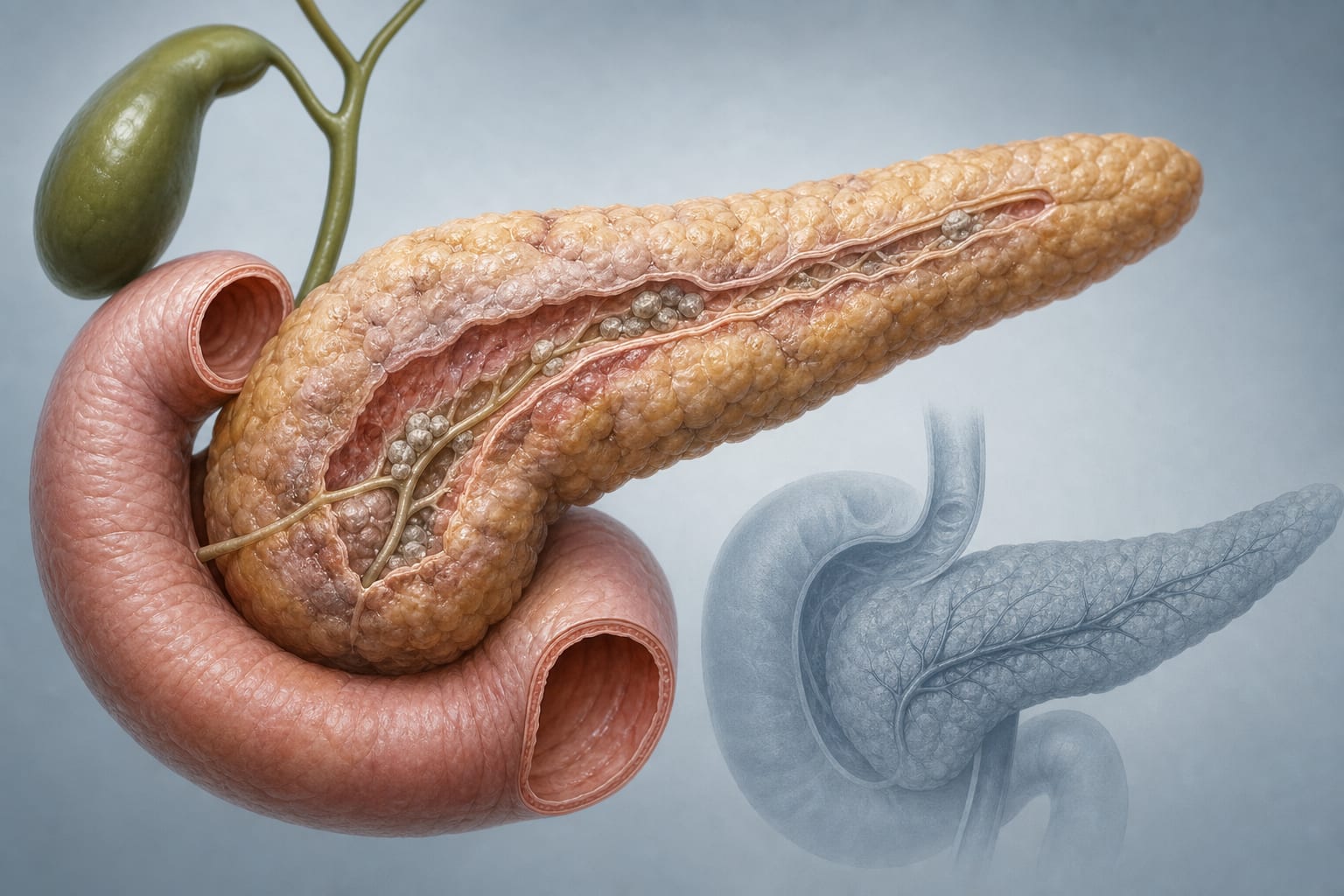
Clinical Report: Causes, identification, and treatment of primary complications related to chronic pancreatitis
Overview
Chronic pancreatitis (CP) leads to irreversible structural damage and various complications, including pancreatic exocrine and endocrine insufficiencies. This review provides an overview of the etiology, diagnostic criteria, and management strategies for these complications.
Background
Chronic pancreatitis is a progressive inflammatory disease characterized by irreversible fibrosis and pancreatic functional decline. The condition poses significant clinical challenges due to its multifactorial etiology and the risk of severe complications.
Data Highlights
Complication
Incidence
Major Diagnostic Methods
Main Treatment Approaches
Pancreatic Exocrine Insufficiency
20% at 5 years, 70% at 20 years
Pancreatic function tests
Pancreatic enzyme replacement therapy
Endocrine Insufficiency
Varies
Blood glucose monitoring
Insulin therapy
Metabolic Bone Disease
Varies
DEXA scan
Calcium and vitamin D supplementation
Pancreatic Pseudocysts
Varies
CT, MRI
Drainage procedures
Key Findings
Chronic pancreatitis is associated with complications, including pancreatic exocrine and endocrine insufficiencies.
The prevalence of pancreatic exocrine insufficiency increases with disease duration and smoking history.
Diagnostic methods include pancreatic function tests and imaging techniques.
Treatment strategies involve pancreatic enzyme replacement therapy and nutritional support.
Clinical Implications
Healthcare professionals should be aware of the complications associated with chronic pancreatitis.
Conclusion
This comprehensive review highlights the critical need for a structured approach to the diagnosis and management of complications related to chronic pancreatitis, which can significantly impact patient care.