Percutaneous Closure of Multiple Large Coronary Fistulae and Right Ventricular Outflow Tract Opening to Establish Biventricular Circulation in a Child with Pulmonary Atresia and Intact Ventricular Septum – A Case Report - Report - MDSpire

Percutaneous Closure of Multiple Large Coronary Fistulae and Right Ventricular Outflow Tract Opening to Establish Biventricular Circulation in a Child with Pulmonary Atresia and Intact Ventricular Septum – A Case Report

  • By

  • Julia Danner

  • Peter Ewert

  • Katarzyna Gendera

  • July 9, 2026

  • 0 min

Share

Catheter-Based Closure of Multiple Large Coronary Fistulae in Pediatric Patient

Overview

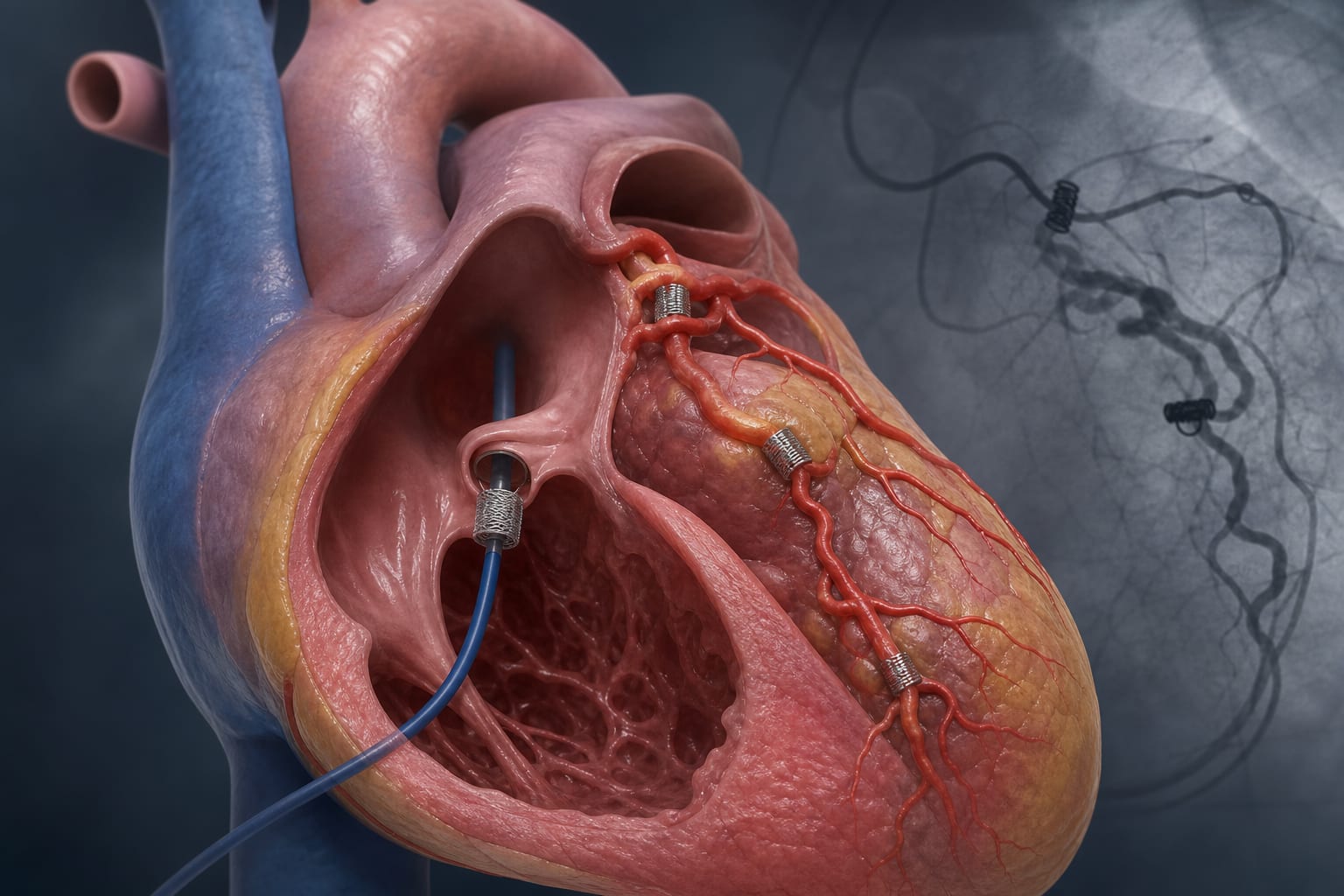
This case study details the catheter-based closure of multiple large right ventricle-to-coronary artery fistulae in a pediatric patient with pulmonary atresia and intact ventricular septum. The interventions included transcatheter perforation of the pulmonary valve.

Background

Pulmonary atresia with intact ventricular septum (PAiVS) presents significant challenges in management, particularly when complicated by right ventricular-to-coronary fistulae. The presence of these fistulae can lead to myocardial malperfusion, necessitating careful evaluation and intervention.

Data Highlights

InterventionDetails
Initial AssessmentHypoplastic tricuspid valve annulus (6 mm), RVOT (4 mm), pulmonary valve atresia (4 mm)
Fistula ClosureThree large RV-to-RCA fistulae closed with Amplatzer™ Duct Occluders II
Subsequent InterventionsAdditional RV-LAD fistula closed; RVOT dilated with Maverick Balloon
Final OutcomeRVP remained suprasystemic after multiple interventions

Key Findings

  • Patient diagnosed with PAiVS and multiple large RV-to-coronary fistulae.
  • Closure of three large RV-to-RCA fistulae using Amplatzer devices.
  • Subsequent interventions included perforation of the RVOT and additional fistula closures.
  • Patient maintained on warfarin for post-interventional anticoagulation.
  • RVP remained suprasystemic despite interventions.

Clinical Implications

The case highlights the role of angiographic assessment in patients with PAiVS and coronary fistulae.

Conclusion

This case study demonstrates catheter-based interventions in managing coronary fistulae in pediatric patients with PAiVS.

Related Resources & Content

  1. Pediatric Cardiology, 2024 -- A National Comparison of Interventional and Surgical Strategies for Pulmonary Atresia with Intact Ventricular Septum
  2. 2025 American Association for Thoracic Surgery Congenital Cardiac Surgery Working Group -- Expert consensus document on the management of patients with pulmonary atresia with intact ventricular septum
  3. Pediatric Cardiology — Transcatheter Closure of Congenital Right Atrial Fistula Using the Amplatzer Occluder: A Case Report
  4. Pediatric Cardiology — Transcatheter Superior Cavopulmonary Shunt Completion After Pulmonary Artery Septation
  5. Pediatric Cardiology — Creation of Transcatheter Ventricular Septal Defects for Restrictive VSD in Cases of Double-Outlet Right Ventricle
  6. 2025 American Association for Thoracic Surgery Congenital Cardiac Surgery Working Group— Expert consensus document on the management of patients with pulmonary atresia with intact ventricular septum - ScienceDirect
  7. Pulmonary Atresia with Intact Ventricular Septum, a National Comparison Between Interventional and Surgical Approach, in Combination with a Systemic Literature Review | Pediatric Cardiology | Springer Nature Link
  8. Three-Decade Experience With Management of Coronary Artery Fistulas in Children - ScienceDirect

Original Source(s)

Related Content