Clinical characteristics and risk factors of atrial fibrillation detection after acute ischemic stroke - Report - MDSpire

Clinical characteristics and risk factors of atrial fibrillation detection after acute ischemic stroke

  • By

  • Hui Zhao

  • Yingyu Jiang

  • Li Liu

  • Jingjing Li

  • Jinxin Shi

  • Weijia Wang

  • Xiaoling Cheng

  • July 8, 2026

  • 0 min

Share

Characteristics and Risk Factors Associated with Atrial Fibrillation Identification Following Acute Ischemic Stroke

Overview

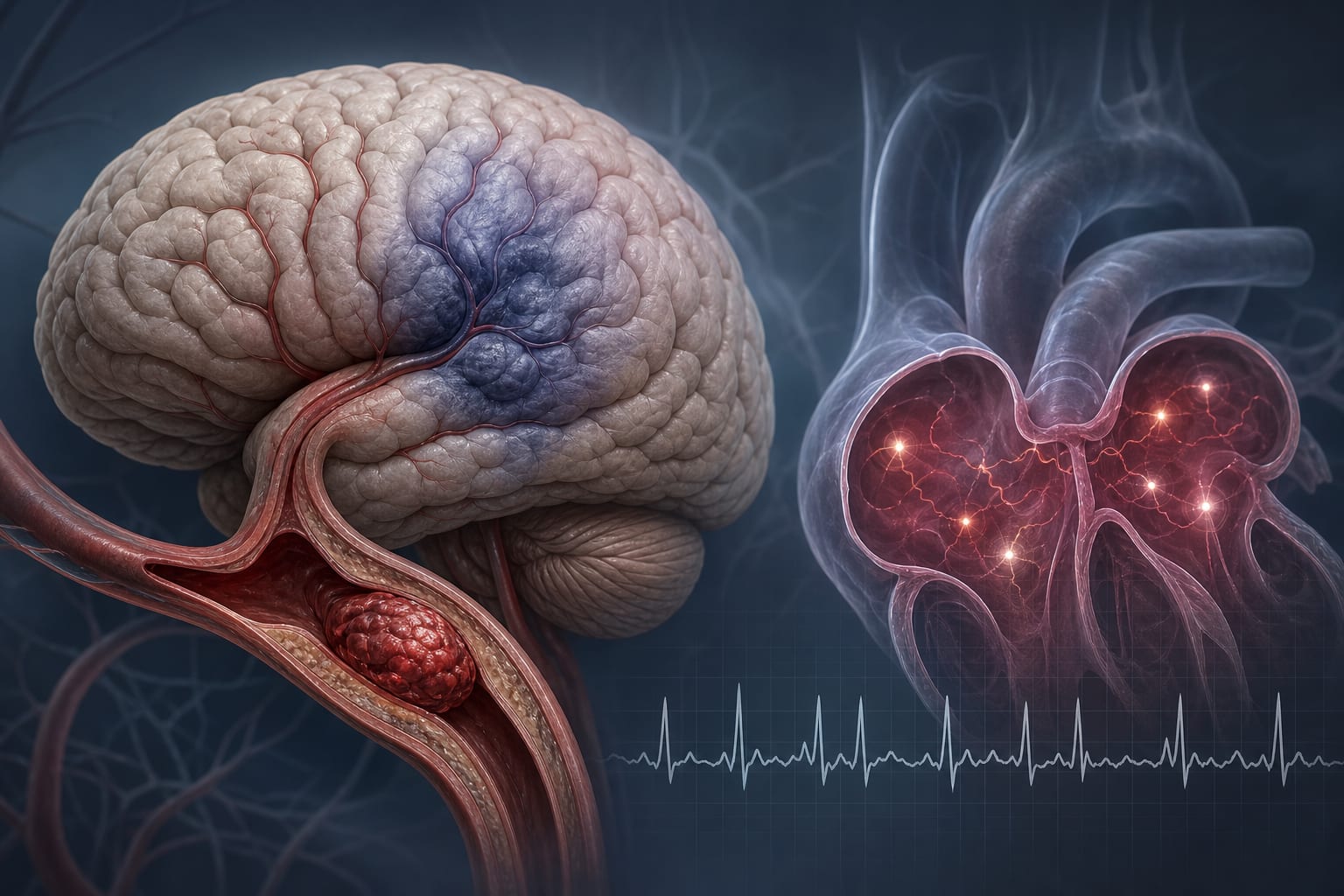
This study identifies independent risk factors for atrial fibrillation detected after stroke (AFDAS) in acute ischemic stroke patients. AFDAS is associated with a higher risk of recurrent stroke.

Background

Atrial fibrillation (AF) is a significant contributor to ischemic stroke, increasing the risk of adverse outcomes. AFDAS occurs in a notable proportion of patients without prior AF history.

Data Highlights

ParameterValue
Patients with AFDAS572 (2.4%)
Age ≥ 65 years (OR)2.14 (95% CI: 1.44–3.16)
History of coronary arterial disease (OR)1.88 (95% CI: 1.22–2.92)
Elevated C-reactive protein (OR)1.02 (95% CI: 1.01–1.02)
Lower triglyceride levels (OR)0.76 (95% CI: 0.61–0.96)
1-year recurrent stroke rate (AFDAS vs. SR)11.7% vs. 6.1% (P < 0.001)

Key Findings

  • AFDAS was identified in 2.4% of the study population.
  • Older age (≥ 65 years) is a significant independent risk factor for AFDAS.
  • A history of coronary arterial disease increases the likelihood of AFDAS.
  • Elevated C-reactive protein levels are associated with AFDAS.
  • Patients with AFDAS have a higher rate of recurrent stroke compared to those in sinus rhythm.
  • AFDAS remains an independent risk factor for stroke recurrence after adjusting for traditional risk factors.

Clinical Implications

Older age, history of coronary heart disease, and inflammatory markers are associated with AFDAS in acute ischemic stroke patients.

Conclusion

The study identifies AFDAS as a condition associated with increased stroke recurrence risk.

Related Resources & Content

  1. Frontiers in Cardiovascular Medicine, 2026 -- A study on risk factors of acute ischemic stroke after radiofrequency ablation in patients with atrial fibrillation
  2. Clinical Research in Cardiology, 2026 -- Predicting atrial fibrillation after an acute coronary syndrome: insights from the BACS & BAMI study
  3. Frontiers in Neurology, 2026 -- Characteristics of patients with cryptogenic stroke and atrial fibrillation detected using insertable cardiac monitoring in the chronic phase: a subanalysis of the LOOK study
  4. Clinical Research in Cardiology, 2022 -- Managing Patients with Subclinical Atrial Fibrillation and Atrial High-Rate Episodes: Evidence and Clinical Significance
  5. 2026 Guideline for the Early Management of Patients With Acute Ischemic Stroke: A Guideline From the American Heart Association/American Stroke Association
  6. Prevalence and predictors of atrial fibrillation detected after stroke or transient ischemic attack: A comprehensive meta-analysis - PubMed
  7. Detection yield and risk profiling
  8. Monitoring strategies and recent evidence syntheses
  9. 2026 Guideline for the Early Management of Patients With Acute Ischemic Stroke: A Guideline From the American Heart Association/American Stroke Association

Original Source(s)

Related Content