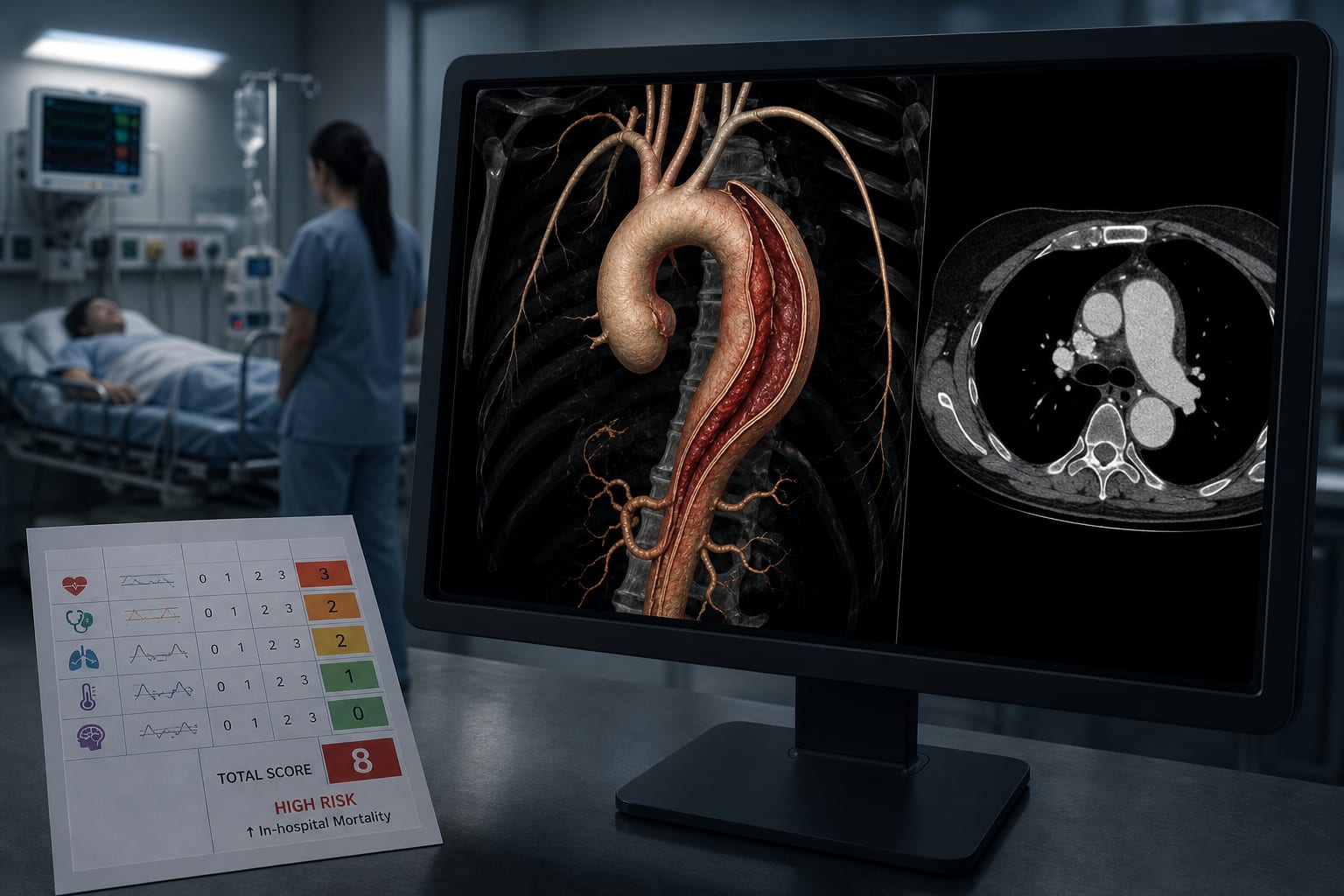
Clinical Report: Prognostic Utility of Early Warning Scores in AAD Patients
Overview
This study evaluates the prognostic value of early warning scores (EWS) in predicting in-hospital mortality among patients with acute aortic dissection (AAD). It identifies Type A AAD and surgical intervention as independent predictors of mortality, with NEWS showing the highest discriminative performance among the EWS evaluated.
Background
Acute aortic dissection (AAD) is a critical and life-threatening condition that requires prompt diagnosis and intervention. The mortality rate can be significantly high without timely treatment, making effective risk assessment tools essential for improving patient outcomes. Early warning scores (EWS) are designed to detect deterioration in patients by monitoring vital signs, yet their specific application in AAD patients remains underexplored.
Data Highlights
Parameter
Association with Mortality
In-hospital mortality rate
33.3%
Type A AAD
Independent predictor
Surgical intervention
Independent predictor
NEWS AUC
0.581 (95% CI 0.528–0.634)
Key Findings
In-hospital mortality rate for AAD patients was 33.3%.
Older age, Type A AAD, male sex, elevated EWS, and higher lactate levels were significantly associated with mortality.
Type A AAD and surgical intervention were identified as independent predictors of in-hospital mortality.
NEWS demonstrated the highest discriminative performance among the evaluated EWS.
Clinical Implications
The findings suggest that early warning scores, particularly NEWS, may assist in initial risk stratification for patients with AAD. Timely surgical intervention remains critical for improving in-hospital outcomes in this patient population.
Conclusion
The study highlights the utility of early warning scores in assessing mortality risk in AAD patients, emphasizing the importance of Type A AAD and surgical treatment as key factors influencing outcomes.