Thyroid autoimmunity is associated with fertilization impairment and follicular fluid exosomal miRNA alterations in euthyroid women undergoing IVF-ET - Report - MDSpire
Advertisement
Thyroid autoimmunity is associated with fertilization impairment and follicular fluid exosomal miRNA alterations in euthyroid women undergoing IVF-ET
Clinical Report: The Influence of Thyroid Autoimmunity on Fertilization Success
Overview
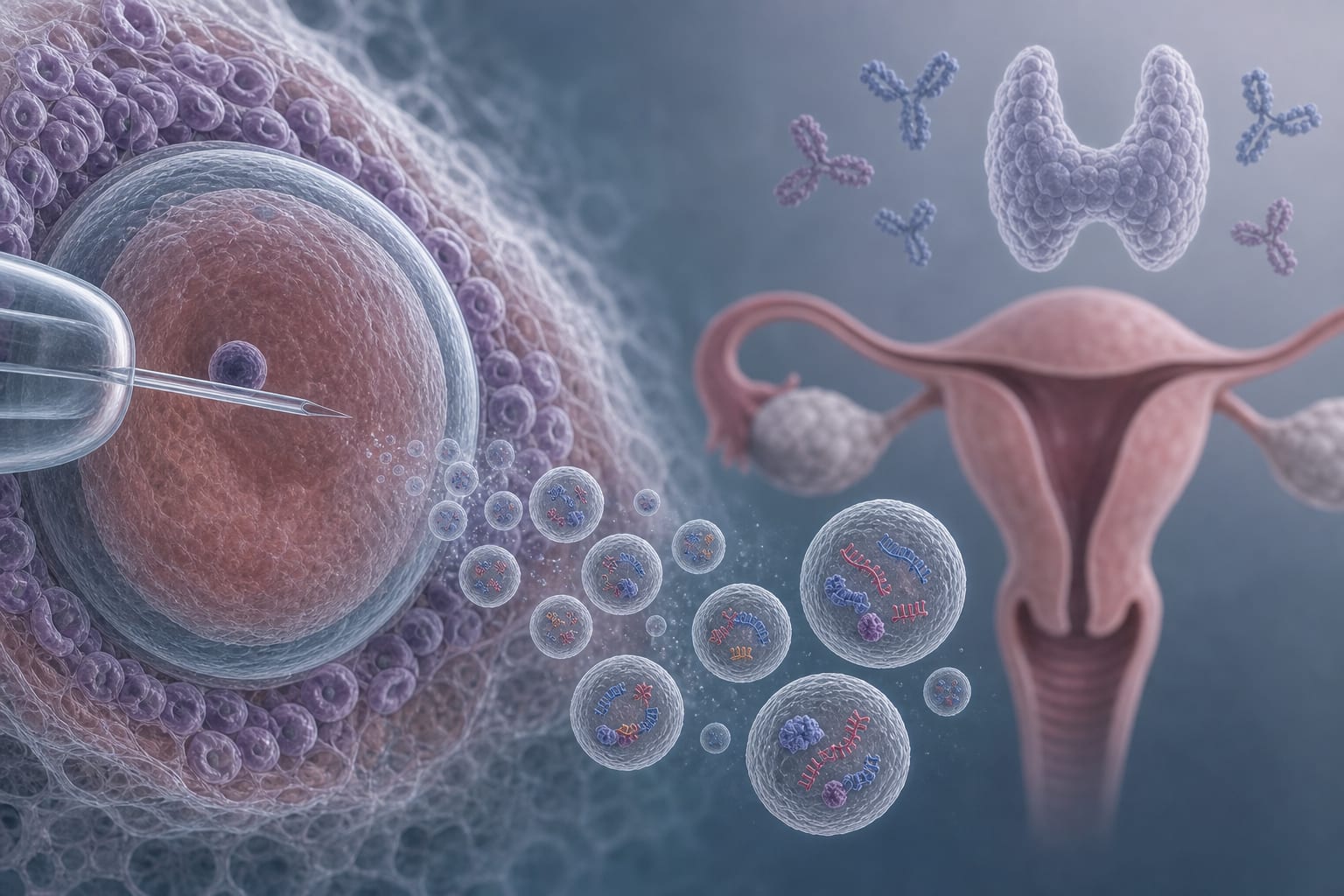
This study investigates the impact of thyroid autoimmunity (TAI) on fertilization outcomes in euthyroid women undergoing IVF-ET, finding that the fertilization rate was significantly lower in TAI-positive women compared to TAI-negative women.
Background
Thyroid autoimmunity is a common condition in women of reproductive age and has been linked to impaired reproductive function and adverse outcomes in assisted reproductive technologies, as supported by various studies. Understanding the relationship between TAI and IVF outcomes is crucial for optimizing fertility treatments.
Data Highlights
Group
Fertilization Rate
TAI-positive
XX%
TAI-negative
YY%
Key Findings
TAI was identified as an independent risk factor for impaired fertilization in euthyroid women.
The fertilization rate was significantly lower in the TAI-positive group compared to TAI-negative women.
Seventy differentially expressed miRNAs were identified in the follicular fluid of TAI-positive women.
Four key miRNAs (hsa-miR-6799-3p, hsa-miR-6836-3p, hsa-miR-4449, hsa-miR-3162-5p) showed good diagnostic performance (AUC > 0.7).
Functional enrichment analysis suggested involvement of these miRNAs in reproductive impairment pathways.
Clinical Implications
Clinicians should consider the presence of thyroid autoimmunity when evaluating fertility in euthyroid women undergoing IVF-ET.
Conclusion
The findings indicate a significant association between TAI and impaired fertilization outcomes, along with the potential of specific miRNAs as biomarkers for reproductive dysfunction.