Clinical Report: Innovations in Artificial Intelligence for Identifying Origins of Premature Ventricular Contractions
Overview
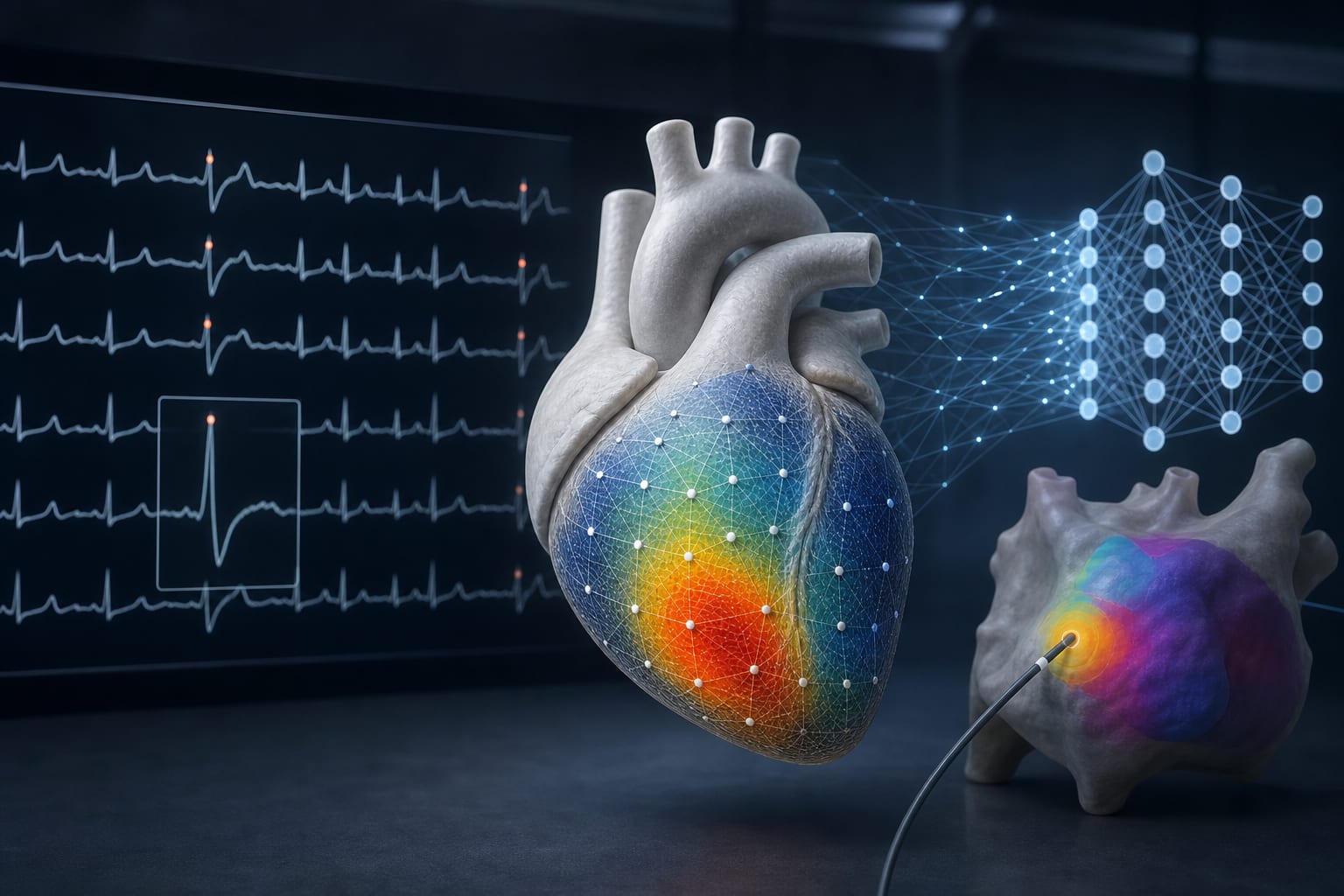
This review discusses advancements in artificial intelligence (AI) for identifying the origins of premature ventricular contractions (PVCs) using electrocardiogram (ECG) data. AI methods, particularly deep learning, are explored in the context of PVC localization.
Background
Premature ventricular contractions (PVCs) are common arrhythmias with a prevalence of 1%–4% in the general population. Accurate localization of PVC origins is crucial for effective catheter ablation, especially in patients with high PVC burden or structural heart disease. Traditional methods are subjective and inefficient.
Data Highlights
No numerical data or trial data provided in the source material.
Key Findings
AI-based approaches improve efficiency and accuracy in identifying PVC origins.
Traditional ECG analysis methods are subjective and time-consuming.
Machine learning and deep learning can automatically extract complex features from ECG data.
Accurate PVC localization is essential for optimizing catheter ablation strategies.
Clinical Implications
The integration of AI in PVC origin localization may lead to improved strategies for catheter ablation.
Conclusion
AI presents advancements in the localization of PVC origins. Continued research and validation are necessary for effective clinical implementation.
Higher annual oral corticosteroid exposure was associated with greater odds of systemic adverse events, with avascular bone necrosis and pneumonia showing dose-dependent associations with cumulative dose and osteoporosis associated with longer annual exposure duration.